
GPR Machine 101: The Ultimate Contractor's Guide
Cutting or drilling into a concrete slab without knowing what’s inside is one of the biggest gambles in our industry. You’re betting your project’s timeline, budget, and your crew’s safety on the hope that you don’t hit a post-tension cable, a live electrical conduit, or a water line. It’s a high-stakes bet that no one should have to make. This is where a Ground Penetrating Radar (GPR) machine becomes your most valuable player. It gives you a non-destructive way to see inside concrete and soil before you ever make a cut. This guide explains what this technology is, how it works, and why having access to a GPR machine is only half the battle; knowing how to interpret its complex data is what truly keeps your job site safe and on schedule.
Key Takeaways
- GPR Is a Non-Negotiable Safety Tool: Using GPR provides a subsurface map of rebar, utilities, and other hazards. This allows your team to cut, drill, or demolish with confidence and avoid costly, dangerous mistakes.
- The Operator's Skill Is More Important Than the Machine: GPR data is not a simple image; it requires a trained expert to interpret the signals correctly and distinguish between different buried objects, making professional analysis essential for accurate results.
- Hiring a Professional Service Is the Most Reliable Option: Instead of investing in expensive equipment and training, hiring an expert service gives you immediate access to top-tier technology and the experience needed to guarantee accuracy, protecting your project's safety, budget, and schedule.
What Is a GPR Machine?
Think of a Ground Penetrating Radar (GPR) machine as a high-tech scanner for the ground or concrete. It’s a non-destructive tool that lets you see what’s hidden beneath the surface without any digging or drilling. By using radar pulses, a GPR system creates an image of what’s below, helping you map out buried utilities, rebar, voids, and other objects. For any contractor, this technology is a game-changer. It’s all about working smarter, not harder, by preventing costly damage to hidden lines and ensuring the safety of your crew on a demolition or construction site. Before you break ground or cut into a slab, GPR gives you the critical information you need to proceed with confidence.
How Does GPR Technology Work?
At its core, Ground Penetrating Radar technology works a lot like a fish finder or bat echolocation, but it uses radio waves instead of sound. The GPR unit has an antenna that sends high-frequency radio pulses into the ground or a concrete structure. When these waves hit an object or a boundary between different materials (like soil hitting a PVC pipe), they bounce back to the antenna. The machine measures the time it takes for the signal to travel down and return. This travel time tells the operator the precise depth of the buried object. The continuous stream of data creates a subsurface map in real-time on the operator's screen.
What Can GPR Detect?
A GPR machine is incredibly versatile and can locate a wide range of metallic and non-metallic objects. In construction and demolition, it’s most often used to find things you absolutely don't want to hit, like rebar, post-tension cables, electrical conduits, and utility lines for gas, water, and communications. It’s also effective at identifying changes in material, such as voids or air pockets under a concrete slab, which could indicate a structural problem. This geophysical method works through many common materials, including concrete, soil, asphalt, and rock, making it an essential tool for site surveys and pre-demolition planning.
GPR Limitations and Common Myths
One of the biggest GPR misconceptions is that it provides a crystal-clear, X-ray-like picture of what’s underground. In reality, the screen displays data as lines and arches (hyperbolas) that a trained professional must interpret. It takes skill and experience to distinguish a pipe from rebar or a tree root. Another common myth is that GPR can penetrate any material to any depth. The truth is, its effectiveness depends on the ground conditions. Highly conductive materials, like dense clay or saltwater-saturated soil, can absorb the radar signal and limit how deep it can see. This is why having an experienced GPR technician is just as important as having the right equipment.
How GPR Is Used in Construction and Demolition
Ground penetrating radar is one of the most powerful tools on a modern construction or demolition site. Think of it as your secret weapon for seeing the unseen. Before your team ever breaks ground or cuts into a slab, GPR gives you a clear picture of what lies beneath the surface. This technology has become essential for ensuring job site safety, preventing expensive damage, and keeping projects on schedule. From scanning concrete floors in a commercial building to assessing the integrity of a bridge, GPR provides the critical data you need to plan and execute your work with confidence. It’s a non-invasive way to gather information, making it a go-to for countless applications in our industry.
Scanning Concrete Before You Cut or Drill
Cutting or drilling into a concrete slab without knowing what’s inside is a huge gamble. You could hit rebar, electrical conduits, or even post-tension cables, leading to catastrophic structural failure, serious injury, and massive project delays. GPR scanning completely changes the game by giving you a way to see inside concrete slabs before you make the first cut.
An experienced technician can use GPR to map out the precise location and depth of metallic and non-metallic objects embedded in the concrete. This allows your crew to safely cut, core, or drill around these critical components. For demolition projects, it helps you understand the structure you’re dealing with, and for renovations, it ensures you don’t accidentally sever essential utilities. It’s a simple step that saves time, money, and protects your team.
Locating Utilities and Underground Lines
Every contractor knows the rule: call 811 before you dig. But what about unmapped or private utility lines? GPR is your best defense against accidentally striking underground utilities like water mains, gas lines, and fiber-optic cables. Before any excavation or demolition work begins, a GPR scan can create a detailed map of all subsurface utilities.
This is especially important on older sites where records might be inaccurate or nonexistent. By identifying the location and depth of these lines, you can prevent dangerous accidents, costly repairs, and service outages that could impact the entire neighborhood. Accurate utility locating is a fundamental part of responsible site preparation, and GPR is the most reliable technology for the job.
Finding Voids and Assessing Structures
Structural integrity is everything, whether you're building up or tearing down. GPR systems are incredibly effective at identifying subsurface anomalies that could compromise a structure's stability. The technology is used to find objects, changes in materials, empty spaces (voids), and cracks that are invisible to the naked eye.
For example, GPR can detect voids beneath a concrete slab that could lead to collapse or settlement over time. It can also identify areas of deterioration within walls, columns, and foundations. For demolition contractors, this information is vital for planning a safe and controlled teardown. For engineers and builders, it helps verify the quality of new work and diagnose problems in existing structures without destructive testing.
Assessing Roads and Infrastructure
GPR isn't just for buildings; it's also a critical tool for maintaining public infrastructure. Departments of transportation and civil engineering firms use specialized GPR equipment to assess the condition of roads, bridges, and airport runways. This technology can measure the thickness of pavement layers, identify areas of moisture damage, and detect voids or delamination in bridge decks.
By using GPR, maintenance crews can pinpoint problems before they become visible on the surface, allowing for proactive repairs that extend the life of the infrastructure and improve public safety. For contractors working on these large-scale projects, GPR data is essential for planning and bidding accurately. It provides a clear understanding of the existing conditions you'll be working with.
Environmental and Archaeological Surveys
Sometimes, the biggest surprises on a job site have nothing to do with the structure itself. GPR is a versatile tool that is also used for environmental site assessments and archaeological surveys. It can locate buried storage tanks, drums, and other potential environmental hazards without the need for excavation, helping you avoid costly cleanup and liability issues.
In areas with historical significance, GPR can also identify buried foundations, artifacts, or even human remains. Discovering these items unexpectedly can bring a project to a grinding halt. Conducting a GPR survey beforehand allows you to identify sensitive areas and work with the proper authorities to manage the findings, keeping your project on track while respecting the site's history.
Key Features of a GPR Machine
Not all GPR machines are built the same. When you’re deciding whether to buy, rent, or hire a service, understanding the core features will help you match the right technology to your project’s needs. From the antenna that sends the signal to the software that shows you the results, each component plays a critical role in getting a clear and accurate picture of what’s hidden underground or inside a concrete structure.
Knowing what to look for ensures you don’t end up with a tool that’s either underpowered for the job or overly complex for your needs. A machine that’s perfect for finding deep utility lines might not be the best choice for pinpointing rebar in a slab you need to cut. Understanding these differences is key to making a smart investment and ensuring your project runs smoothly and safely. Let’s break down the five key features that define a GPR machine’s performance and usability on the job site.
Antenna Frequency and Depth
The antenna is the heart of the GPR system, and its frequency determines both how deep it can see and how detailed the image will be. Think of it as a trade-off. High-frequency antennas, typically in the 200-400 MHz range, provide a very high-resolution image but can only penetrate shallow depths. This makes them perfect for locating rebar, conduits, and post-tension cables within a concrete slab before you cut or drill.
On the other hand, low-frequency antennas (50 MHz or less) can penetrate much deeper, but the resolution is lower. These are the go-to for locating deeper utilities, storage tanks, or geological features. The EPA explains that these different geophysical methods are chosen based on whether the goal is high detail at a shallow depth or locating larger targets much deeper.
Portability and Usability
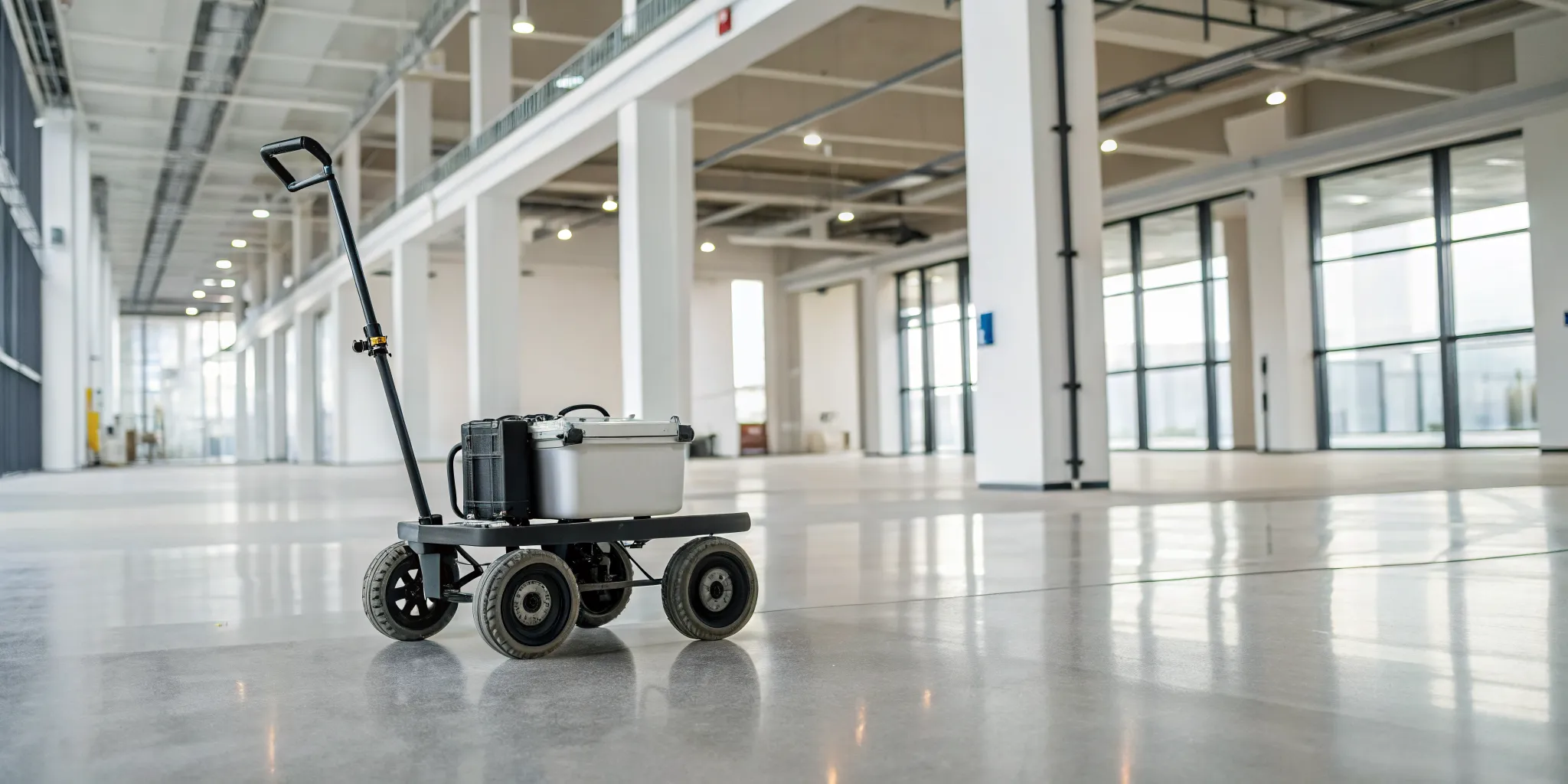
GPR technology used to be bulky and complex, requiring a highly trained specialist to operate. Thankfully, that’s no longer the case. Modern GPR systems are designed with the contractor in mind. They are often built into wheeled carts that are easy to push across a site, with intuitive touchscreen interfaces and simplified controls. This focus on accessibility means project managers and contractors can take charge of their own surveys.
This user-friendly approach doesn't sacrifice accuracy; it simply makes powerful technology more accessible. The goal is to put you in the driver's seat, giving you complete control over your GPR surveys without needing a Ph.D. in geophysics. This means you can get the answers you need quickly and keep your project moving forward.
Data Software and Visualization
A GPR machine is only as good as the software that interprets its data. As the antenna sends waves into the ground, the receiver measures the time it takes for them to bounce back and how strong the returning signal is. This raw data is then processed by the machine’s software to create a visual representation of the subsurface, often called a radargram.
Advanced software helps you make sense of these images. According to the EPA, this information is used to determine the depth, shape, and characteristics of underground objects. Good software will allow you to add markers, estimate depths, and even filter out noise to get a clearer picture. This visualization is what turns raw ground penetrating radar data into actionable intelligence for your demolition or construction project.
GPS and 3D Imaging
While a 2D scan gives you a cross-section view, many modern GPR systems integrate GPS to create detailed 3D maps of the subsurface. As you scan an area, the GPS receiver logs the precise coordinates of every reading. The software then stitches these individual scan lines together to generate interactive 3D models. This is a game-changer for complex job sites.
Instead of just knowing a pipe is there, you can see its path, depth, and relationship to other buried objects. This ability to create high-resolution 3D subsurface images helps you plan excavations and cuts with incredible precision, preventing costly utility strikes or structural damage. It provides a comprehensive map of everything you need to avoid.
Durability and Weatherproofing
A construction site is no place for delicate equipment. GPR machines are built to withstand the rigors of daily use, including dust, moisture, and rough terrain. Look for systems with rugged frames, durable wheels, and sealed electronics with a high IP (Ingress Protection) rating, which indicates resistance to water and dust. A machine that can handle a bit of rain or a dusty environment is one you can rely on to work when you need it.
Beyond physical toughness, these machines are also designed for safety. GPR is a non-invasive method that doesn't emit harmful radiation, making it safe for the operator and anyone nearby. Following proper ground-penetrating radar safety guidelines is always important, but the technology itself is inherently safe for use on busy job sites.
Popular GPR Machine Brands and Models
When you're ready to invest in a GPR machine, you’ll find plenty of options on the market. The right choice really depends on the kind of work you do most often. Are you mainly locating utilities, scanning concrete slabs, or mapping out large areas? Different machines are built for different specialties. Some are rugged, all-terrain units perfect for sprawling construction sites, while others are more compact and designed for precision work indoors. The software is another huge factor, with some offering basic line detection and others providing complex 3D models. To give you a starting point, let's look at a few of the most trusted and popular brands that contractors rely on for accurate results. These models are known for their performance, but remember that for complex jobs, nothing beats the experience of a professional service. When the stakes are high, bringing in a team like All Pro Demolition ensures the job is done right.
GSSI UtilityScan Pro
The GSSI UtilityScan Pro is a name you'll hear a lot, and for good reason. It's a workhorse system designed specifically for locating and mapping utilities. Contractors appreciate its versatility, meaning it can handle a wide range of common tasks, from finding buried pipes and electrical cables to identifying rebar in concrete before you cut. What makes it a favorite is its focus on ease of use. On a busy job site, you don't have time for a complicated setup. The UtilityScan Pro is built to get you the data you need quickly and clearly. GSSI offers a full lineup of GPR equipment, so you can be sure you’re getting a tool that’s right for your specific survey needs.
MALA Easy Locator
Another top contender that contractors often turn to is the MALA Easy Locator. As the name suggests, this system is recognized for its straightforward, user-friendly interface and solid performance in the field. It’s particularly effective at locating underground utilities, making it a reliable choice for pre-demolition site scans or construction prep. Its reputation for efficiency across different types of soil and ground conditions makes it a dependable tool. For businesses weighing their options, Pine Environmental provides opportunities to rent or purchase this model, which speaks to its popularity and widespread trust within the industry. This flexibility is great for contractors who may want to try it out before committing to a purchase.
OKM Gepard GPR 3D
For jobs that require a deeper and more detailed look underground, the OKM Gepard GPR 3D is a highly sophisticated system. This machine goes beyond simple line detection to create detailed 3D images of what’s below. It’s excellent for detecting a whole range of subsurface features, including pipes, hidden cavities, cables, tunnels, and even old foundations. The data is displayed on an Android tablet, giving you a clear, three-dimensional model of the underground structures. This advanced visualization is incredibly valuable for complex site investigations, helping you understand the full scope of what you're working with before the first cut or excavation begins.
Comparing GPR Machine Types
Not all GPR machines are created equal. The right equipment depends entirely on the job, from the size of the area to the depth you need to scan. Understanding the main differences between models is the first step in deciding whether to buy, rent, or hire a professional service. The technology ranges from simple handheld units to complex systems that use artificial intelligence to analyze data. Let's break down the major categories so you can get a clearer picture of what's out there.
Entry-Level vs. Professional Models
GPR systems generally fall into two camps: entry-level units for basic tasks and professional models for complex surveys. Handheld units are great for shallow scans on walls or floors to find rebar or conduit. They are more affordable, but their capabilities are limited. On the other hand, professional cart-based systems are the workhorses for serious utility locating and large-scale site assessments. These wheeled devices are pushed along the ground to cover significant areas efficiently. For highly specialized tasks, like finding deep voids or geological features, you have deep earth scanners. The price and complexity increase with capability, which is why many contractors choose to hire a GPR service that already owns and operates this professional-grade equipment.
Single vs. Multi-Frequency Systems
The antenna's frequency is what determines a GPR machine's performance. Think of it this way: high-frequency antennas (around 200-400 MHz) give you a sharp, high-resolution picture but can only see a few feet deep. They're perfect for finding small targets in concrete. Low-frequency antennas (50 MHz or less) can penetrate much deeper into the ground but provide a lower-resolution image, making it harder to distinguish small objects. The returning signal's travel time and strength are measured by the GPR receiver to create the final image. While single-frequency systems are common, advanced multi-frequency machines offer the flexibility to switch between frequencies, giving you the best of both worlds without having to change antennas.
The Role of AI in GPR Systems
One of the most exciting developments in GPR is the integration of artificial intelligence. Interpreting GPR data has always required a highly trained eye, but AI is changing that. New systems use machine learning algorithms to analyze the raw data and automatically identify pipes, voids, and other features. This helps create clearer 3D images and reduces the potential for human error. As AI-enabled data interpretation becomes more common, the ground penetrating radar market continues to grow. This technology helps speed up surveys and provides more reliable results, making the entire process more efficient from start to finish.
How Much Does a GPR Machine Cost?
Let's talk about the bottom line. A GPR machine is a serious investment, and the price tag can vary quite a bit depending on the features and capabilities you need. The cost isn't just about the initial purchase; it also includes software, training, and potential maintenance. Understanding the full financial picture will help you decide whether buying, renting, or hiring a service is the right move for your business.
The main factors that influence the price are the antenna frequency, the depth it can scan, and the sophistication of the software used to analyze the data. A simple, handheld unit for scanning concrete walls will cost significantly less than a complex, multi-frequency system designed for deep utility mapping. Before you start shopping, it’s helpful to have a clear idea of the primary tasks you'll use the GPR for. This will help you narrow down your options and find a machine that fits both your needs and your budget.
Purchase Prices by Model
When you start looking at purchasing a GPR machine, you'll find the prices fall into a few key categories based on the type of unit. For scanning shallower surfaces like concrete walls or floors, a handheld unit is often sufficient, and these typically run between $11,000 and $17,000. If your work involves larger surveys, like mapping utilities across a site, you’ll be looking at a cart-based system. These wheeled units are pushed along the ground and can range from $20,000 to $65,000. For highly specialized work, such as deep geological surveys, advanced scanners can cost $48,000 or more. The technology behind Ground Penetrating Radar is complex, and the price reflects the power and precision you get.
Rental Costs: When to Rent vs. Buy
If you're not ready to commit to a purchase, renting is an excellent alternative. Renting makes a lot of sense for contractors who only need a GPR machine for a specific, short-term project or for those who want to test out the technology before making a large capital investment. It gives you access to high-end equipment without the upfront cost and responsibility of ownership and maintenance. Companies like Pine Environmental offer a variety of GPR systems for rent, giving you the flexibility to choose the right tool for the job at hand. This approach lets you build the cost directly into a project bid, making it a practical choice for many businesses.
Understanding Financing and Support
For those ready to buy, the high price tag doesn't have to be a barrier. Many manufacturers understand that a GPR system is a major purchase and offer solutions to make it more manageable. Leading brands like GSSI provide comprehensive support, including phone and email assistance and helpful user guides to ensure you get the most out of your equipment. They also offer various financing options to help you spread out the cost over time. When you're evaluating different models, don't forget to ask about the post-purchase support and financing plans available. Good support can be just as valuable as the machine itself, especially when you're first getting started.
Safety Guidelines for Operating a GPR Machine
While GPR is one of the safest subsurface imaging tools available, using it on an active construction or demolition site still demands a serious commitment to safety. The good news is that the machine itself poses very little risk to the operator. The real hazards are found in the surrounding environment. Following a clear set of safety protocols isn't just about checking a box; it’s about protecting your team, your project, and your timeline from preventable accidents. Before you even power on the equipment, a thorough safety check should be your first priority.
Assess the Site for Hazards
Every GPR scan should begin with a careful site walk. Before you start rolling the equipment, take the time to identify any potential physical hazards. Look for uneven terrain, open trenches, falling debris, and overhead obstacles that could cause trips or injuries. It’s also smart to perform an evaluation for potential chemical hazards, especially when working on brownfield or industrial sites where contaminants could be present in the soil. Acknowledging these risks beforehand allows you to create a safe path for the scan and ensure the operator can focus on the data, not on dodging dangers.
PPE and OSHA Compliance
Let’s clear one thing up: GPR technology is incredibly safe. As a noninvasive tool, it "emits no harmful radiation, so it is safe for the technician performing the work and for anyone or anything in the surrounding area." However, that doesn't mean you can walk onto a job site without the right gear. Standard personal protective equipment (PPE) is still a must. This includes a hard hat, steel-toed boots, safety glasses, and a high-visibility vest. Using GPR to locate utilities and rebar before you dig or cut is a key step in maintaining compliance with OSHA excavation standards and preventing catastrophic accidents.
Why Proper Training Is Essential for Safety
The biggest risk in using a GPR machine isn't from the device itself, but from misinterpreting its data. GPR scanning is an essential first step before any cutting, drilling, or excavating. However, an operator without proper training can easily misread the signals, potentially missing a high-pressure gas line or failing to identify a structural weakness. This is why "safe operation of Ground Penetrating Radar includes proper training to handle equipment and assess site conditions." An inaccurate scan is just as dangerous as no scan at all. If you want to guarantee accuracy and safety, consider working with a dedicated GPR scanning service to handle this critical task.
Common Challenges of Using GPR
While GPR technology is incredibly powerful, it’s not a magic wand. Like any advanced tool, it has its limitations, and getting accurate results depends heavily on the skill of the person operating the machine. Understanding these challenges is the first step to ensuring you get reliable data for your demolition or construction project. An experienced technician knows how to work around these issues, but they can easily trip up a novice and lead to costly or dangerous mistakes.
Dealing with Signal Interference
One of the biggest hurdles for GPR is signal interference from the surrounding environment. The radar waves work best in uniform, low-conductivity materials like sand or dry concrete. However, job sites are rarely that simple. Dense, clay-rich soils, areas saturated with saltwater, or even a thick network of tree roots can absorb or scatter the radar signal, making it difficult to get a clear reading. This can create "blind spots" in the scan. A seasoned operator can often recognize these conditions and adjust their scanning technique, but it’s a major reason why GPR struggles in certain environments and requires expert oversight.
The Challenge of Interpreting GPR Data
A common misconception is that a GPR machine shows a perfect, X-ray-like picture of what’s underground. In reality, the raw data looks more like a series of arches and curves, known as hyperbolas. Each hyperbola indicates that the radar has detected an object, but it doesn't automatically tell you what that object is. It takes a highly trained eye to interpret GPR data correctly. An analyst must differentiate the signature of a PVC pipe from that of a steel conduit, a piece of rebar, or even a large rock. This skill is less about just using a machine and more about understanding the science behind the signals to paint an accurate picture of the subsurface.
Working with Depth and Density Limits
GPR technology operates on a fundamental trade-off between depth and resolution. This is determined by the antenna's frequency. A high-frequency antenna provides a high-resolution image but can only penetrate a short distance, making it perfect for locating rebar within a concrete slab. A low-frequency antenna can see much deeper but provides a lower-resolution image, which is better for finding large utility lines buried several feet down. The challenge is that you must use the right tool for the job. Using the wrong GPR antenna frequency can mean missing your target entirely, which is why professional services use a range of equipment tailored to each specific task.
Where to Buy or Rent a GPR Machine
Once you decide you need GPR capabilities, your next step is to get the equipment. You can find Ground Penetrating Radar machines for purchase or rent from a few different places, including specialized manufacturers and general online retailers. Before you even start shopping, it’s smart to think about the kind of work you do most often. Your projects might focus on utility locating, concrete inspection, or broader site investigations. Knowing your primary use case will help you narrow down the options and find a machine that’s truly built for your needs.
How to Choose a GPR Equipment Supplier
Finding the right supplier is about more than just price. You’re looking for a partner who understands your work and can match you with the best tool for the job. The ideal supplier will ask about the type of targets you need to find, how deep they are, and the typical ground conditions you work in. They can help you find a GPR system optimized for utility locating or another specific task. The good news is that the ground penetrating radar market is growing, which means you have more choices than ever. Take your time to find a supplier who offers solid support and expertise.
Online Retailers vs. Specialized Suppliers
You’ll quickly notice you can buy GPR equipment from big online stores or from suppliers who focus only on this technology. While online retailers might offer convenience, a specialized supplier provides deep expertise that can save you from a bad purchase. Getting reliable subsurface imaging depends on having the right antenna and frequency for the job. A specialist can walk you through these technical details. They can also warn you about site-specific challenges. For instance, GPR can have limitations in soil with dense roots or high clay content. A specialized supplier will know this and can recommend equipment that performs well in your area’s unique conditions.
Is It Better to Hire a GPR Scanning Service?
While you can buy or rent a GPR machine, the real question is whether you should. Operating the equipment is one thing, but accurately interpreting the data is a completely different skill set. For most contractors and project managers, the answer is clear: hiring a professional GPR scanning service is not just easier, it’s safer and more cost-effective. A mistake in GPR analysis can lead to project-derailing disasters, like cutting through a post-tension cable or a critical utility line.
Hiring an expert means you’re paying for certainty. You get a clear, reliable map of what’s beneath the surface, allowing your team to proceed with confidence. A professional service brings specialized equipment and, more importantly, years of field experience to your job site. This expertise is what turns raw GPR data into actionable intelligence, protecting your crew, your budget, and your timeline. Instead of adding another complex task to your plate, you can rely on a dedicated specialist to handle this critical step correctly from the start.
Why Hiring a Pro Is Often the Best Choice
The biggest benefit of hiring a professional is their ability to interpret the GPR data accurately. An experienced technician can distinguish between rebar, electrical conduits, and post-tension cables, a skill that takes years to develop. This expertise is what prevents catastrophic damage and saves projects from costly delays. When you bring in a specialist, you’re not just renting a machine; you’re leveraging a deep well of knowledge to ensure your project’s safety and success.
A professional service like All Pro Demolition understands how to configure the equipment for your specific site conditions and project goals. They know how to plan a survey to get the most effective results, ensuring nothing is missed. This level of precision is nearly impossible to achieve without dedicated training and hands-on experience. Ultimately, hiring a pro minimizes risk and lets you focus on what you do best, knowing the subsurface scanning is in expert hands.
How to Choose a GPR Scanning Company
When you’re ready to hire a GPR scanning company, it’s important to vet them carefully. Start by asking about their experience with projects similar to yours. A company that primarily scans for utility lines may not be the best fit for analyzing a complex, elevated concrete slab. Ask about the equipment they use and the training their technicians receive. A reputable provider will be transparent about their qualifications and processes.
You should also ask for sample reports to see how they present their findings. A clear, detailed report is crucial for your team to work safely and efficiently. Before making a decision, confirm they have experience in your area and a solid reputation. A professional service will know how to properly plan a survey to maximize accuracy, giving you confidence in the results.
Why GPR Is Essential for Safe Demolition
Think of GPR scanning as getting an X-ray before surgery. It’s a non-destructive way to see what’s hidden inside a structure before you start cutting, coring, or demolishing it. This step is absolutely essential for safety. Cutting into a concrete slab without knowing what’s inside is a huge gamble. You could hit a live electrical conduit, a water line, or a post-tension cable, leading to serious injuries, property damage, and massive project setbacks.
Using GPR helps detect subsurface hazards and locate utilities before any destructive work begins. This proactive approach is the hallmark of a professional demolition process. It transforms a potentially hazardous job into a controlled, predictable one. By identifying and mapping out all embedded elements beforehand, you create a safe work environment and ensure the demolition process goes smoothly, without any dangerous or expensive surprises.
Frequently Asked Questions
Is GPR the same as getting an X-ray of the ground? That’s a common comparison, but it’s not quite accurate. While GPR lets you see what’s hidden, it doesn’t produce a simple, clear picture like a medical X-ray. The screen displays data as lines, arches, and different color patterns that require a trained eye to interpret. An experienced technician is needed to analyze these signals and tell the difference between a PVC pipe, a bundle of rebar, or just a large rock.
Why can't I just call 811 instead of using GPR? Calling 811 is an essential first step for any excavation, but it only covers public utilities that run from the main line to your property line. It won't locate any private lines on the property itself, such as electrical lines running to an outbuilding, water lines for an irrigation system, or unmapped pipes on an older site. GPR fills this gap by mapping all buried objects, public and private, giving you a complete picture of the subsurface.
How deep can a GPR machine actually scan? The scanning depth depends entirely on the antenna frequency and the ground conditions. As a general rule, there is a trade-off between depth and detail. High-frequency antennas provide very detailed images but only penetrate a few feet, which is perfect for finding rebar in a concrete slab. Low-frequency antennas can see much deeper, sometimes 20 feet or more, but the image is less detailed. A professional service will choose the right antenna for your specific target.
Are there any conditions where GPR doesn't work well? Yes, GPR is not a perfect tool for every situation. Its effectiveness is limited by certain ground conditions. The radar signals have a hard time penetrating dense, wet clay or soil that is saturated with salt. These materials can absorb or scatter the signal, making it difficult to get a clear reading. An experienced GPR technician can recognize these challenging conditions and use different techniques to get the most accurate data possible.
If the machines are so user-friendly now, why do I still need to hire a professional? Modern GPR machines are definitely more accessible, but the most critical part of the process isn't pushing the cart; it's interpreting the data. An inaccurate scan is just as dangerous as no scan at all. Hiring a professional service means you are paying for their expertise in analyzing the complex data, distinguishing between different types of objects, and understanding the technology's limitations. This expertise is what prevents costly mistakes and ensures the safety of your crew.