
Concrete Recycling Demolition: What Contractors Should Know
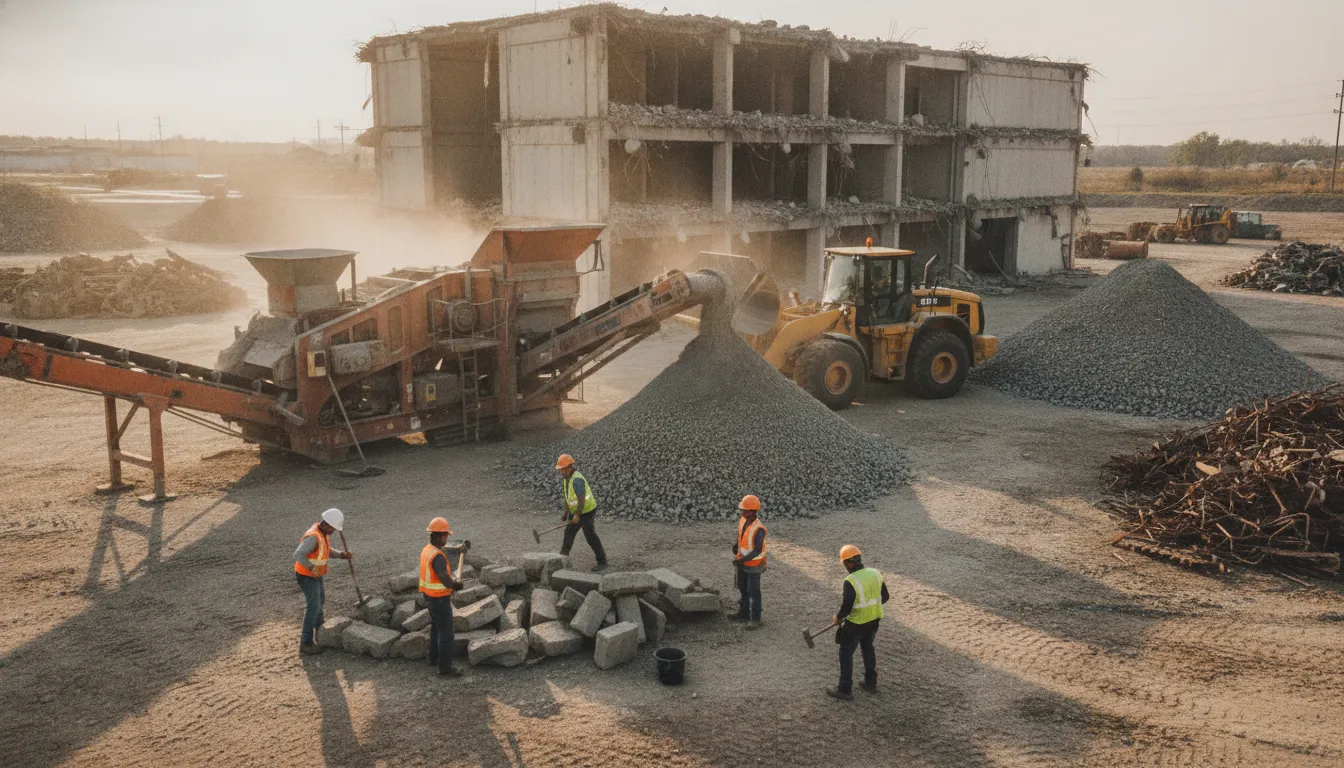
Concrete is often the largest and heaviest material removed from a demolition site, so the disposal decision has immediate environmental and logistical consequences. Sending it straight to a landfill treats a usable resource as waste and increases the volume of construction and demolition debris that must be managed.
Concrete recycling demolition practices keep recoverable material in circulation, reduce landfill waste, and produce recycled aggregate for future construction. The approach supports a more circular materials economy while helping project teams meet sustainability objectives.
Effective recycling depends on decisions made before the first slab is broken, including how concrete is separated, processed, and directed to an appropriate end use. The broader value becomes clear when recycling is viewed as a core part of responsible demolition rather than an afterthought.
Request a custom quote to get a concrete recycling plan built around your Georgia demolition project.
Why Concrete Recycling Is Central to Sustainable Demolition
Concrete is one of the most substantial material streams created when a building, pavement system, or industrial structure is removed. Treating it as disposable sends useful mineral material to a landfill and creates additional demand for newly quarried aggregate. A better concrete recycling demolition plan keeps that material in productive use and makes waste management part of the project strategy from the beginning.
The immediate benefit is a smaller landfill burden. The U.S. Environmental Protection Agency identifies recycling construction and demolition materials as a way to reduce the amount of waste sent to landfills. For Georgia developers and contractors, that means demolition can be planned around recovery rather than relying on mixed debris disposal as the default. Concrete is separated, processed, and directed toward an appropriate reuse pathway instead of being treated as a liability. EPA guidance on construction and demolition recycling provides the broader framework for this approach.
From demolition waste to a circular material stream
Concrete recycling also supports circular-economy goals. Construction and demolition debris management is a key part of sustainable materials management because structural materials can be reused and recycled instead of leaving the economy after one project. Recycled concrete may be processed into aggregate for roadway base, structural fill, soil stabilization, or other approved applications. The result is a more deliberate flow of materials from one project into the next, with less dependence on virgin resources.
This approach can lower a project's carbon footprint in two connected ways. First, keeping concrete out of the waste stream reduces the environmental impact associated with disposal. Second, processing the material for reuse can reduce the need to extract and transport new aggregate. The project-specific result depends on separation methods, processing locations, haul distances, and the final application. But the principle is straightforward: recovering a usable material generally avoids impacts associated with replacing and disposing of it. Research also identifies recycled concrete waste as a potential contributor to carbon sequestration efforts within the construction materials lifecycle.
Meeting expectations for green building in Georgia
Green building expectations are increasingly relevant to Georgia clients, particularly on commercial, institutional, and redevelopment projects. B2B clients and local regulators are placing greater emphasis on environmental goals, and effective concrete recycling can help a project demonstrate responsible material management. It may also support documentation for sustainability programs when recycled materials are incorporated into the new work. Although the applicable credits and requirements must be confirmed for each project.
These outcomes require more than a haul-off truck and a disposal receipt. They depend on a demolition plan that identifies recyclable concrete, protects material quality, coordinates site logistics, and confirms a viable reuse or processing destination. Reviewing sustainable demolition practices can help Georgia project teams see how recycling fits into a broader approach to safe, efficient, and accountable site work.
How the Concrete Recycling Process Works on a Demolition Site
Concrete recycling is planned into the work sequence rather than treated as a final cleanup step. The goal is to keep concrete separated, clean, and accessible long enough to process it into a useful aggregate. On a commercial project, that requires coordination between demolition crews, equipment operators, haulers, and the receiving facility. The process typically follows these stages:
- Separate concrete at the work area. Recycling begins with careful, selective demolition that separates concrete from wood, drywall, soil, trash, and other waste streams on site. This early separation protects the material from contamination and gives the crew a cleaner feedstock for processing. It also makes it easier to direct each material to the correct recovery or disposal route. All Pro Demolition can coordinate this approach as part of its commercial demolition services.
- Sort and inspect the material. Sorting is the most critical quality step because the condition of the incoming concrete determines how useful the finished aggregate will be. Crews identify unwanted materials, isolate heavily contaminated loads, and keep different waste streams from being mixed. Adequate room for stockpiles, equipment movement, and separate containers must be included in the site plan from the beginning. The EPA notes that successful recycling requires space and planning for on-site sorting and processing.
- Remove rebar and other metals. Reinforcing steel, wire, and other metals are extracted before or during crushing. Removing these contaminants improves the grade and value of recycled concrete aggregate while allowing the recovered metal to enter its own recycling stream. It also protects crushing equipment and helps produce a more consistent end product.
- Crush the clean concrete. A mobile crusher can reduce properly prepared demolition concrete into aggregate at or near the project site. On-site crushing can reduce the number of truck trips required to haul debris away, lowering transportation emissions and logistics costs. The final size and grading depend on the intended use and the requirements of the receiving project or facility. Material that cannot be processed on site may be transported to a qualified regional recycling facility.
- Manage the recycled aggregate and remaining streams. Once processed, the aggregate is stockpiled or delivered for an approved construction use, while metals and other recoverable materials follow separate routes. Concrete recycling depends partly on the availability of suitable regional facilities, so confirming outlets and specifications before demolition prevents unnecessary handling. Planning these details early keeps the recovery process efficient and supports a safer, more controlled site.
Good results come from treating recycling as a demolition-planning decision. Before work begins, the contractor should confirm available space, equipment access, material specifications, hauling needs, and the destination for each recovered stream.
The Environmental Benefits of Recycling Demolition Concrete
Recycling concrete changes the environmental profile of a demolition project by keeping a useful material in circulation. Instead of treating broken slabs, foundations, and other concrete elements as waste, a project team can process them into recycled concrete aggregate (RCA). The U.S. Environmental Protection Agency identifies RCA as a high-quality substitute for natural aggregate in a range of construction applications. That substitution reduces pressure on newly extracted resources while preserving the value already contained in the original material.
Less mining and fewer disturbed landscapes
Natural aggregate is commonly obtained through quarrying and other extraction activities. Replacing part of that demand with RCA can help preserve natural landscapes and reduce the environmental damage associated with virgin aggregate mining. The EPA notes that using recycled aggregate mitigates the impacts of virgin aggregate extraction and natural resource depletion. This benefit extends beyond the demolition site because the project is helping reduce the need for new material at a later stage of construction.
Concrete recycling can also reduce the amount of demolition debris sent to landfills. When concrete is separated and prepared for reuse, it remains part of the construction materials cycle instead of occupying landfill capacity. On projects where concrete is crushed on-site, processing can also reduce hauling activity, transportation emissions, and the logistics associated with moving heavy debris to and from a facility.
Supporting lower-carbon construction
RCA supports a more circular materials lifecycle, and research has identified the use of recycled concrete waste as one way to support carbon sequestration efforts in construction. This does not make every recycled concrete application carbon-neutral. The environmental outcome still depends on separation, processing, transportation, specifications, and the intended use. It does mean that a well-planned recycling strategy can reduce the need for newly mined aggregate while returning demolition material to productive use.
Useful applications beyond basic fill
RCA has practical environmental value because it can serve more than one purpose. In suitable designs, it can be used in permeable pavement systems that help manage stormwater. It can also support soil stabilization and landscaping foundation work during site preparation. These applications allow one recovered material stream to contribute to drainage, site performance, and resource conservation instead of requiring separate quantities of virgin material for every task.
For a broader overview of how material recovery fits into project planning, review our sustainable demolition practices. The environmental gains from concrete recycling are strongest when separation, contamination control, processing, and end use are considered before demolition begins.
Is Recycling Concrete Cost-Effective for Your Project?
Often, yes, but the savings depend on the material volume, site layout, local disposal rates, and the availability of a suitable recycling facility. Recycling concrete is not automatically the lowest-cost option for every demolition project. It becomes more financially attractive when the project team plans for recovery early, has enough space for processing, and can use the resulting aggregate nearby.
The clearest savings come from turning demolition debris into a usable material instead of buying all-new aggregate for later site work. Reusable concrete aggregate can reduce material costs when it meets the specifications for the intended application. That may include road base, structural fill, or other approved preparation work. The material still needs to be properly sorted, processed, and evaluated, so the projected use should be confirmed with the project engineer and local requirements. The benefits of professional demolition services include coordinating these waste and material decisions as part of the wider project plan.
Where the savings come from
- Lower replacement-material costs: Turning suitable demolition debris into reusable aggregate can reduce the amount of virgin material a project needs to purchase. This supports both cost control and green-building objectives.
- Fewer hauling and disposal trips: On-site crushing can process concrete closer to where it is removed. That can reduce transportation and logistics costs, while also limiting the emissions associated with hauling debris to a distant facility. The U.S. Environmental Protection Agency identifies recycling and reuse as ways to reduce construction and demolition waste sent to landfills: EPA guidance on C&D material recycling.
- More efficient waste management: A professional demolition contractor can separate concrete from other waste streams, coordinate equipment, and identify materials that have recovery value. Better organization reduces the risk of paying to haul recyclable material as mixed waste.
- Potential local incentives: Some municipalities offer financial incentives or faster permit approvals for projects that demonstrate a high rate of construction and demolition waste recycling. These programs vary by location, so verify eligibility before including an incentive in the project budget.
When recycling may not be the best financial choice
Recycling may be less economical when concrete is heavily contaminated, the site cannot accommodate crushing or stockpiling, or the nearest qualified facility is far away. Small quantities may also make mobilizing specialized equipment difficult to justify. A contractor should compare processing, labor, testing, transport, and equipment costs against disposal fees and the price of replacement aggregate. That project-specific comparison gives owners a realistic answer rather than assuming that recycling always produces savings.
What Can Recycled Concrete Aggregate Be Used For?
Recycled concrete aggregate (RCA) is not limited to low-value fill. Once demolition concrete is separated, processed, and screened to remove contaminants, it can serve several practical roles in infrastructure and site development. The right application depends on the material's size, cleanliness, gradation, and the project's engineering requirements.
| Application | How RCA is used | Project value |
|---|---|---|
| Roadway base and structural fill | Processed aggregate can form roadway base courses, working platforms, and structural fill where the material meets project specifications. | Provides a practical substitute for virgin aggregate in new infrastructure work. |
| Soil stabilization | RCA can be incorporated into unstable or weak soils during site preparation and foundation-related earthwork. | Improves the support conditions needed for construction and landscaping areas. |
| Permeable pavement | In suitable pavement designs, open-graded recycled aggregate can support drainage and stormwater movement through the pavement system. | Helps manage stormwater while reducing demand for newly quarried material. |
| Green-building documentation | Using recycled materials can contribute to credits or sustainability documentation under systems such as LEED, depending on the project's criteria. | Supports resource-reuse goals for owners, developers, and design teams. |
The performance of RCA depends heavily on processing quality. Sorting concrete separately from wood, plastic, metal, and other contaminants is essential to maintaining aggregate quality. Rebar and other metals must also be removed before the material is graded for reuse. The EPA identifies roadway base, fill, and other construction uses for recycled concrete, while research shows that treatment methods can improve the material's physical and mechanical properties for more demanding applications.
Standardization makes those applications more predictable. Engineering criteria and consistent grading help determine whether RCA is appropriate for a load-bearing use rather than a general fill application. Life-cycle research also indicates that recycled aggregate can replace a substantial share of natural aggregate in some concrete mixes without compromising material integrity. Although the final mix design must be evaluated for the specific project.
For a demolition project, that means the end use should influence the work plan from the beginning. Selective separation, contamination control, processing, and documentation all affect whether recovered concrete becomes a specified construction material or merely a disposal load.
How to Plan for Concrete Recycling in Your Demolition Project
Concrete recycling demolition outcomes are determined before the first slab is broken. Developers and contractors should treat recycled material as a planned project stream, not as debris that might be sorted later. That means confirming how concrete will be separated, where it will be staged, how contaminants will be removed, and which facility will receive the material.
Reserve space for separation and processing
Start with the site logistics plan. Successful recycling requires adequate space for on-site sorting and processing from the beginning of the demolition project. The plan should identify a clean staging area for concrete, separate locations for metal and mixed debris, equipment access, truck routes, and safeguards around stockpiles. Without that space, concrete can become contaminated with wood, plastic, soil, or other waste, reducing the quality and potential uses of the recycled aggregate.
Confirm the intended material destination before demolition begins. Recycling success and cost-effectiveness depend heavily on the availability of certified regional processing facilities. A contractor should verify acceptance requirements, material specifications, transportation distance, operating hours, and whether the facility can process the expected volume. If on-site crushing is practical, the team can also evaluate whether producing aggregate at the project location will reduce hauling and handling.
Use selective demolition to improve recovery
Recovery improves when the structure is taken apart in a controlled sequence. Selective demolition prioritizes material recovery by isolating concrete and other reusable materials instead of sending mixed loads to a landfill. The scope should identify which slabs, foundations, walls, and other concrete elements can be recovered, along with coatings, insulation, fixtures, and embedded materials that need separate handling.
Sorting is a quality-control step, not an administrative detail. Rebar and other metals should be extracted because contaminant removal improves the grade, value, and potential applications of recycled concrete aggregate. The demolition sequence, equipment selection, and inspection points should all support that goal.
Coordinate demolition, scanning, and drilling
Integrated planning is especially important when the site contains unknown structural conditions or embedded utilities. GPR scanning can provide more informed planning and improve demolition precision, supporting safer and more efficient material recovery. Core drilling and other precision services should be coordinated with the demolition sequence so that necessary openings or cuts do not create avoidable mixed debris.
All Pro Demolition combines demolition, core drilling, and GPR scanning under one project plan. That integrated model gives the team a clearer view of site conditions, recovery priorities, staging requirements, and recycling logistics. It also reduces coordination gaps between separate subcontractors. Bring the recycling objective into the preconstruction discussion, and the contractor can plan the work, facility coordination, and documentation around the project's actual constraints.
Request a project quote and the All Pro Demolition team will map your concrete recycling process and material destination before work begins.
Frequently Asked Questions
How can old concrete be disposed of responsibly?
Arrange for the concrete to be separated from wood, plastic, soil, and other debris during demolition. It can then be hauled to a qualified recycling facility or processed on-site when the project has enough space and suitable equipment. Recycling construction and demolition materials reduces the amount of waste sent to landfills, according to the U.S. Environmental Protection Agency.
How much does it cost to demolish concrete?
The price depends on the concrete's thickness, reinforcement, access, total volume, equipment needs, hauling distance, and site conditions. A contractor must also evaluate whether on-site crushing or nearby recycling is practical. Request a project-specific estimate after a site review rather than relying on a standard per-square-foot figure.
Is recycling concrete cost-effective?
It can be, particularly when the project produces enough material to justify efficient sorting, crushing, and local reuse. Recycling may reduce disposal and hauling expenses, while recycled aggregate can provide a lower-cost alternative to some virgin materials. Actual savings depend on facility availability, transportation distance, contamination, and the intended use of the aggregate.
What are the environmental benefits of recycling concrete?
Recycling keeps concrete out of the waste stream, reduces demand for virgin aggregate mining, and can lower transportation impacts when material is processed near the demolition site. Recycled concrete aggregate is commonly used for roadway base and structural fill, keeping recovered material in productive use instead of treating it as waste. See the EPA's demolition reuse guidance for additional applications.
Ready to Plan a More Sustainable Demolition?
Concrete recycling works best when it is considered during project planning, alongside site clearance, material handling, and logistics. All Pro Demolition can help you evaluate the recycling needs of your Georgia project and define a practical path forward. Request a quote to schedule a demolition consultation and get a project-specific estimate from the All Pro Demolition team.