
Commercial Demolition in Georgia: Scope, Process and Safety
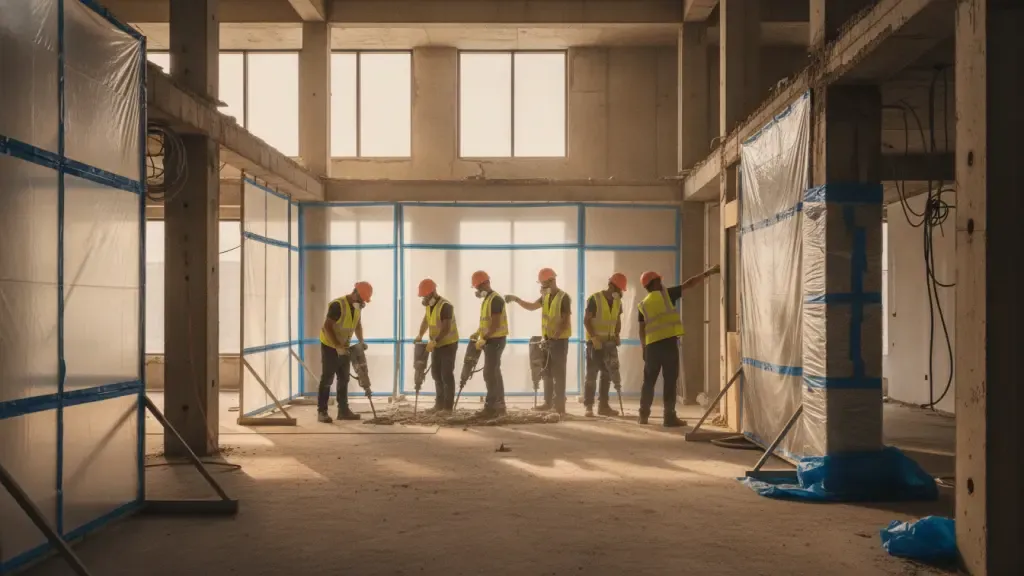
Commercial demolition is more than bringing down a building. In Georgia, the work may involve a complete teardown, a selective removal for renovation, an interior strip-out, exterior structural removal, or precision concrete work around retained construction. Each scope calls for a different sequence, different protection measures, and clear coordination before a crew mobilizes.
Talk with All Pro Demolition about your Georgia commercial demolition scope.
What does commercial demolition include?
Commercial demolition is the planned removal of part or all of a business, retail, office, institutional, or other commercial structure. The goal may be to clear a site, prepare a building for a new tenant, open space for a renovation, remove damaged elements, or create safe access for new mechanical, electrical, plumbing, or fire-protection work.
The phrase describes the project setting and coordination demands, not one single demolition method. A small office renovation and a full building teardown can both be commercial demolition, but their scopes, equipment, sequencing, and retained elements are very different.
- Complete demolition: Removing an entire structure and, when included in the approved scope, associated foundations or site features.
- Selective demolition: Removing identified walls, ceilings, floors, fixtures, building systems, or exterior elements while keeping the rest of the structure in service.
- Interior demolition: Clearing interior finishes, partitions, ceilings, flooring, fixtures, or specialty items while the exterior shell remains.
- Exterior or structural demolition: Removing a building face, wall, addition, or other exterior component while protecting the portions that remain.
- Specialty demolition: Handling an unusual, constrained, or precision removal that needs a carefully controlled approach.
- Concrete cutting and coring: Creating planned openings or removing concrete elements to support new utilities, equipment, or construction changes.
Some projects combine several of these categories. For example, a tenant improvement may require an interior strip-out, selective exterior work, and core drilling for new utility routes. Defining the boundaries early helps the owner, general contractor, and demolition subcontractor coordinate the work without relying on assumptions.
How is commercial demolition different from residential demolition?
The difference is not simply building size. Commercial work often takes place in an active business district, an occupied facility, a multi-trade construction project, or a structure that will be substantially altered rather than simply removed. That creates more interfaces to manage.
- More stakeholders: Owners, property managers, general contractors, tenants, engineers, environmental consultants, utility providers, and multiple trades may all have responsibilities.
- More retained work: Selective demolition must protect structural elements, fire separations, utilities, finishes, and equipment that are not part of the removal scope.
- More scheduling constraints: Noise, dust, access, loading, egress, and delivery routes may need to be coordinated with neighboring or ongoing operations.
- More documentation: Drawings, surveys, plans, hazard information, work-hour limits, disposal requirements, and closeout expectations should be aligned before work starts.
- More trade coordination: Demolition may need to occur in a defined sequence so that electricians, plumbers, HVAC crews, concrete contractors, and other teams can begin their work safely.
A commercial demolition plan should therefore answer two questions: what is being removed, and what must remain protected and usable? That second question is where many avoidable problems begin.
What are the main types of commercial demolition?
Complete building demolition
A complete demolition removes a structure that is no longer intended to remain. The scope may include the building, selected slabs, foundations, exterior improvements, or other site elements, but those items should be specifically identified. A complete teardown still requires planning for utilities, access, equipment movement, debris handling, neighboring property, and the final condition of the site.
Selective and partial demolition
Selective demolition removes only defined portions of a building. It is common during renovations, additions, tenant improvements, and changes to building use. The demolition team must understand the retained structure and the limits of the work. A wall scheduled for removal may connect to a ceiling, floor, fire-rated assembly, utility route, or weather barrier that another trade needs to preserve.
Interior commercial demolition
Interior work can include ceiling, flooring, partition, fixture, and specialty demolition. The exterior shell may remain while the interior is prepared for a new layout. Protection of entrances, elevators, adjacent tenants, retained finishes, and shared building systems can be as important as the removal itself.
For a deeper look at commercial strip-outs, see All Pro Demolition's Georgia interior demolition guide. That page addresses the narrower interior-specific planning and execution questions that are outside this broad overview.
Exterior and specialty demolition
Exterior demolition can range from removing a wall or building addition to taking down a complete structure. Specialty demolition may involve a constrained location, an unusual material, a structure with sensitive retained elements, or a removal that must be completed in a carefully controlled order. All Pro Demolition provides exterior demolition services in Georgia for scopes that require exterior, surgical, specialty, or wrecking work.
Concrete cutting, coring, and GPR-supported work
Not every commercial demolition project is about removing a whole room or building. A renovation may need a controlled opening through a wall or slab for utilities. Core drilling and GPR scanning can support that work by helping the project team understand what is inside the concrete before drilling. See the core drilling and GPR scanning service when a commercial scope includes planned penetrations.
What is the typical commercial demolition process?
The exact sequence varies by site, but a well-coordinated project generally moves through these stages.
- Define the scope: Identify the areas, materials, assemblies, equipment, and site features to be removed. Mark exclusions and retained elements just as clearly.
- Review the site: Examine access, building condition, neighboring structures, working room, loading areas, floor capacity, egress, and the location of active operations.
- Coordinate surveys and hazards: Confirm the available building information and identify environmental or structural conditions that require additional review before work begins.
- Confirm utilities and responsibilities: Clarify which services must be disconnected, isolated, protected, or maintained. Put responsibility for each item in writing.
- Set the sequence: Decide how protection, removals, equipment access, debris loadout, and trade handoffs will occur. The safest route is not always the fastest-looking route.
- Establish controls: Set work zones, access points, barriers, dust and debris controls, required personal protective equipment, communication procedures, and emergency expectations.
- Perform the removal: Use the method and equipment suited to the approved scope. Skilled crews should stop and escalate when field conditions do not match the plan.
- Sort and remove debris: Keep the site organized and route materials according to the project requirements. Concrete, metal, wood, and mixed debris may have different handling paths.
- Inspect the result: Confirm that the agreed removals are complete, retained elements are protected, access is safe, and the area is ready for the next phase.
This process is intentionally high level. A building-specific project plan may need engineering, environmental, utility, permitting, and disposal details that depend on the site and jurisdiction. For that narrower planning question, use the Georgia building demolition project guide.
What should contractors define before mobilization?
A clear scope protects the schedule and helps prevent disputes. Before mobilization, the project team should align on:
- The exact rooms, floors, elevations, structures, and site features included in the removal.
- The elements that must remain, including structural members, walls, finishes, equipment, utilities, and weather protection.
- The required finish condition, such as broom-clean, ready for layout, exposed structure, capped services, or another documented handoff.
- Access routes, staging areas, loading locations, equipment limitations, working hours, and building occupancy restrictions.
- Who supplies drawings, surveys, utility information, environmental reports, permits, shutdowns, and approvals.
- How change conditions will be documented when field conditions differ from the drawings or the agreed scope.
Photos, marked-up plans, a site walk, and a written scope can resolve questions that a short line item cannot. If the work is part of a larger construction schedule, include the required handoff dates and the next trade's access needs.
What are the core safety controls?
Commercial demolition hazards change with the building, materials, equipment, and sequence. A safe project starts with a site-specific plan and a crew that understands the limits of the work. Core controls commonly include the following.
Protect people from falling materials and unstable conditions
Demolition can change the way loads move through a structure. Crews need controlled work zones, exclusion areas, stable access, and a sequence that does not leave unsupported elements in an unsafe condition. Do not treat a partially removed wall, ceiling, or connection as harmless simply because it appears small.
Control utilities before removal
Live electrical, gas, water, fire protection, data, and mechanical systems can create serious hazards. The responsible parties should identify, isolate, lock out, or protect services before work begins, then verify the field condition. A drawing alone is not a substitute for coordination and confirmation at the site.
Manage dust, noise, and debris
Dust and falling debris can affect workers, occupants, neighboring businesses, and downstream trades. Use barriers, controlled access, housekeeping, appropriate respiratory and eye protection, and a removal method that fits the environment. Noise and vibration may also require work-hour coordination or protection of sensitive areas.
Use the right PPE and equipment
Hard hats, high-visibility clothing, eye protection, hearing protection, gloves, respiratory protection when required, and task-appropriate footwear are common parts of a demolition safety program. Equipment operators should be trained and authorized for the machinery and attachments they use. All Pro Demolition documents licensed heavy-machinery operators as part of its exterior demolition capabilities.
Plan for hazardous materials and regulated waste
Older commercial buildings can contain materials that require specialized identification, abatement, handling, or disposal. Do not disturb suspect materials based on appearance alone. Coordinate the appropriate survey and qualified environmental professionals before demolition when the building history or project conditions warrant it.
Georgia's Environmental Protection Division provides current information on asbestos notification requirements and project notifications. The exact requirements depend on the project, materials, and applicable rules. The demolition contractor, owner, general contractor, and environmental professionals should agree on responsibilities before mobilization. All Pro Demolition also maintains a separate overview of Georgia commercial demolition environmental and disposal rules.
How do you choose a demolition method?
The method should follow the structure, access, retained work, schedule, and risk controls, not the other way around. A project team may compare manual removal, mechanical demolition, selective demolition, specialty tools, concrete cutting, or a combination of methods.
- Manual removal may suit controlled interior or highly selective work where protecting adjacent elements is the priority.
- Mechanical demolition may improve production on a suitable site with adequate access, space, floor capacity, and exclusion controls.
- Selective demolition is appropriate when a defined part of the building must change while the retained structure remains usable.
- Concrete cutting and coring can create precise openings for new work when the project needs a controlled penetration rather than broad removal.
In practice, a commercial project may use several methods in sequence. The best choice is the one that meets the scope while controlling risk to people, retained property, utilities, schedule, and neighboring operations.
When should a Georgia contractor bring in a demolition specialist?
Bring in a demolition specialist early when the project has a tight sequence, retained construction, difficult access, embedded utilities, occupied surroundings, unusual materials, or a need for interior and exterior work from one coordinated subcontractor. Early input can help the general contractor identify scope gaps before they become field changes.
All Pro Demolition serves contractors, renovation companies, property developers, and commercial property owners throughout Georgia. Its service lines include interior demolition, exterior demolition, concrete cutting, core drilling, and GPR scanning. That combination can be useful when a renovation requires both removal and precision openings for new utilities.
For a contractor-selection checklist, see How to Vet Commercial Building Demolition Contractors. This article is focused on what commercial demolition includes and how the work is generally organized, not on ranking or comparing contractors.
Commercial demolition in Georgia: frequently asked questions
What is the difference between commercial and selective demolition?
Commercial demolition describes the business or commercial setting. Selective demolition describes the scope, meaning that only identified portions are removed while other parts remain. A commercial project can be selective, complete, interior, exterior, or a combination.
Does every commercial demolition project require the same permits or notifications?
No. Requirements depend on the structure, location, materials, scope, and jurisdiction. The project team should confirm applicable building, environmental, asbestos, utility, traffic, and disposal requirements before work begins rather than assuming that one project's approvals apply to another.
Can demolition and concrete cutting be part of the same project?
Yes. A renovation may require broad interior or exterior removal plus core drilling or other concrete cutting for new utilities. GPR scanning can help locate embedded features before planned drilling. The scopes should be coordinated so that demolition does not remove or damage the areas needed for the next trade.
What information should I send a demolition contractor?
Share the project address, drawings or photos, the areas to be removed, the elements that must remain, approximate schedule, access constraints, known utilities, building occupancy, prior environmental information, and the desired handoff condition. Even incomplete information helps the contractor identify what needs to be confirmed during a site walk.
How early should demolition be included in the construction schedule?
As early as practical. Demolition affects utility shutdowns, surveys, protection, permits, debris routes, trade access, and the start date for follow-on work. Early coordination gives the team time to resolve responsibility gaps before the crew arrives.