
Commercial Demolition Georgia: Environmental & Disposal Rules
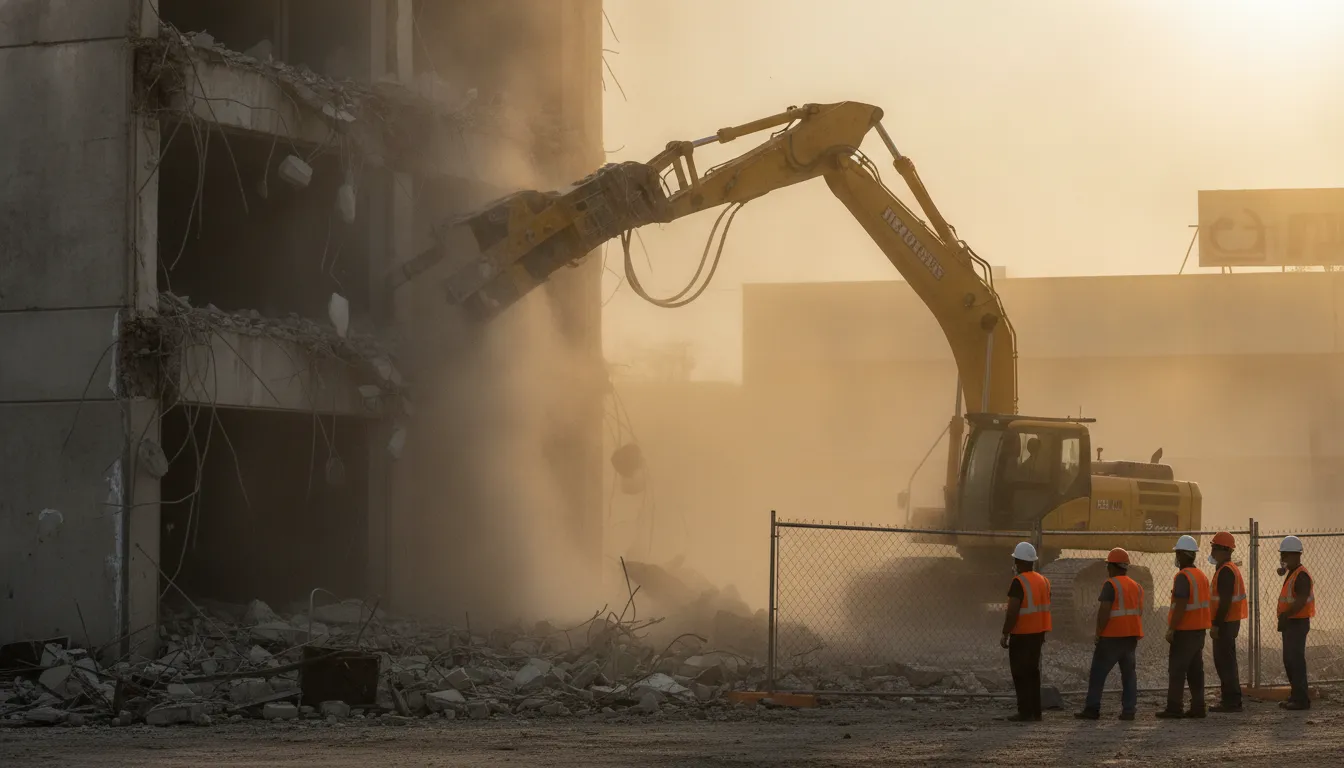
Commercial demolition is not simply a matter of taking down a structure and hauling away the debris. In Georgia, the work must be planned around environmental reviews, asbestos requirements, waste classification, local disposal rules, and worker-safety obligations. Missing one of these steps can delay a project or create avoidable compliance exposure for the owner and contractor.
For commercial demolition georgia projects, compliance begins before mobilization with a documented scope, required hazard surveys and notifications. An engineered work plan, and a disposal route that matches the material and the receiving facility's permit.
A qualified demolition partner should be able to coordinate these requirements with the physical work, rather than treating compliance as an afterthought. The process starts by establishing what the project involves, which approvals and inspections may apply, and how site conditions will shape the demolition plan.
Request a custom quote for your commercial demolition project in Georgia
What a Commercial Demolition in Georgia Involves Before Work Begins
A compliant commercial demolition project in Georgia begins well before equipment arrives on site. The owner, general contractor, and demolition contractor need a documented plan that accounts for the building's structure. The local jurisdiction's permit requirements, environmental obligations, waste handling, and worker protection. The exact process varies by municipality and project conditions, but the objective is consistent: identify risks early. Obtain the required approvals, and establish work practices that protect people and property.
Local permitting is usually the first formal checkpoint. The responsible contractor should confirm which city or county has jurisdiction, what demolition permit or related approvals are required. Whether inspections must be scheduled, and what documentation the authority expects before work starts. A permit review may also reveal requirements involving utility disconnects, traffic control, adjacent structures, erosion measures, or site restoration. These details should be resolved during planning rather than after mobilization.
Assessing the building and the site
Pre-demolition planning should document the structure, its surroundings, and the sequence of work. The team should identify load-bearing elements, occupied or adjacent areas, access points, overhead hazards, utilities, and conditions that could affect equipment or debris removal. For renovation and tenant-improvement work, a focused interior demolition in Georgia plan may be appropriate. Larger structural or site projects require a broader plan for controlled dismantling, equipment movement, and separation of materials.
Hazard identification is also part of the pre-work process. Commercial buildings may contain asbestos, lead-based coatings, regulated materials, or concealed conditions that are not visible during a basic walk-through. Georgia demolition planning must account for the environmental requirements administered through the Georgia Environmental Protection Division, as well as applicable federal requirements. Asbestos notification and abatement rules can apply to regulated demolition work even when the project team does not expect asbestos to be present. So the question should be addressed before the schedule is finalized.
Coordinating environmental, disposal, and safety requirements
The regulatory framework extends beyond the permit counter. Environmental requirements govern hazardous-material assessments and asbestos procedures. Solid-waste rules govern how construction and demolition debris is separated, transported, and received. Worker-safety requirements apply to the demolition operation itself, including planning, access, structural stability, and equipment use. These obligations overlap, which makes a single coordinated plan more reliable than treating each requirement as an isolated checklist.
For construction contractors and property developers, single-source accountability can simplify that coordination. All Pro Demolition combines interior and exterior demolition with in-house core drilling and GPR scanning, supported by licensed heavy machinery operators and a safety-first approach. That integrated model helps the project team align site information, sequencing, and field execution across Georgia before demolition begins.
Asbestos Rules Every Commercial Demolition in Georgia Must Follow
Asbestos compliance begins before equipment reaches the site. Under the federal National Emission Standard for Hazardous Air Pollutants (NESHAP). The Georgia Environmental Protection Division (EPD) requires notification for all regulated demolition projects, whether or not asbestos is ultimately found. A project should not be treated as exempt simply because the owner or contractor expects the building to be asbestos-free.
For regulatory purposes, demolition includes wrecking a facility or removing any load-supporting structural member, along with related handling. That definition can capture work that an owner informally describes as selective removal or interior renovation. The project team should confirm the scope early and determine whether the planned work falls within the regulated definition.
Inspect for friable and non-friable asbestos
A thorough asbestos inspection should be completed before demolition begins. The inspection needs to account for both friable and non-friable asbestos-containing materials (ACM). Including materials that may be hidden behind finishes, above ceilings, beneath flooring, around mechanical systems, or within other building components. Sampling and evaluation should be handled by qualified asbestos professionals who can document the material locations and the work practices required for removal.
Friable asbestos material is material containing more than 1% asbestos, as determined by Polarized Light Microscopy. That can be crumbled, pulverized, or reduced to powder by hand pressure when dry. Non-friable materials can also become regulated if demolition activities are likely to break them apart. Georgia EPD defines Regulated Asbestos-Containing Material (RACM) to include friable ACM and certain non-friable ACM. That grouping covers Category I non-friable ACM that has become friable. Plus Category II non-friable ACM with a high probability of becoming crumbled or reduced to powder during demolition.
Submit notice before project inception
The owner or responsible project party must submit written notice to the Georgia EPD Lead-Based Paint and Asbestos Program at least 10 working days before project inception. The Georgia EPD notes that Georgia Rule 391-3-14 refers to seven days, but the agency adopts the more protective federal NESHAP requirement of 10 working days. That timing should be built into the project schedule rather than treated as an administrative task to complete after mobilization.
Notice requirements apply even when the inspection does not identify asbestos. The notification gives regulators the information needed to track regulated demolition activity and helps establish a documented compliance record. Project teams should retain the submitted notice, inspection report, laboratory results, abatement records, and any required updates with the project file.
Abate RACM before demolition
All RACM must be abated from the building before demolition proceeds. Demolition work should not disturb, crush, or disperse regulated material while crews are removing structural elements. Abatement planning should identify the material, define containment and removal procedures, coordinate waste handling, and confirm that the work area is ready for demolition. This sequencing protects workers, occupants, neighboring properties, and the project from avoidable regulatory delays.
For the current notification requirements, definitions, and RACM provisions, review the Georgia EPD asbestos notification requirements. Because requirements can depend on the project scope and local conditions, commercial owners and general contractors should resolve asbestos questions with qualified professionals before authorizing demolition.
Environmental Remediation and Hazard Surveys Before Demolition
Pre-demolition characterization is a practical control measure, not an administrative formality. Before crews remove walls, floors, or slabs, the project team should identify materials and site conditions that could expose workers, delay production, or create compliance problems. Older commercial buildings may contain lead-based paint, asbestos-containing materials, mercury devices, mold, contaminated finishes, or other hazardous substances that are not apparent during a standard walkthrough. A qualified hazardous materials survey helps determine what is present, where it is located, and how it must be handled before demolition begins.
Lead-based paint deserves particular attention in older commercial properties. Sanding, cutting, scraping, or mechanically disturbing painted surfaces can create hazardous dust. The survey should document affected areas and inform the work method, containment measures, worker protection, waste handling, and clearance requirements that apply to the project. The same principle applies to other suspect materials. Sampling and laboratory analysis should be performed by appropriately qualified professionals when visual inspection cannot establish the material's identity.
Survey the structure and the site, not just the visible finishes
A complete hazard review extends beyond the building interior. Project teams should confirm the location of underground utilities, abandoned lines, fuel systems, tanks. Pits, voids, and other buried or undocumented structures before excavation, slab removal, or foundation demolition. Utility records are useful, but they may not reflect later alterations or undocumented work. Coordination with utility owners, review of available drawings, field verification. And a defined approach for unknown conditions reduce the risk of striking an active service or destabilizing adjacent areas.
Ground-penetrating radar can add valuable information before a floor or slab demolition. GPR scanning helps map embedded rebar, conduits, post-tensioning elements, and other subsurface features without immediately breaking into the concrete. The findings can guide saw cuts, core locations, equipment selection, exclusion zones, and sequencing. GPR does not replace utility-owner coordination or every required investigation, but it gives the demolition team a clearer picture of what is inside and beneath the work area.
For projects that require both structural removal and subsurface investigation, core drilling and GPR scanning can be coordinated with demolition planning through one accountable service provider. This integrated approach helps align survey findings, access requirements, concrete cutting, and removal methods before production starts.
Proper characterization protects workers and supports an orderly, compliant project. It also gives the general contractor and property owner a documented basis for responding to unexpected materials or conditions instead of discovering them after demolition is underway. Across Georgia, a safety-first plan supported by qualified surveys, licensed heavy machinery operators, and disciplined site preparation is central to responsible commercial demolition.
What Disposal Regulations Apply to Commercial Demolition in Georgia?
Disposal planning is a compliance requirement, not an administrative detail to address after a commercial structure is down. In Georgia, construction and demolition (C&D) waste generally consists of building materials and rubble generated during demolition operations on commercial buildings. The category can include asbestos-containing waste, wood, bricks, metal, concrete, and wall board. Each material stream should be identified during pre-demolition planning so the project team can determine where it may legally go and what documentation is required.
What qualifies as construction and demolition waste
Georgia's solid waste rules describe C&D waste by its source and material character. It is associated with construction, renovation, repair, or demolition activity, rather than ordinary household refuse. A commercial demolition plan should account for the full range of materials expected from the work. Including mixed rubble and materials that may be separated for recycling or other approved handling.
The definition does not make every material automatically suitable for the same disposal route. A contractor should evaluate materials before loading containers, especially where demolition may disturb regulated asbestos-containing material, coatings, treated products, chemicals, or other potentially hazardous substances. For projects involving exterior demolition services, the site plan should also address staging areas, container placement, truck access, dust control, and protection of adjacent properties.
Use a permitted C&D landfill for eligible waste
Georgia's solid waste requirements provide that C&D waste must be accepted by a permitted construction and demolition landfill. That means the project team should confirm the receiving facility's permit status and acceptance criteria before hauling begins. The facility may require information about the source of the waste, the expected material mix, and whether any loads contain restricted materials.
Good documentation connects the material leaving the site with the facility receiving it. Keep disposal receipts, weight tickets, load records, and any waste profiles or facility correspondence with the project file. These records help the owner and contractor demonstrate that debris was routed through an approved channel. They also make it easier to resolve a rejected load or investigate a material issue without relying on incomplete recollections.
Match each waste stream to its handling route
A practical way to keep a load compliant is to sort material by its required handling. Common groups to separate during commercial demolition include:
Construction and demolition waste such as concrete, brick, metal, wood, and wallboard, which is acceptable at a permitted C&D landfill.
Asbestos-containing waste including regulated ACM and abatement debris, which must be abated and disposed under the applicable asbestos requirements rather than mixed into ordinary C&D debris.
Hazardous waste such as solvents, chemicals, unknown drums, or contaminated soil, which must be separately characterized and disposed under Georgia Rule 391-3-11 and is prohibited from solid-waste disposal facilities.
Recyclable or approved materials such as clean metal and some concrete, which may be directed to a permitted recycling or approved handling channel.
Hazardous waste must be separated from ordinary demolition debris
Hazardous waste, as defined under Georgia Rule 391-3-11, is prohibited from disposal at solid-waste disposal facilities. It cannot simply be mixed into a C&D load because it was discovered after demolition started. Suspect materials must be separately characterized and directed to an appropriate disposal process before they are transported.
This distinction is important when a building contains unknown drums, solvents, contaminated soil, chemicals, or materials with characteristics that may make them hazardous. If testing or professional evaluation identifies hazardous waste, stop the affected handling activity and coordinate the required packaging, transport, and disposal. Do not ask a landfill to accept a load that contains material outside its permit or acceptance conditions.
Check local ordinances before relying on state rules
Georgia's statewide solid waste rules do not eliminate local requirements. Local solid waste regulations take precedence. State rules in Rule 511-3-4 apply in a county or municipality where no local solid waste regulations are in effect. Before mobilization, confirm the requirements of the city and county where the commercial demolition will occur, including any local provisions for haulers, recycling, disposal documentation, or restricted materials.
The controlling sources should be reviewed directly: Georgia Rule 391-3-4 addresses construction and demolition waste and disposal facilities, while Rule 511-3-4 addresses the role of local solid waste regulations. A compliant disposal plan accounts for both the material's classification and the jurisdiction's applicable rules.
OSHA Safety Standards Governing Demolition Operations
Demolition work is governed by the full set of OSHA construction requirements, not only the rules written specifically for dismantling structures. At a commercial site, the applicable requirements in 29 CFR Part 1926 remain in force alongside Subpart T, OSHA's demolition standard. That combination covers planning, worker access, structural stability, material removal, equipment use, and site control. The project scope and sequence should be established before crews, machinery, or subcontractors begin work.
OSHA identifies preparatory operations under 1926.850(a) as the source of approximately three-quarters of demolition citations. Within that group, the engineering survey required by 1926.850(a)(1) accounts for more than half of the citations identified by OSHA. The survey is therefore more than a paperwork step. It is the primary structural review used to determine whether the building is safe to enter and how the demolition can proceed without exposing workers to an uncontrolled collapse.
Complete and document the engineering survey before work starts. A competent person should evaluate the structure, adjacent buildings, floors, roofs, walls, utilities, and other conditions that could affect stability. The survey should identify hazards and inform the written demolition sequence. No demolition activity should begin until this preparatory review is complete and its findings have been addressed.
Establish safe access and movement through the work area. Subpart T addresses stairs, passageways, and ladders so workers can reach their work areas without relying on unstable or improvised routes. As portions of the structure are removed, access paths must be maintained, protected, and revised as conditions change. The plan should also account for restricted areas and falling-material hazards.
Control the movement of debris and materials. Chutes and other removal methods must be arranged so material does not fall unpredictably or strike workers below. Floor openings require controlled removal procedures and appropriate protection. The work sequence should keep people away from drop zones and prevent debris from accumulating where it could overload a floor or obstruct an escape route.
Remove walls, masonry, and chimneys in a controlled sequence. Structural components cannot be taken out in a way that transfers unplanned loads to remaining portions of the building. Masonry and chimney work requires attention to falling materials, weakened connections, and the location of workers and equipment. The competent person should stop and reassess the operation when site conditions differ from the survey or planned sequence.
Use mechanical demolition equipment with defined controls. Mechanical demolition introduces swing-radius, collapse, debris, and equipment-stability hazards. Operators and ground personnel need clear separation, communication, and exclusion zones appropriate to the equipment and structure. Equipment selection and operating methods should match the engineering survey, the material being removed, and the remaining structural condition.
Review the plan throughout the project. Demolition changes the building after every cut, pull, lift, and removal. Supervisors should monitor structural conditions, weather, utilities, access routes, debris levels, and worker exposure as the sequence advances. If an unexpected condition appears, work should pause until the hazard is evaluated and controls are updated.
These practices are part of a broader compliance program that includes competent supervision, documented planning, training, personal protective equipment, and coordination with other trades. OSHA's demolition standards and related construction rules should be reviewed directly at osha.gov, especially when a project involves unusual structural conditions or multiple demolition methods.
For owners and general contractors, documentation is also a practical way to evaluate a bidder's readiness. The criteria discussed in this guide to commercial building demolition contractors can help teams assess whether a contractor can explain its survey process, work sequence, supervision, and safety controls before mobilization.
How to Vet a Compliant Commercial Demolition Contractor in Georgia
Choosing a demolition contractor for a commercial project requires more than confirming equipment availability and an estimated schedule. Before work begins, the contractor should be able to demonstrate that its licensing, insurance. Safety planning, environmental documentation, and disposal process are appropriate for the project scope and location. These checks are especially important when structural demolition, hazardous materials, utility conflicts, or multiple subcontractors are involved.
Start by requesting current licensing and insurance documentation, then confirm that the legal entity named in the documents matches the entity signing the contract. Ask for certificates of insurance and verify that the coverage is current with the issuing agent. The contractor should also explain which responsibilities it performs directly and which, if any, it assigns to qualified specialty partners.
Ask for a project-specific compliance file
A credible contractor should be prepared to identify the inspections and notifications required for the site rather than offering a generic assurance that the project is compliant. Depending on the building and scope, request documentation showing that asbestos and other environmental surveys were addressed. Required agency or local notifications were made, and permits were obtained or coordinated before mobilization. The records should identify the property, project scope, responsible parties, and relevant dates.
Documentation should continue through the final load leaving the site. Ask how the contractor will classify construction and demolition materials, where each material stream will go, and how disposal records will be maintained. For ordinary construction and demolition waste, the receiving facility should be permitted to accept that material. Potentially hazardous waste must be handled separately and should not be sent to a facility that is not authorized to receive it. Request copies of weight tickets, waste profiles, recycling records, and disposal manifests when those documents apply.
It is also reasonable to ask who will maintain the project record and how quickly documentation can be supplied to the general contractor, owner, or regulator. Clear ownership prevents missing paperwork when a project changes hands or an inspection occurs after demolition has started.
Verify safety planning and field competence
Before approving the contractor, ask whether an engineering survey has been completed and where it is maintained. The survey should inform the demolition sequence and identify structural conditions that could affect workers, adjacent property, utilities, or the public. Request the contractor's written work plan, site-specific hazard controls, and evidence that crew members receive applicable OSHA training for their assigned duties. Licensed heavy machinery operators and a documented safety-first process are important indicators, but they should support, not replace, project-specific planning.
Finally, evaluate whether one accountable team can coordinate the connected work. A single-source contractor that self-performs demolition, core drilling, and GPR scanning can reduce handoff risk between crews and keep field findings, safety decisions, and compliance records connected. This is particularly useful when scanning or precision cutting must happen before interior removal. You can review additional selection criteria in commercial building demolition contractors and see the scope of interior demolition in Georgia before requesting project-specific documentation.
How All Pro Demolition Handles Environmental Compliance Across Georgia
Commercial demolition compliance depends on more than removing a structure safely. The project also requires disciplined planning, clear responsibility, controlled site operations, and proper handling of materials from the first survey through final disposal. All Pro Demolition supports that process as a Georgia-based, family-owned contractor serving construction contractors, renovation companies, developers, and commercial property owners statewide.
Founded by Omar Maldonado, the company brings more than 15 years of demolition experience to projects across Georgia. Its operating model combines interior and exterior demolition with core drilling and GPR scanning under one accountable team. That integrated structure gives the client a single point of responsibility for coordinating site preparation. Structural work, technical scanning, and jobsite safety instead of trying to manage several specialized subcontractors independently.
One accountable team for planning and field execution
Environmental and safety requirements often overlap. A demolition plan may depend on what a survey identifies, where utilities or structural elements are located, how materials will be separated, and which disposal pathway is appropriate. When those activities are divided among unrelated providers, important details can be delayed, duplicated, or left between scopes. All Pro Demolition keeps the related work coordinated so field conditions can be communicated directly to the team responsible for the next operation.
GPR scanning and core drilling capabilities are available in-house alongside demolition services. This allows the team to investigate concrete and subsurface conditions before cutting, drilling, or undertaking more extensive removal. For exterior work, clients can review the company's exterior demolition services as part of a broader project plan rather than treating demolition and technical preparation as disconnected assignments.
Safety and documentation remain part of the scope
All Pro Demolition uses licensed heavy machinery operators and follows a safety-first approach on active jobsites. Operators, supervisors, and project stakeholders need a shared understanding of work limits, access conditions, sequencing, hazards, and material handling expectations. Maintaining that alignment helps reduce coordination gaps while supporting the site controls required for commercial construction work.
The company does not present compliance as a one-time checkbox. Requirements must be considered throughout the project, including preparation, controlled removal, separation of materials, loading, and site closeout. The exact obligations depend on the building, materials, location, and scope, so project-specific review remains essential. Clients planning commercial demolition in Georgia can contact All Pro Demolition to discuss the site and request a custom project assessment without relying on assumptions from a different property.
Get a project-specific quote and compliance plan for commercial demolition in Georgia
Frequently Asked Questions
Does commercial demolition in Georgia require a permit?
Usually, commercial demolition requires approvals from the local city or county, but the exact permit, inspection, and notification requirements depend on the jurisdiction and project scope. Confirm the requirements with the authority having jurisdiction before mobilizing. A demolition notification may also be required under federal asbestos rules even when asbestos is not present. Georgia EPD explains the NESHAP notification requirement.
What environmental review is needed before a commercial demolition project?
Start with a documented hazardous-materials assessment, including an asbestos inspection and a review for lead-based paint or other regulated materials where applicable. If regulated asbestos-containing material is present, it must be addressed before demolition. Planning should also identify utilities, structural hazards, containment needs, and the proper disposal route.
Are there specific disposal regulations for commercial demolition waste in Georgia?
Yes. Construction and demolition waste includes materials such as concrete, brick, metal, wood, wallboard, and asbestos-containing waste. C&D waste must go to a permitted C&D landfill, while hazardous waste regulated under Georgia Rule 391-3-11 is prohibited from disposal at solid-waste facilities. Local solid-waste rules take precedence where a city or county has its own ordinance. See Georgia's C&D waste rules and state solid-waste rules.
What asbestos notification is required for commercial demolition in Georgia?
NESHAP requires notification for all regulated demolition projects, whether or not asbestos is present. Georgia EPD states that notice should be submitted to its Lead-Based Paint and Asbestos Program at least 10 working days before project inception. All regulated asbestos-containing material must be abated before demolition begins. Requirements can vary by material and scope, so retain qualified asbestos professionals for inspection and abatement decisions.
Ready to Plan a Compliant Commercial Demolition?
A clear project plan can help your team address environmental requirements, disposal logistics, and site safety before work begins. For a coordinated review of your commercial demolition scope anywhere in Georgia, request a custom quote from All Pro Demolition. Share your project details through the contact form so the next steps can be evaluated against the building, site, and planned work.