
Concrete Core Drilling Companies: Georgia Guide
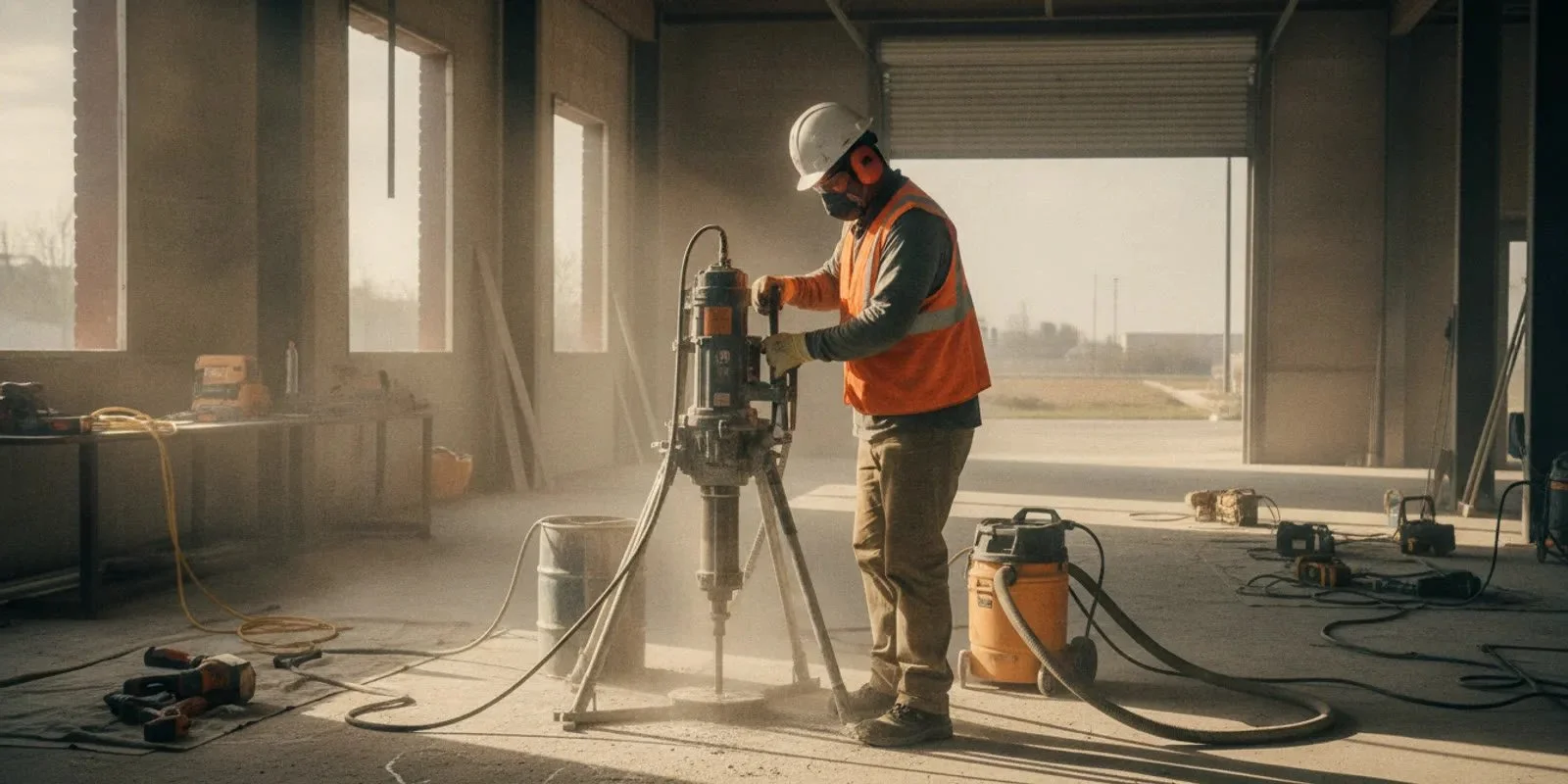
Concrete core drilling companies are not interchangeable just because each one owns a diamond drill. On a Georgia job, the useful comparison is whether two written proposals cover the same openings, the same access, and the same site controls. A low number that skips scanning, slurry, or a second visit is not the same bid as a higher number that names those items.
Request a project-specific quote
What should you compare among concrete core drilling companies?
Start with the opening, not the company brochure. Core drilling makes a round hole through concrete, CMU, or masonry. One pipe sleeve in an open slab is a different job from six penetrations in an occupied floor, even when both are called core drilling.
Send every company the same short packet. Include the city, the structure, the number of holes, the diameter and depth if you know them, and the purpose of each opening. Add photos or a marked plan. If thickness, rebar, or access is unknown, say that in the packet. Hidden unknowns make two prices impossible to compare.
Then score the replies on the same five points:
Scope: Which holes, floors, and diameters are priced? What is excluded?
Method: Does the plan fit a slab, a wall, a ceiling, or an elevated deck?
Scanning: Is GPR included, optional, or not offered?
Site control: Who handles water, slurry, dust, and nearby finishes?
Schedule: One mobilization, or a return trip if the area is not ready?
All Pro Demolition drills concrete, CMU, and masonry, including slab-on-grade and elevated slabs, and can scan before the bit goes in. That pairing matters when the comparison is about a penetration plan, not a standalone hole. Use the core drilling and GPR scanning service page to see the work the quote should describe.
How do Georgia company types change the bid?
An Atlanta search for this work does not return one kind of vendor. It returns local specialists, full cutting shops, and out-of-area crews. Treat the category as a scope question. Do not treat a brand name as proof that the bid matches your hole.
Company type, what the bid usually covers, and the question to ask:
Core-drilling specialist: Round penetrations, often with a scan line — Who patches, saws, or hauls broken concrete?
Cutting and coring shop: Cores plus slab, wall, or wire sawing — Is the core a separate line, or buried in a cutting total?
Cutting plus removal crew: Drilling, breaking, and haul-off — Where does drilling stop and demolition start?
Regional or out-of-state crew: A crew that can travel for a large package — Is mobilization priced for this Georgia site and date?
Public pages show the split. Dixie Concrete Cutting in College Park lists GPR scanning, round cores in walls, slabs, and ceilings, several sawing methods, and breaking and removal. East GA Cutting and Coring in Augusta lists core drilling beside hand, slab, and wall sawing, and says it is available around the clock in that market. A Phoenix core-drilling page or a Birmingham coring page can rank in the same search and still be the wrong crew for a Georgia mobilization.
Match the vendor to the opening. If the job is only round penetrations, do not pay for a sawing package you will not use. If the job also needs a door opening or a slab removal, say so. A cutting company and a drilling company should not be scored as if they priced the same drawing.
Geography belongs on the score sheet too. A College Park shop and an Augusta shop can both core concrete and still be a poor fit for a site hours away if mobilization is vague. Ask which yard the crew leaves from, whether the date is a dedicated visit, and what a second trip costs. All Pro Demolition works across Georgia, so a statewide crew should still name the site city and the access window in the proposal.
Which quote lines make two bids comparable?
A comparable quote names the work. Ask for the count and approximate size of the cores, the material, the thickness assumption, and the floor or wall. Ask for setup, mobilization, work hours, water or slurry control, and cleanup limits. If scanning or layout is in the price, it should be its own line.
Read the exclusions with the same care. A core price often leaves out engineering review, permits, utility relocation, patching, pour-back, traffic control, after-hours work, and holes that are not on the list. Those items are not free add-ons. If you need them, name the trade that will do them.
Two numbers can describe different jobs. One may assume a short, open slab and a single visit. The other may assume a occupied floor, a scan, and a tight window. The lower figure is not the better value if a required task has no owner. Split optional work so you can drop it without rewriting the whole bid.
Also ask what happens when the field differs from the packet. Thickness, a moved location, or a site that is not ready should trigger a written note before extra work starts. You want to know who calls, what they document, and who can approve the change.
Watch for bundled language. "Cores as needed" and "drilling included" hide the count. Ask for a quantity, a diameter range, and a thickness note you can set beside the other bids. If one company prices eight holes and another prices a lump sum, you do not have two prices yet. You have one price and one estimate that still needs a scope.
How should you check scanning, access, and water control?
Do not assume a scan is included because a homepage mentions GPR. Ask whether this proposal scans the planned holes, what the scan is meant to find, and who may approve a moved location. A scan can show likely rebar, conduits, or voids. It is not a promise that every embedded item will appear.
All Pro Demolition uses GPR to look for utilities and a safer drilling location before coring concrete or masonry. For the limits of that step, read how GPR scanning supports concrete cutting. The comparison question is simple: does this bid say what will be checked before the drill starts?
Access changes the crew you should hire. Note the floor, the path for the rig, staging room, and whether the area is occupied. "Three holes in a new slab" is not enough. Say whether the crew works from above, whether other trades are in the bay, and when the area will be released.
Wet coring needs a water plan. Ask where slurry goes, who protects finished floors, and who cleans the zone. If the bid is silent, the price may assume an open site with a drain nearby. On an occupied floor, also ask how the crew isolates the bay and where the vacuum or containment sits. The Concrete Sawing and Drilling Association publishes cutting and drilling safety guidance that project teams can use as background. Your site rules still control the work.
How do you run a fair side-by-side review?
Use one packet and one score sheet. A six-hole tenant job shows the difference. Company A sends one total and says the work includes drilling. Company B lists each location, states the diameters and access it assumed, prices scanning apart, and says patching is excluded. Company B is easier to judge, even when its total is higher.
Confirm each quote prices the same holes, floors, sizes, and access.
Mark scanning, layout, slurry control, cleanup, and patching as included, excluded, or optional.
Note the thickness assumption and what a different thickness would change.
Name who approves layout, who releases the floor, and who approves a change.
Compare the work window, the mobilization count, and what delays the start.
Get any open item rewritten before you approve the proposal.
Ask each firm to include, exclude, or option every blank line. A verbal "we will handle it" is not a line you can compare. Written answers also show whether the estimator understood the drawing.
Keep this review separate from choosing a sawing contractor. Sawing and coring share crews on some sites, but the buying question is different. If the opening is a straight cut rather than a round core, use how to choose a concrete sawing contractor in Georgia instead of forcing that decision into this score sheet.
When should the core crew be separate from other concrete work?
Say what else is happening around the holes. A core made before a slab is removed is a different visit from a core made after finishes are in place. Tell each company whether sawing, demolition, or a new installation is planned, and which one happens first.
If you still need to pick the opening method, that decision belongs in how to match a concrete drilling method to the structure. This article assumes you already need round penetrations and are choosing a company to drill them.
Define the edges of the work. Patching and pour-back are often a later trade. Debris haul-off may sit with demolition. If another contractor will handle interior demolition beside the cores, write down who protects the slab, who owns the slurry, and who leaves the opening ready for the next trade.
For a larger Georgia scope, the short guide to core drilling for Georgia contractors covers the service itself. Use it for background. Use the score sheet here to compare the companies that would do the holes.
What should you send before the work day?
You do not need a finished drawing set. Send what you have and label the gaps. A clear packet produces a clearer exclusion list, which is what makes the bids comparable.
City, site type, and whether the space is occupied or an active build.
Hole count, approximate diameter and depth, and slab, wall, or elevated deck.
Marked plans, photos, room names, or grid lines for each location.
Known thickness or material, plus the source of that note.
Access path, floor, staging limits, work hours, and site rules.
Whether you want scanning, layout help, slurry control, cleanup, or restoration.
The date window and the person who can approve a change.
After you pick a company, reconfirm the locations against the latest marks. Make sure the person who can move a hole will be reachable. Walk the rig path and the staging spot. Agree again on who isolates the zone and who manages water. If the plan changed after pricing, send the revision before the crew rolls.
If the site does not match the quote, stop and write down the difference. Name the contact, the new condition, and the approval needed. That pause is cheaper than discovering mid-hole that two companies priced two different jobs.
Frequently asked questions
How many concrete core drilling companies should I contact?
Contact enough firms to see a real spread, usually two or three when the holes are simple and more when access or the schedule is tight. Give each the same packet. Compare written assumptions, not a one-line price.
Should scanning be inside every core drilling quote?
No. Ask if this slab or wall needs a scan, what the scan is meant to check, and whether that work is included or optional. Do not treat a general GPR mention on a homepage as a line in your bid.
Can I compare bids if I do not know the slab thickness?
Yes, if every bid states the thickness it assumed. Ask what changes if the slab is thicker, and who will verify the number before drilling. An unknown that is written down is safer than an unknown that is priced away.
Does a core drilling price include patching?
Usually no. Ask whether patching, pour-back, or finish repair is included, excluded, or optional. If another trade will close the hole, write down the handoff and the finish they must meet.
What if the site is not ready on the scheduled day?
Confirm whether the price is one mobilization. If the floor is blocked or the layout is still open, ask what a return trip costs before you send the crew home. Put that answer in the same email as the approval.
