
Concrete Cutting Company in Georgia: What a Quote Should Include
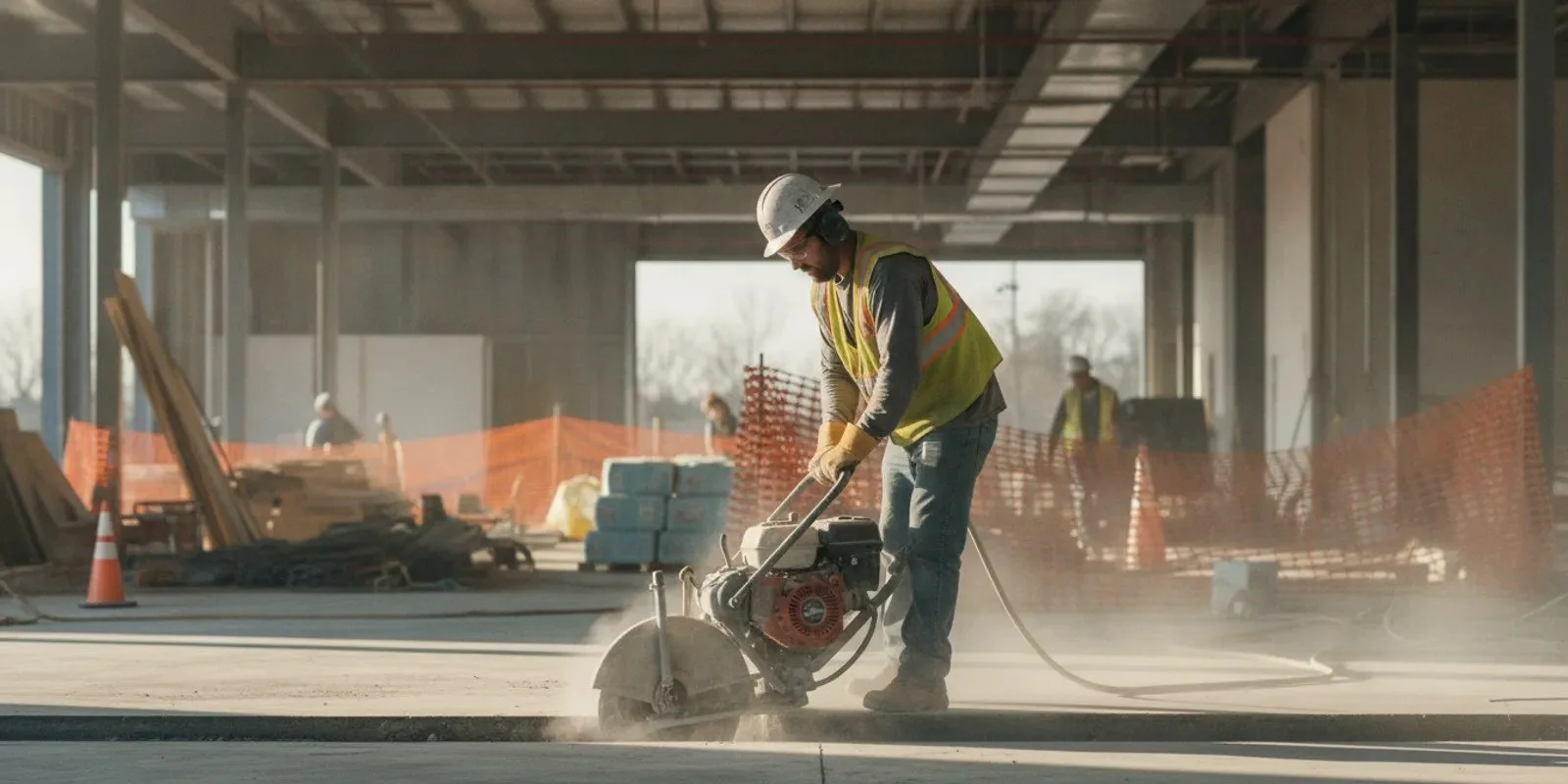
A concrete cutting company quote is useful only when it describes the same work your project team expects to receive. Before comparing totals, define the cut locations, dimensions, access, site conditions, and responsibilities in writing. This guide shows Georgia contractors, renovation teams, developers, and property owners what to ask for so a quote is easier to review and schedule.
Why should a concrete cutting quote be specific?
A quote is more than a price. It is a record of how the provider understands the requested work. When the requested scope is vague, two proposals may describe different quantities, assumptions, and responsibilities. A lower total may leave out a task you expected; a higher total may include work that another proposal excludes.
That does not mean every proposal needs to be long. It needs enough detail to make the work identifiable and to show where responsibility changes hands. For a straightforward opening, that may be a concise description and a marked plan. For a larger renovation or a sequence of cuts, the proposal may need separate locations, quantities, access notes, and timing assumptions.
Use the quote review to catch differences before work is scheduled. If a drawing, field condition, or project instruction changes, ask how the change will be documented and priced before treating the original total as final. This keeps the decision grounded in comparable scope rather than a single number.
What information should a request for a quote include?
Start with the information that lets a concrete cutting company understand what is being changed and where. A short request can include a project contact, site address, desired work window, and a clear description of the opening or cut. Add drawings, photographs, or marked-up plans when they help identify the location.
Project and site: Identify the project, site address, building or area, and the person who can answer field questions.
Purpose and scope: State what the cut is meant to accomplish, such as an opening, a slab section, or a route through a concrete element. Do not assume a brief label explains the complete work.
Location: Mark each cut on a plan or photograph. Give the floor, room, grid, elevation, or another location reference the crew can recognize.
Dimensions and quantity: Provide the requested length, width, depth, diameter, or count as applicable. Identify whether dimensions are approximate or confirmed.
Material and known conditions: Share what is known about the concrete, its thickness, reinforcement, finishes, and the surrounding construction. Mark unknowns as unknown rather than guessing.
Access and work area: Describe entry routes, available working space, operating hours, occupied areas, and any site rules that may affect access.
Related work and handoffs: Explain who is responsible for preparation, locating or protecting nearby systems, removal of cut material, cleanup, and follow-on repair or installation.
Schedule: Give the preferred date or project sequence, any required work windows, and dependencies that could prevent the area from being ready.
Include the best available information, but distinguish confirmed facts from estimates. For example, “slab thickness shown as 8 inches on drawing A-4; field verification pending” is more useful than presenting a drawing dimension as a measured condition. That distinction lets the provider identify what the quote depends on.
For a structured request, use the scope and site-condition prompts in this Georgia concrete cutting planning guide. The aim here is narrower: carry the relevant facts into a quote that can be reviewed and compared.
How should the quoted work be described?
Look for language that identifies the work area and the result requested, not just a general label such as “concrete cutting.” The description should make it possible to connect each quoted task to a plan, location, or written instruction. If there are multiple cuts, separate them by location or type so a missing item is visible.
Ask whether the proposal defines the intended limits of each cut and the basis for the dimensions. Is the work based on a drawing, a field measurement, or an estimate from photographs? Does the quote state whether dimensions are approximate? If the actual conditions differ, how will the parties agree on the change before proceeding?
It can also help to separate the cut from adjacent tasks. “Cut an opening” does not automatically explain who removes the resulting piece, handles debris, protects adjacent finishes, or completes any later patching. A quote should state what is included and what is assigned to others. If the project needs cutting plus another specialty task, note whether those tasks are included in one proposal or handled separately.
Different cutting approaches suit different situations, and this article is not a substitute for a method-specific scope. For a comparison of sawing approaches and planning questions, see the Georgia slab sawing guide. For a broader explanation of how cutting providers are compared, refer to this Georgia guide to concrete cutting companies; keep the present review focused on what the actual proposal commits to deliver.
Which quote line items and boundaries deserve attention?
Ask the provider to identify the work included in its price and any assumptions that could change it. The exact items vary by project. The point is to make the proposal’s boundaries explicit, not to expect every quote to use the same template.
Mobilization and setup: Is travel, equipment setup, or a return visit part of the quoted work? What conditions does the price assume on arrival?
Cutting quantity: Does the price cover each identified cut and the stated dimensions? Are extra cuts, deeper work, or changed dimensions outside the current scope?
Site preparation: Who clears the work area, provides access, and protects nearby surfaces or operations?
Water, dust, and slurry arrangements: What controls or collection responsibilities are included, if relevant to the proposed method and site? Which party handles any required site-specific disposal arrangements?
Removal and handling: Does the proposal include breaking out, lifting, moving, or disposing of cut concrete, or does it end after the cut is made?
Cleanup and restoration: What cleanup is included? Is patching, pour back, finish repair, or other follow-on work excluded or assigned to a separate trade?
Access equipment and constraints: Does the assumed access match the actual route, working height, and space? Are special access arrangements the responsibility of the project team?
Standby, delay, and return visits: What happens if the work area is not ready, access is blocked, or a required dependency is unresolved?
Taxes, fees, or allowances: Identify any stated allowances or variable charges and the condition that would cause them to change.
Not every item applies to every project, and the quote should not be padded with irrelevant line items. Ask about a task only when it is part of your scope, affects coordination, or is a responsibility that needs to be assigned. If a proposal excludes removal, for instance, note who will take it on and when that handoff occurs.
Some construction bid scopes explicitly separate locating reinforcement, saw cutting, and concrete removal. A Gordon County bridge-repair bid is one public example of those distinct tasks appearing in a project description. It is an example, not a universal quote template; use your own drawings and project requirements to define the work.
What should you verify about site conditions before scheduling?
A proposal may rely on information that has not yet been confirmed. Read its assumptions and check them with the people who know the site. The aim is not to make a technical determination from a quote. It is to establish which facts are available, who will verify them, and what should happen if they differ from the assumptions.
Confirm the location and dimensions against current project documents. Check whether the quoted work area will be accessible at the proposed time and whether the site will be occupied. Identify known reinforcement, embedded services, structural restrictions, finishes, or other conditions that the project team has documented. If information is missing, state that clearly and ask whether the quote is conditional on further review.
When a project involves uncertainty about what lies in concrete, coordinate the question with the design and site teams rather than treating a cutting quote as a subsurface survey. All Pro Demolition has a separate Core Drilling and GPR Scanning service page, and its guide to the role of GPR in concrete scanning and cutting explains the related coordination topic. The correct scope depends on the specific project and the information available.
Also check any site requirements that affect working hours, access, barricades, deliveries, or coordination with other trades. Put the applicable requirements in the request, and ask the provider to identify any assumption it cannot confirm. Do not assume that a general statement such as “site ready” assigns every preparation duty clearly.
How can you compare two concrete cutting proposals fairly?
First, compare the scope descriptions side by side. A simple comparison table can expose differences before the team considers price. Use “not stated” instead of filling in missing details based on an assumption.
Review item
Proposal A
Proposal B
Question to resolve
Cut locations and quantity
List each location and quantity
List each location and quantity
Do both cover the same marked work?
Dimensions and basis
Record stated dimensions and source
Record stated dimensions and source
Are dimensions confirmed or assumed?
Included tasks
Note cutting, removal, cleanup, and other included tasks
Note cutting, removal, cleanup, and other included tasks
Are task boundaries aligned?
Exclusions and allowances
Copy exclusions and variable items
Copy exclusions and variable items
Could an exclusion leave an unassigned task?
Access and schedule
Write down assumptions and timing
Write down assumptions and timing
Can both work under the same site conditions?
Change handling
Record stated process or “not stated”
Record stated process or “not stated”
How will changed conditions be approved?
Then resolve every material difference. Ask for clarification in writing and request a revised proposal when the scope changes. Avoid comparing a complete scope against a partial one as though the totals represent the same deliverable. If one quote includes removal and another does not, account for the missing work before deciding which number is lower.
Compare schedule assumptions too. One proposal may assume a single mobilization while another is based on multiple visits; a project area may be ready in one case and not the other. Ask what the proposed schedule requires from the owner, general contractor, or other trades. A clear handoff can matter as much as a small difference in the quoted total.
For a separate overview of project pricing considerations, see the concrete cutting cost guide. It should complement—not replace—an itemized, project-specific proposal. Do not use a generic price discussion as a substitute for confirming quantities, conditions, inclusions, and exclusions for your site.
How does a quote review work on a sample project?
Consider a renovation team requesting an opening through an existing concrete slab. The team has a preliminary drawing, a preferred work window, and a goal of routing new services through the opening. This example does not assume a particular cutting method or site condition. It shows how the same request can become easier to price when the team separates confirmed information from decisions that remain open.
First, the team marks the proposed opening location and dimensions on the drawing and identifies the drawing revision. It notes that the dimensions are preliminary, names the person who can confirm the final layout, and describes the access route and work window. It also states whether the request is for a cut only or includes removal of the resulting section. If another trade will handle removal, the request says so and names the planned handoff.
Next, the quote is checked against that request. Does it refer to the marked location? Does it use the preliminary dimensions or state that final dimensions are needed? Is removal included, excluded, or not addressed? Does the proposal assume that the work area is cleared and accessible? If one answer is missing, the team asks a specific question rather than assuming what the provider intended.
Suppose the proposal prices cutting but does not state who removes the section. The team can ask for that responsibility to be clarified and, if requested, for removal to be priced separately. If the final opening location is not yet approved, the team can ask whether the proposal depends on the current drawing and how a later location change will be handled. These questions expose the decision points before a date is coordinated.
Finally, the team records the agreed scope, any exclusions, the current drawing revision, and the person responsible for each remaining task. If a later revision changes the location or dimensions, the team compares it with the quote and asks whether a written revision is needed. This simple sequence helps prevent an unassigned task or a preliminary measurement from being mistaken for a confirmed commitment.
For a quick internal review, write one line for each quoted location and check four things: what work is included, what information it is based on, what the project team must provide, and what is excluded. If the quote covers several areas, repeat the check for each one rather than treating the entire project as one undifferentiated scope. A clear record helps the team resolve questions without losing sight of the price and schedule assumptions.
What questions can clarify an unclear quote?
Keep questions tied to a specific line, assumption, or responsibility. A concise written list is easier to answer and preserves a record of what the team agreed. Useful questions include:
Which marked locations and dimensions are included in this price?
What documents or measurements did you use to prepare the proposal?
Which site conditions are assumed, and which have not been verified?
Does the scope include removal and handling of the cut material? If not, who should plan for it?
What setup, protection, cleanup, or return visit is included?
What site access and readiness conditions must be met before mobilization?
Which tasks are expressly excluded or assigned to another trade?
How will a change in dimensions, quantity, or field conditions be recorded and approved?
What schedule window does the proposal assume, and what project dependencies could affect it?
Who should the project team contact if the drawings or site conditions change?
Answers should clarify the scope without requiring the reader to infer a promise from an informal conversation. If the provider confirms a detail by phone, ask for the proposal or written scope to be updated when the detail changes the work, price, or schedule. Keep the final documents together with the relevant drawing revision so the field team can work from the same information.
What should happen when the site differs from the quote?
Changed conditions are best handled as a decision point, not an informal assumption. The project team should identify the difference, pause long enough to clarify its effect on the scope, and document any revised work, price, or timing before authorizing the change. The quote should explain how the parties handle additional work or changed quantities, or the team should settle that process before scheduling.
For example, if a marked opening moves or the requested dimensions change, confirm whether the new location is covered by the existing proposal. If access is not as described, ask whether the original setup remains feasible. If an expected handoff—such as debris handling or area preparation—has no assigned owner, agree on that responsibility rather than letting it fall between teams.
Keep a record of the revised scope, the person authorizing it, and the drawing or instruction that prompted it. This is a practical project-control step, not legal advice. For larger projects, follow the contract's change procedure and the owner's established approval process.
How can a Georgia project team prepare a clean quote request?
Before sending the request, collect the current plan or marked-up sketch, photographs that show the work area, dimensions or quantities, the preferred timing, and contact details for the person who can answer questions. Clearly identify unknowns and list any known site conditions that affect access or coordination. If drawings are preliminary, label them that way.
Write the requested result in plain language and make responsibilities visible. Say whether the request is for cutting only or whether it also asks for related work. If removal, cleanup, or restoration is by others, state that too. This keeps the provider from pricing a broader or narrower task than the project team intended.
Once you receive the quote, check each item against the request. Confirm that the proposal identifies the same locations and quantities, addresses the relevant site conditions, and states what is included and excluded. Resolve gaps before coordinating a work date. For an overview of related core drilling work, the concrete drilling services guide and guide to concrete core drilling provide additional context; they are not substitutes for the specific scope of a concrete cutting quote.
Ask our team for a project quote
Frequently asked questions about concrete cutting quotes
Should the quote include concrete removal?
Only if removal is part of the requested and agreed scope. Check whether the proposal includes breaking out, handling, moving, or disposing of the cut material. If it does not, identify who will perform those tasks and coordinate the handoff.
Can I compare proposals by total price alone?
Not reliably. First confirm that the proposals cover the same locations, quantities, dimensions, site assumptions, and related tasks. Then compare totals and any stated allowances or exclusions. A low price for a smaller scope is not directly comparable to a higher price for more work.
What if I do not know the concrete thickness?
Say that it is unknown or provide the best available drawing information with its source. Do not present an estimate as a verified measurement. Ask the provider whether the quote depends on a thickness assumption and what process applies if field conditions are different.
Does a quote automatically include GPR scanning?
No. Do not assume scanning is included unless the proposal says so. If the project team has questions about embedded items or information needed before cutting, raise them separately and clarify which party is responsible for the appropriate investigation or coordination.
How should I handle a scope change after accepting a quote?
Follow the contract or project approval process. Describe the changed location, quantity, condition, or task in writing, and ask for the effect on price and schedule before authorizing additional work. Keep the approved revision with the current project documents.
Ready to request a project-specific quote?
A useful proposal starts with a clear request and a shared understanding of the work. Provide the best available plan and site details, identify unknown conditions, and ask the provider to state its inclusions, exclusions, assumptions, and change process. That gives your team a practical basis for comparing scope and coordinating the next step.
Contact All Pro Demolition to discuss your concrete cutting project
With the key scope details in writing, your project team can make a more informed decision about the proposal and the work it covers.
