
What Is Concrete Core Drilling? Georgia Guide
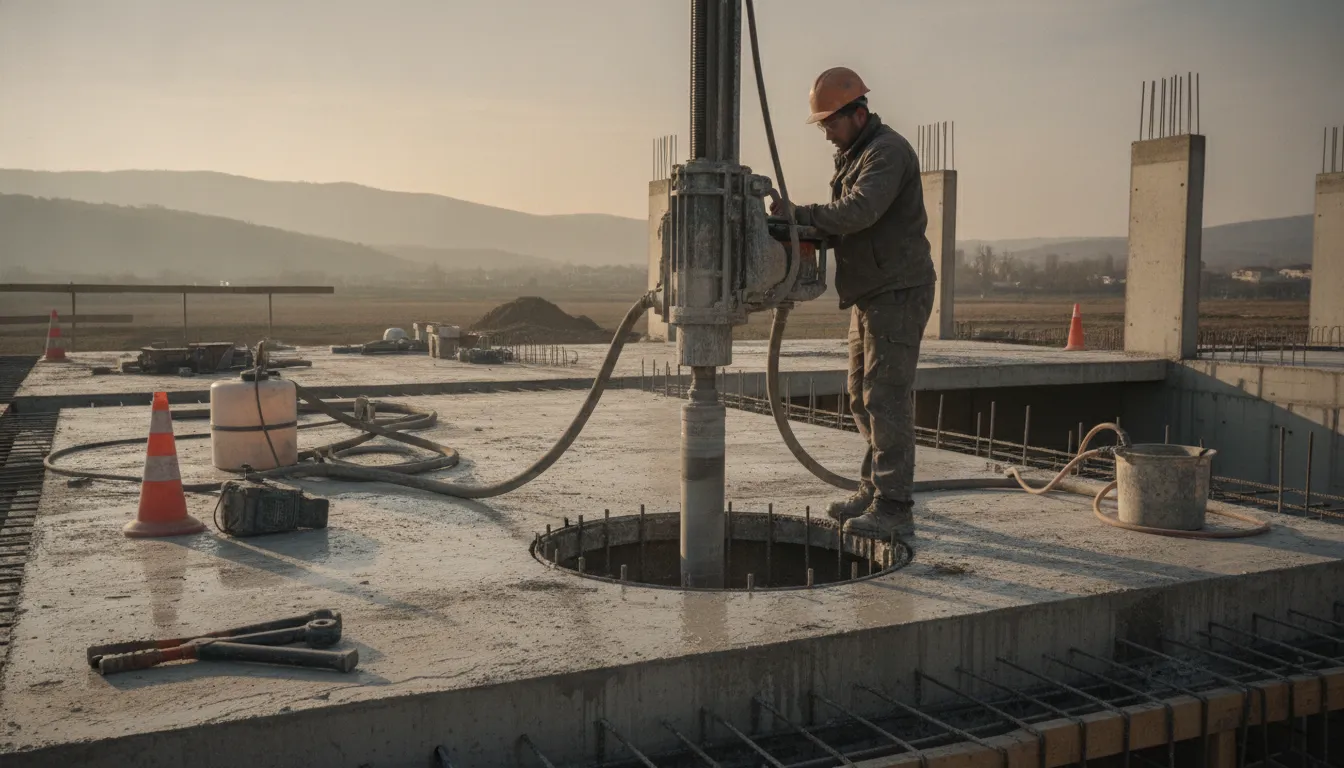
When a Georgia project needs a clean, planned opening through concrete, the method matters. A rough break can create unnecessary removal and complicate the next trade. A controlled core creates a defined path for a pipe, conduit, sleeve, HVAC route, or other building-system work.
Contact All Pro Demolition about your Georgia concrete core drilling project.
What is concrete core drilling? All Pro Demolition describes it as a precision cutting method that uses a hollow, diamond-tipped bit to remove a circular cylinder from concrete, reinforced concrete, CMU, or masonry. GPR scanning may support planning when the team needs more information about embedded conditions before drilling.
This guide explains the equipment, materials, applications, planning steps, and project details that shape a core-drilling visit. It also compares precision coring with broader demolition, so contractors and property teams can match the method to the actual scope.
What Is Concrete Core Drilling?
Concrete core drilling is a controlled method for making a round penetration in concrete or masonry. All Pro Demolition uses the term for work in which a hollow diamond-tipped bit cuts around the planned opening and removes a cylindrical core. The result is a defined opening with less surrounding removal than broad demolition.
A core drill is positioned over a marked location on a floor, wall, ceiling, or other concrete surface. The bit rotates through the material and cuts along the circumference. Unlike a solid bit that breaks material at its tip, a core bit removes a defined cylinder. That distinction makes the method useful when another trade needs a predictable opening.
The bit diameter should match the penetration the installing trade needs. The drilling plan should also account for material type, thickness, depth, access, orientation, water use, slurry handling, and the condition of the surrounding area. A small opening through a block wall presents a different setup from a deep penetration through an elevated reinforced slab.
How a diamond-tipped bit works
Diamond segments form the cutting surface at the end of the hollow bit. As the bit advances, those segments cut a circular path through the substrate. The central cylinder remains inside the bit until it is extracted or breaks free. The crew then handles the core and resulting opening according to the agreed scope.
Wet drilling may be used to cool the bit and control airborne dust. It also creates slurry, so the work plan needs a method for containing water, protecting nearby finishes, collecting residue, and cleaning the area. Review OSHA construction silica guidance with the project safety lead when it applies.
Why the extracted core matters
The extracted core is the physical section of material removed from the opening. It may be treated as construction waste, or the project team may ask that it be retained for inspection or testing. Confirm the required diameter and depth before drilling so the penetration fits the installation plan.
Core drilling is not a substitute for every kind of concrete cutting or demolition. It is a targeted penetration method. A project may also need sawing, selective demolition, slab removal, or other work, but each activity should be planned for its own purpose.
What Materials and Structures Can Be Cored?
Core drilling can be planned for concrete, reinforced concrete, CMU, masonry, slab-on-grade surfaces, and elevated slabs. All Pro Demolition evaluates the material, thickness, opening size, depth, access, orientation, and known embedded conditions when shaping the equipment setup and work plan for each location.
All Pro Demolition documents core-drilling capability for concrete, CMU, and masonry applications. The company also identifies slab-on-grade and elevated-slab work within its service scope. The exact setup depends on field conditions and the information available before mobilization.
Concrete and reinforced concrete
Plain concrete may need circular penetrations for plumbing, electrical conduit, HVAC routes, anchors, or other building systems. Reinforced concrete can also be cored, but embedded steel changes the cutting conditions. Confirm the requested diameter, depth, location, and orientation before selecting equipment.
Some slabs and walls contain reinforcement or other embedded elements that are not visible from the surface. Review the proposed location with the responsible contractor or project team. Drawings, prior scanning information, and field observations can all contribute to a more informed plan.
CMU and masonry
CMU means concrete masonry unit, commonly called a block. Masonry can also include brick or stone assemblies. These materials may have different thicknesses, joints, voids, and surface conditions. The crew needs to know whether the penetration passes through a block, joint, grouted area, foundation element, or another assembly.
Slab-on-grade and elevated slabs
A slab-on-grade sits on or near the ground, while an elevated slab is part of a raised floor or other supported structure. Both can require planned penetrations, but access, protection, water management, and embedded conditions can differ. Elevated work may require coordination below the slab and protection of occupied or finished areas.
Before drilling, identify the working side, receiving side, available clearance, and method for handling the extracted core. Coordinate with affected trades and building occupants when work occurs in an active facility.
How Does the Concrete Core Drilling Process Work?
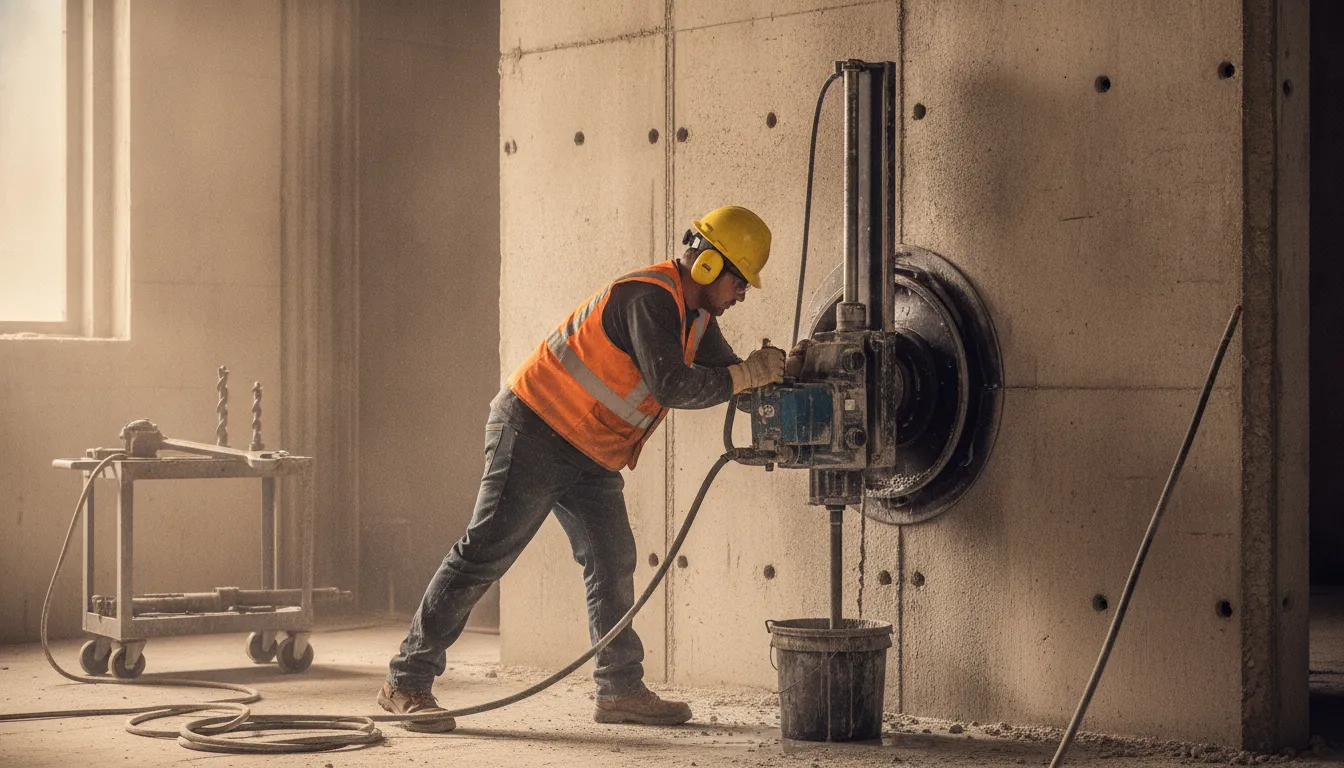
The concrete core drilling process begins with the scope and proposed location, then moves through access planning. All Pro Demolition plans surface protection, equipment setup, controlled drilling, core removal, slurry or dust management, and cleanup. The company may include GPR when the team needs more information about subsurface conditions before cutting.
- Confirm the purpose and opening. Identify the utility, conduit, pipe, sleeve, anchor, or other installation that needs the penetration. Confirm the required diameter, depth, location, and orientation with the responsible trade.
- Identify the substrate. Note whether the work involves concrete, reinforced concrete, CMU, brick, stone, slab-on-grade, or an elevated slab. Include approximate thickness when known.
- Review embedded conditions. Gather available drawings, prior scan results, and field information. If the area may contain rebar, post-tension elements, utilities, or other obstructions, discuss whether GPR scanning should support the plan.
- Plan access and protection. Determine how the drill and crew will reach the location. Protect finished surfaces, nearby equipment, occupied areas, and the space below an elevated slab. Address power, water, ventilation, and cleanup requirements.
- Set and align the equipment. Place the drilling system at the marked location and align it with the intended path. The bit size and setup should reflect the material, thickness, opening, depth, and access conditions.
- Drill the opening. Advance the hollow diamond bit through the substrate along a controlled circular path. Manage water or dust controls according to the selected method and site plan.
- Remove the core and clean the area. Extract or collect the cylindrical core. Handle slurry, dust, and debris according to the work plan, then leave the area ready for the next trade or agreed closeout activity.
Actual sequencing can change with the project. A general checklist is not a substitute for site-specific planning, structural direction, or the requirements of the responsible safety and construction teams. Review All Pro Demolition's core drilling and GPR scanning service when planning the scope.
Why Is GPR Scanning Important Before Drilling?
GPR scanning can help a drilling team evaluate subsurface conditions before cutting. All Pro Demolition uses GPR to help locate or map embedded utilities, rebar, and post-tension elements. The scan gives the project team additional field information to review alongside drawings, trade coordination, and the site safety plan.
GPR supports a more informed drilling plan
Ground Penetrating Radar, or GPR, is a scanning method used to gather information below a concrete surface. For a coring project, a scan may help identify features that are not visible from above. That information can support a discussion about the proposed drilling location and whether an adjustment is needed.
GPR is particularly relevant when a slab or wall may contain embedded utilities, reinforcement, or post-tension elements. It does not replace project drawings, responsible design professionals, utility coordination, or the site safety plan. It adds another source of field information for the people making the work decision.
What GPR can and cannot do
GPR can support locating and mapping work, but no scan should be described as a blanket guarantee that a location contains nothing. Results depend on the substrate, access, equipment, surface conditions, scan coverage, and interpretation. Use the findings with all other available information.
NIST research describes mapping rebar locations to help assess drilling areas before embedments in reinforced concrete. Review the NIST rebar-mapping publication for technical context. All Pro Demolition positions demolition, core drilling, and GPR capabilities as an integrated service model for Georgia construction work. See the related guide on core drilling equipment, safety, and accuracy for additional planning context.
Core Drilling or General Demolition: Which Fits?
Choose core drilling when the project needs a planned circular penetration with limited surrounding removal. Choose general demolition when the scope requires broader removal of finishes, assemblies, walls, slabs, or structures. All Pro Demolition may support both methods on one project, with each activity planned for its own purpose.
Choose core drilling for a planned opening
Core drilling fits work where the desired result is a specific round penetration. Examples include a planned route for plumbing, electrical conduit, HVAC work, or another building-system installation. Describe the opening by diameter, depth, material, location, access, and the condition of the area around it.
Precision coring does not mean every surrounding risk disappears. The team still needs to plan for embedded conditions, surface protection, water or dust, core handling, and coordination with the trade that will use the opening. A focused method still requires a complete scope.
Choose general demolition for broader removal
General demolition is used when the objective is to remove a larger assembly or area. That may include interior finishes, partitions, exterior elements, slabs, or an entire structure, depending on the project. Equipment, sequencing, debris handling, protection measures, and closeout requirements differ from those of a single penetration.
All Pro Demolition provides interior and exterior demolition in addition to core drilling and GPR scanning. Review its interior demolition service for interior removal scope and its exterior demolition service for exterior demolition needs.
When an integrated contractor is useful
An integrated provider may be useful when a project combines selective demolition with new penetrations and subsurface planning. The contractor can discuss the demolition scope, coring locations, scan, schedule, and protection plan in one project conversation.
This approach does not remove the need for the general contractor, installing trades, engineers, owners, or safety leads to make decisions within their roles. It can reduce the number of separate field handoffs a project team needs to coordinate.
What Information Helps Plan a Georgia Core-Drilling Quote?
A useful core-drilling quote request identifies the project location, material, approximate thickness, opening diameter and depth, drilling orientation, access, schedule, water or dust restrictions, and available drawings or scan information. All Pro Demolition can use these details to understand the scope before discussing field requirements.
Material and opening details
- Project city or site location in Georgia
- Concrete, reinforced concrete, CMU, brick, stone, or another known substrate
- Approximate wall or slab thickness
- Required opening diameter and depth
- Floor, wall, ceiling, slab-on-grade, or elevated-slab orientation
- Purpose of the penetration and the trade that will use it
Access and site conditions
- Available access for crew, drill, water, power, and material handling
- Clearance on both sides of the work area
- Finished surfaces, occupied rooms, sensitive equipment, or areas below the work
- Water, slurry, dust, noise, ventilation, and work-hour restrictions
- Requirements for core removal, cleanup, and protection
Drawings, scanning, and scheduling
Share relevant drawings, marked-up plans, prior scan reports, and known information about embedded utilities or reinforcement. If the project lacks reliable subsurface information, ask whether GPR scanning should be included in the planning conversation. Also provide the target schedule, site contact, access rules, and coordination requirements for other trades.
Project conditions affect labor, equipment, setup, access, travel, protection, water management, and scheduling. All Pro Demolition uses a custom project discussion rather than presenting old template pricing as a service rate. Describe the work clearly enough for the team to determine what needs to be confirmed in the field.
How Can Georgia Teams Prepare for a Core-Drilling Visit?
Prepare by marking the proposed location, gathering drawings and dimensions, confirming access on both sides, identifying nearby finishes or occupants, and coordinating with the installing trade and site safety lead. All Pro Demolition also needs restrictions on water, slurry, dust, work hours, and cleanup before the drilling team arrives.
Start with the intended result. Mark the approximate penetration location and confirm the required diameter and depth with the trade that will install the pipe, conduit, sleeve, or other component. A mark alone is not enough if the orientation, receiving side, or clearance has not been confirmed.
Next, gather information that may affect the plan. Include structural or MEP drawings, prior scan reports, slab or wall details, access restrictions, work-hour limits, and rules for water or slurry. Tell the contractor if the area is occupied, newly finished, sensitive to moisture, or located above another active space.
Finally, identify the people who need to be involved. The general contractor, installing trade, property representative, safety lead, and responsible design professionals may each hold information needed for a safe and coordinated decision. A drilling contractor can explain its scope and field requirements, while the project team remains responsible for decisions assigned to its own roles.
For a broader overview of project coordination, see the benefits of self-performing concrete cutting. For demolition planning beyond coring, review All Pro Demolition's Georgia demolition services.
Frequently Asked Questions
What is concrete core drilling?
Concrete core drilling is a precision method that uses a hollow, diamond-tipped bit to create a circular opening through concrete, reinforced concrete, CMU, or masonry. The bit removes a cylindrical core, while GPR scanning may provide additional information about embedded conditions before the drilling location is finalized.
What is concrete core drilling used for?
Concrete core drilling is used to create planned openings for plumbing, electrical conduit, HVAC systems, sleeves, anchors, and other building-system work. The required diameter, depth, material, access, orientation, and embedded conditions shape the work plan for each penetration.
Do you need GPR before drilling a concrete slab?
GPR may be appropriate when the project team needs more information about possible embedded utilities, rebar, post-tension elements, or other subsurface conditions. It is not a universal guarantee that a location is clear, so review the findings with drawings, trade coordination, and the responsible safety or design team.
Can core drilling be done in an elevated slab?
Core drilling can be planned for an elevated slab, but access and protection requirements need review. Confirm the working and receiving sides, clearance below the slab, nearby occupants or finishes, water and slurry controls, and available information about embedded conditions before work begins.
How should a contractor prepare for a core-drilling quote?
Provide the Georgia project location, substrate, approximate thickness, opening diameter and depth, orientation, purpose, access conditions, target schedule, water or dust restrictions, and available drawings or scan information. Photos and marked-up plans can also help the contractor understand the scope.
Send All Pro Demolition the project details for a Georgia core-drilling discussion.
Plan Your Georgia Core-Drilling Scope
The right drilling plan begins with a clear opening request, useful site information, and coordination around access and embedded conditions. When a project may need both precision coring and broader demolition, an integrated conversation can help the team define the work before scheduling a visit.
Contact All Pro Demolition to discuss your Georgia concrete core drilling project.