
Hiring a Family Owned Demolition Company You Can Trust
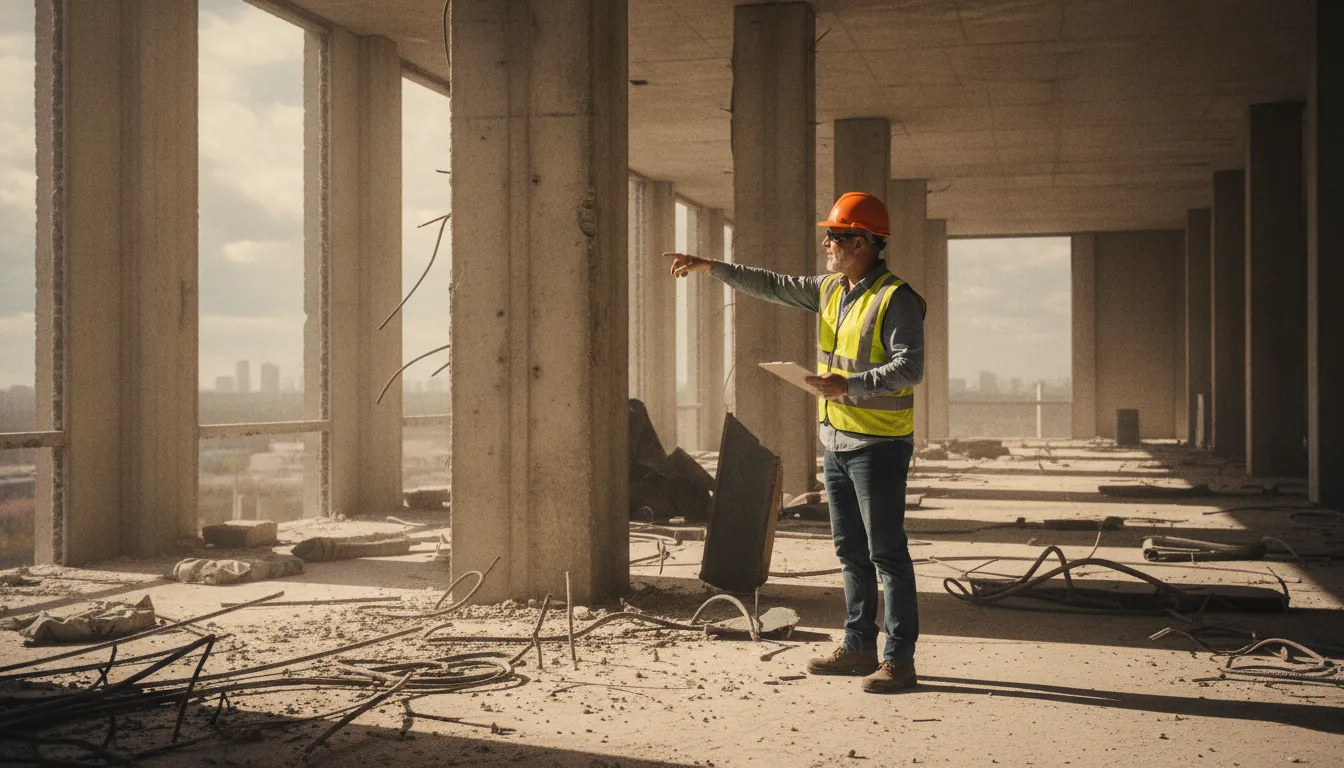
On a demolition site, accountability is visible in the details: who answers a question. How hazards are reported, whether the work matches the agreed scope, and what condition the site is left in. For general contractors, renovation specialists, and property developers, those details can affect safety, scheduling, and the next trade's ability to work.
A family owned demolition company can keep accountability close to the project through direct communication, owner involvement, and one team responsible for connected services such as demolition, core drilling, and GPR scanning. That single point of accountability helps reduce handoff gaps and gives project leaders a clearer path for decisions, updates, and risk communication.
Accountability is more than a contractor's promise. It is a working system that turns safety requirements, reporting, site organization, and schedule commitments into actions the project team can see and verify. The first step is understanding what that system should look like on the job site.
Request a demolition estimate from a family owned demolition company that answers for every detail and keep your project accountable from the first site visit to final closeout.
What Does Accountability Mean on a Demolition Job Site?
On a demolition project, accountability is more than assigning responsibility after something goes wrong. It is the daily practice of making sure the work follows the approved scope. Safety protocols, and applicable regulations before crews begin, while the work is underway, and during site closeout. For a general contractor or property developer, that discipline helps keep people protected, surrounding areas controlled, and the schedule informed by current site conditions.
Safety protocol adherence is the foundation. Crews need to understand the planned sequence, required personal protective equipment, access limitations, equipment controls, and the hazards associated with the structure and surrounding work. Accountability also includes regulatory and environmental compliance. Responsible demolition requires debris to be handled, transported, and disposed of in compliance with environmental requirements, not simply moved out of sight. See these demolition compliance requirements when planning a commercial project in Georgia.
What accountability looks like in daily operations
Strong contractors turn expectations into repeatable site practices. A daily safety checklist gives the crew and supervisor a defined point of review rather than relying on memory or informal assumptions. In high-hazard work, OSHA has documented the value of specific daily tasks, safety checklists, and site reporting as measurable ways to maintain accountability. These records can help the project team confirm what was reviewed, identify a changed condition, and determine what needs attention before work continues.
- Pre-work review: Confirm the planned scope, work area, equipment, access, and known hazards.
- Safety verification: Check that required protective measures and controls are in place before demolition starts.
- Condition reporting: Record new hazards, unexpected site conditions, or changes that affect the work plan.
- Waste stewardship: Track how debris is separated, managed, transported, and disposed of.
- Closeout documentation: Report completed work, remaining issues, and site conditions to the project manager.
This documentation is useful because it creates a clear communication trail between the demolition crew, contractor, and other trades. It also supports faster decisions when the field conditions differ from the original assumptions. A family-owned demolition company that treats these steps as part of its operating culture gives the project team a more dependable view of what happened on site and what comes next.
Why a Family Owned Demolition Company Operates Differently
For a general contractor, renovation specialist, or property developer, the difference is often visible in how information moves. A family owned demolition company typically has fewer layers between the field and the person responsible for the work. Questions about sequencing, site conditions, access, or scope do not have to pass through several departments before someone can act. The result is a more direct working relationship and a clearer path to resolution.
Direct communication matters because demolition conditions can change quickly. If the crew encounters an unexpected obstruction or a conflict with another trade, the project manager needs an answer grounded in the actual site conditions. Owner involvement in site management can keep those conversations practical and timely. Instead of relying solely on a remote corporate process, the client can communicate with people who understand the work, the crew, and the commitments made during planning.
Personal reputation creates project-level accountability
In a family-owned operation, the owners' personal reputation is closely tied to every project outcome. That relationship can encourage a longer view of quality and client service. A missed commitment, poor communication, or disorganized closeout affects more than one contract. It can influence relationships with local general contractors, repeat clients, trade partners, and the surrounding community. Research on family-owned contractors describes this connection between performance, local reputation, and long-term viability as a significant source of accountability (source on family-owned commercial contractors).
This does not replace formal planning, safety procedures, or documentation. It adds a personal layer of responsibility to those systems. For a commercial client, that can mean more consistent follow-through from the initial scope discussion through demolition and final coordination. The contractor's name is not abstract from the work. It is represented by what happens on the job site.
Faster decisions with fewer management layers
Reduced hierarchy can also shorten the distance between a field observation and a project decision. Family-owned business structures are often associated with faster decision-making and more direct accountability because fewer approvals are required (industry perspective on family-owned demolition contractors). That speed is useful when a schedule depends on coordinating demolition with concrete work, inspections, deliveries, or the next subcontractor.
For clients evaluating a reputable demolition team, the practical question is not simply whether the company is family-owned. Ask who will communicate with your team, who can make field-level decisions, and how changes will be documented. A locally invested contractor has a reason to protect both the immediate project and the working relationships that support its future. That combination of access, ownership, and community reputation can make accountability easier to see and easier to act on.
Owner-Led Supervision Keeps Project Accountability On-Site
Owner involvement gives a demolition project a clear line of responsibility from the bid through closeout. When the people responsible for the company are directly engaged in execution. The standard described during the proposal phase is more likely to remain the standard delivered in the field. That includes the details that can be easy to lose between estimating, scheduling, and daily site operations.
For a general contractor or project manager, owner-led supervision creates a direct point of contact when conditions change. Questions about scope, sequencing, access, debris removal, or coordination do not have to move through several layers of management before someone with authority can respond. The owner can evaluate the issue, align the crew with the project requirements, and communicate the decision to the broader team.
The bid becomes a field standard
Accountability is not limited to completing the physical demolition. It means keeping every promise made from the initial estimate to the final site walk-through, including the agreed scope, safety expectations, completion requirements, and quality of cleanup. That promise is easier to manage when ownership remains connected to the work instead of treating the estimate as a handoff to an unrelated production team.
On-site oversight also helps identify small deviations before they become schedule or cost problems. A supervisor who understands the original plan can compare progress with the bid. Confirm that the work is being performed as intended, and raise a concern early when field conditions require a change. This protects the project relationship and gives the general contractor useful information while options are still available.
Organization protects the schedule
A clean, organized job site is a visible measure of operational discipline. Controlled debris, clear access routes, and orderly staging reduce avoidable interference with other trades and help the crew work efficiently. Job site organization and safety are direct reflections of a contractor's commitment to accountability and operational excellence. It is not cosmetic housekeeping. It supports safer movement, clearer communication, and a more predictable handoff when demolition is complete.
Schedule ownership is part of the same responsibility. Meeting a tight deadline requires more than promising a finish date. It requires planning the sequence of work, allocating the right resources, monitoring progress, and communicating promptly when conditions affect the plan. An owner-led team can take responsibility for the impact its work has on the overall construction schedule, rather than focusing only on its own narrow scope.
For a closer look at how disciplined coordination supports commercial interior work, review these accountable demolition practices. The result is a working relationship in which the estimate, the daily job site, and the final walk-through reflect one consistent standard.
Safety Culture and Employee Empowerment in Family Firms
A strong safety culture is visible in what employees do when a condition changes, a task feels unclear, or a planned method no longer fits the site. Workers need the authority to pause, ask questions, and report a concern before it becomes an incident. They also need ownership of their work areas, including housekeeping, access control, equipment checks, and communication with the crew working nearby.
That expectation works best when family management is engaged beyond the office. In a family-owned operation, owners and senior leaders can stay close to daily work, listen to field feedback, and reinforce that production never outranks worker protection. The principle is straightforward: a deadline matters, but it does not justify asking someone to accept an avoidable hazard.
Empowerment must be supported by training
Speaking up is not enough on its own. Employees need practical training that connects safety procedures to the conditions they encounter during demolition, interior strip-outs, core drilling, and related work. Owners who participate in mentoring can explain not only what a procedure requires, but why it matters. That direct transfer of experience helps newer workers recognize changing conditions, use equipment correctly, and make better decisions when a supervisor is not standing beside them.
The U.S. Occupational Safety and Health Administration describes this kind of approach in its account of McElroy Manufacturing, a second-generation family-owned company. Its safety culture emphasizes accountability, mutual trust, continuous improvement, and empowered employees who speak up and take ownership of their work areas. The example is relevant beyond manufacturing because the underlying expectation is the same on a demolition site: every person has a role in identifying risk and protecting the team. OSHA's McElroy safety success story provides additional context.
Accountability becomes a daily behavior
Accountability is strongest when it is treated as a cultural expectation rather than a document reviewed once during orientation. Employees should know who can answer a question, how concerns are escalated, and what follow-up looks like after a hazard is reported. Family management can make that system credible by responding consistently, recognizing careful decisions, and correcting unsafe shortcuts without creating a blame-first environment.
Family-owned firms can also adjust quickly when a new hazard appears. A revised work sequence, added control, or updated briefing can be communicated directly instead of moving through several layers of approval. That agility is valuable when demolition reveals unexpected conditions or when neighboring operations change the risk profile. The goal is not simply to have a written protocol. It is to keep the protocol aligned with the actual site, while giving employees the training and authority to help maintain it.
How Technology and Precision Tools Reduce Project Risk
Technology should make demolition more accountable, not simply more impressive. The right tools give the project team better information before work begins. Make technical decisions easier to document, and reduce the number of surprises that can interrupt a commercial schedule. That matters when demolition takes place near occupied areas, structural elements, active utilities, or infrastructure that must remain in service.
GPR scanning turns hidden conditions into usable information
Ground-penetrating radar, or GPR, provides a non-destructive way to investigate what is beneath or within a concrete surface. Scanning can help map embedded utilities and rebar before a crew cuts, drills, or removes material. The goal is not to claim that every hidden condition can be eliminated as a risk. The goal is to give the project team more accurate site data so the work plan reflects known conditions instead of relying on assumptions.
That information supports accountability from the beginning. When GPR is part of the same service workflow as demolition and concrete work. The findings can be carried into planning and execution without creating a gap between the party collecting the information and the party acting on it. All Pro Demolition describes GPR as a tool for improving site accuracy and transparency from day one. Its integration with traditional demolition and core drilling provides a single point of accountability for complex projects. Review the company's integrated demolition capabilities.
Precision core drilling protects the planned scope
Core drilling requires more than powerful equipment. It requires technical knowledge, careful layout, and adherence to the engineering specifications for the project. A precisely placed opening can support the intended mechanical, electrical, plumbing, or structural work. An inaccurate opening can create rework, affect surrounding concrete, or force other trades to adjust their sequence.
Following the approved specifications gives the general contractor a clear basis for reviewing the work. It also helps connect the field activity to the drawings, scope, and schedule rather than treating each opening as an isolated task. Precision core drilling is therefore an accountability practice as much as a production method. The contractor must understand the requirement, perform the cut accurately, and communicate when field conditions require review before proceeding.
Accuracy protects schedule and neighboring work
Modern commercial demolition often involves complex structural modifications where neighboring infrastructure cannot be treated as expendable. Better site information and more precise execution can reduce the likelihood of damaging a utility, cutting outside the approved area, or creating avoidable downtime. That does not replace planning, safety procedures, or coordination with the project team. It strengthens those controls.
For a general contractor or developer, this is a practical reason to hire commercial demolition contractors who invest in both specialized tools and the systems needed to use them responsibly. The technology creates value when it is tied to clear communication, documented decisions, and ownership of the result. A serious family-owned demolition company treats that investment as part of its responsibility to the project, not as a marketing extra.
How Do Family-Owned Demolition Specialists Ensure Job Site Accountability?
Accountability starts with making responsibility visible. On a demolition project, the person coordinating the work should be able to communicate directly with the contractor's field leadership. Understand what is happening on-site, and receive clear documentation rather than piecing together updates through multiple layers of management. A family-owned demolition company can support that structure with direct reporting lines from the crew to the project manager, general contractor, or developer.
That reporting line is more than a convenient contact list. It creates a defined path for questions, approvals, schedule changes, and safety concerns. When field conditions differ from the original plan, the issue can be escalated quickly to someone who understands both the scope and the project's larger goals. This helps prevent small uncertainties from becoming avoidable delays or coordination problems.
Accountability also depends on shared commitments. The demolition contractor and general contractor need to align on the work sequence, access requirements, schedule milestones, site safety objectives, and standards for communicating changes. Both parties can then measure progress against the same expectations. The demolition team is responsible for its scope, but it also has to recognize how its work affects adjacent trades, inspections, deliveries, and the overall construction schedule.
Concrete practices that keep responsibility clear
- Assign a clear field and project contact for the general contractor or developer.
- Confirm the day's scope, site conditions, access limits, and safety priorities before work begins.
- Document completed work, discovered conditions, changes, and outstanding decisions.
- Raise hazards, utility concerns, structural questions, or schedule risks as soon as they are identified.
- Review progress against agreed milestones instead of waiting until a deadline is missed.
Proactive risk communication is especially important because demolition conditions can change once walls, slabs, or structural elements are opened. A responsible specialist communicates the risk, explains its potential project impact, and works with the project stakeholders on the next decision. That approach gives the general contractor and developer time to adjust sequencing, protect workers, or revise the plan before the issue causes a larger disruption.
Transparent records reinforce those conversations. Clear reports help establish what was observed, what was completed, and what still needs direction. For complex commercial work, this disciplined communication gives every stakeholder a reliable view of progress and keeps accountability tied to decisions. Safety, and schedule performance, not just the physical act of demolition.
Talk to the All Pro Demolition team and see how owner-led supervision, safety culture, and precision tools keep your Georgia job site accountable at every stage.
Frequently Asked Questions
What are the benefits of hiring a family-owned demolition company?
A family-owned demolition company can provide more direct communication, personal oversight, and a clear point of accountability. Owners often have a personal stake in the quality of each project, which can support faster decisions and more consistent follow-through. For contractors and developers, that means fewer management layers between the field team and the person responsible for the work.
How do family-owned demolition specialists ensure job site accountability?
They establish clear reporting lines, maintain direct communication with the general contractor or project manager, and keep ownership involved in project execution. Accountability also includes following safety protocols, maintaining an organized site, documenting progress, and communicating risks before they become schedule or budget problems.
What should I ask a family owned demolition contractor before hiring?
Ask who will supervise the work, how updates and field issues will be reported, and how the contractor manages safety, site organization, and schedule commitments. Confirm whether demolition, core drilling, and GPR scanning are handled by one coordinated team or separate subcontractors. A single-source team can reduce handoff gaps and clarify who owns each decision.
Can a demolition contractor support complex commercial work?
Yes, but the contractor should explain how it will manage structural limitations, adjacent areas, embedded infrastructure, and sequencing. Ask whether the team uses tools such as GPR scanning for non-destructive site information and precision core drilling where project specifications require controlled work. The answer should connect the technical approach to safety, coordination, and risk reduction.
Work With a Family Owned Demolition Company That Answers for Every Detail
Job site accountability is not a buzzword. It is the promise that the team on your project understands the scope, follows the safety plan, and reports back clearly at every milestone.
Contact All Pro Demolition for a no-obligation estimate and put a Georgia family-owned demolition, core drilling, and GPR scanning partner on your next commercial project.
From the first site walk-through to final debris removal, a single point of accountability keeps your schedule on track and your site safe.