
Demolition Safety Standards for Heavy Machinery Operators
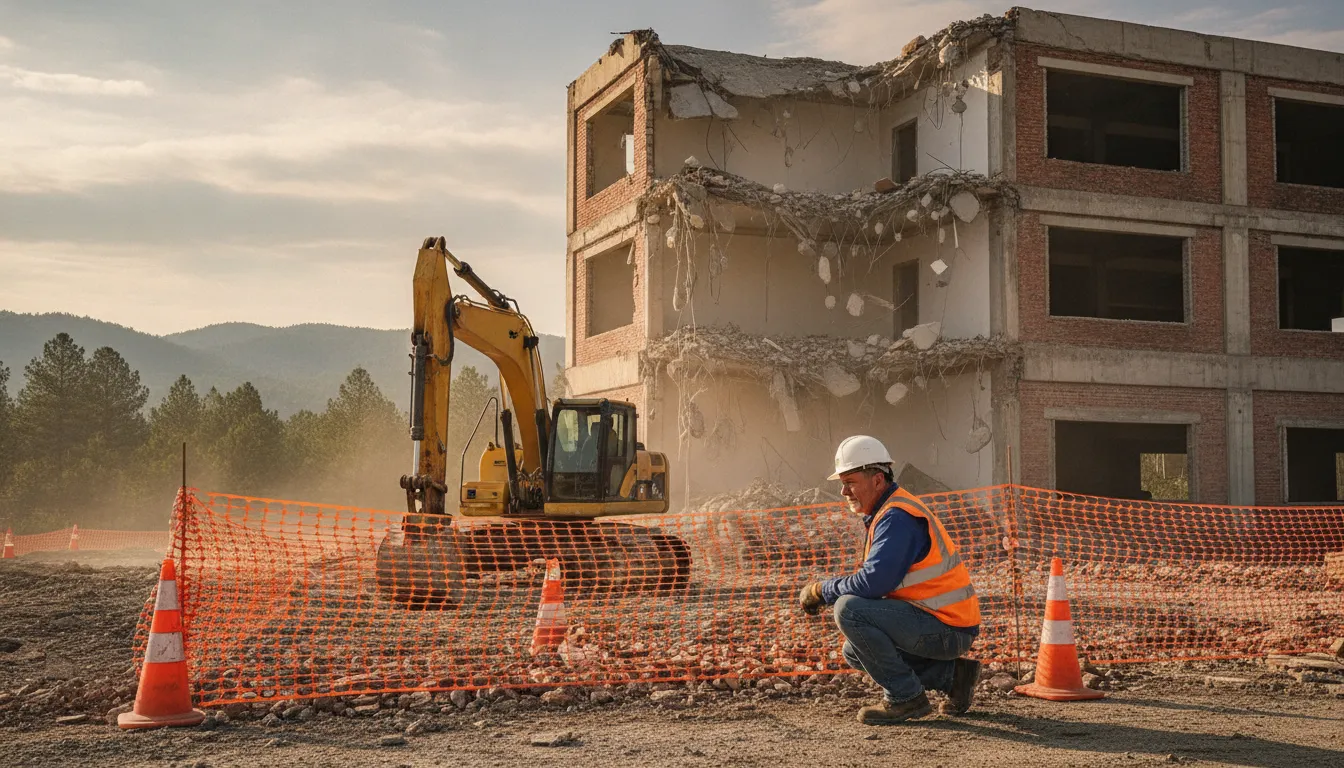
Demolition work changes quickly: a wall that appears stable can shift when a machine, attachment, or interior connection is removed. For Georgia operators and the contractors directing them, safety depends on more than wearing PPE. It requires a documented plan, a competent-person evaluation, trained equipment operators, controlled access, and coordination around utilities and hazardous materials.
Contact All Pro Demolition to review the demolition safety standards that apply to your Georgia project.
Demolition safety standards combine OSHA's demolition requirements with site-specific engineering controls, equipment inspections, operator training, and Georgia rules for hazards such as asbestos and fire safety. OSHA requires an engineering survey by a competent person before employees begin demolition, including an assessment of the structure's framing, floors, walls, and potential for unplanned collapse. OSHA 1926 Subpart T is the governing reference.
That preparation matters because the Bureau of Labor Statistics recorded 738 fatal workplace injuries from contact with objects and equipment among 5,486 total U.S. workplace fatalities in 2022. About 13.5 percent. See the BLS 2022 fatal occupational injuries table. The right standard is practical, not merely procedural: it helps teams decide how work should proceed before machinery enters the structure. The principles below show what Georgia operators and project leaders should verify first.
Why Demolition Safety Standards Matter for Georgia Operators
Demolition is controlled removal, not simply breaking concrete, cutting steel, or moving debris. Every machine movement can change the load path, reduce visibility, or expose workers to an unexpected point of contact. For Georgia contractors, strong demolition safety standards keep heavy equipment, structures, and people under control throughout the work.
Contact hazards deserve deliberate controls
NIOSH defines a contact injury as an injury caused by contact with another device, machine, or surface. Most machine injuries are contact injuries, including crushing, caught-between hazards, and amputations. These risks are serious on demolition sites, where excavators, loaders, attachments, and workers operate in the same changing environment. NIOSH machine-safety guidance explains why understanding how a machine operates is a basic part of preventing contact-related incidents.
The scale of the risk supports a methodical approach. In 2022, fatalities related to contact with objects and equipment represented 738 of 5,486 U.S. workplace fatalities, or about 13.5 percent, according to the BLS 2022 fatal occupational injuries table. That figure is not a prediction for any project, but it is a reminder that equipment-related hazards require planning. It reinforces the need for communication, exclusion zones, inspections, and operators who understand both the machine and the demolition sequence.
Safety starts before the first machine moves
OSHA's demolition requirements call for an engineering survey by a competent person before employees begin demolition. The survey evaluates the condition of the framing, floors, and walls and the possibility of an unplanned collapse. It gives the team a factual basis for deciding where machinery can work, what must be removed first, and which areas need bracing, barricades, or restricted access. At All Pro Demolition, this mindset supports a SAFE and EFFECTIVE job by treating operator qualifications. Machine condition, visibility, and communication as connected safety controls, not separate paperwork items.
The OSHA Rulebook: Demolition Safety Standards Under 1926 Subpart T
OSHA 1926 Subpart T is the federal baseline for demolition work. It covers preparatory operations, engineering surveys, material removal, access routes, wall and floor removal, and mechanical demolition. The project team should translate these requirements into a site-specific plan before work begins, because the federal rules apply to nearly every building demolition in the state.
The survey helps the team identify how materials will be removed without overloading floors or exposing workers below. OSHA's preparatory-operations rules require materials to be removed through floor openings when that method is used, rather than allow uncontrolled movement through the structure. Floor openings must be planned and protected as part of the overall sequence. A competent person should reassess conditions when work changes, because removing one wall, slab, or brace can alter the stability of the remaining structure.
Control access, debris, and specialized methods
Safe access is a core part of demolition planning. Stairs, passageways, and ladders used by employees must be kept clear, maintained, and protected from hazards created by the work. A blocked or damaged route can delay evacuation, force workers into an unsafe path, or expose them to falling material.
OSHA also prohibits dropping material outside the building's exterior walls unless the area is effectively barricaded. Chutes, controlled floor openings, barricades, and clear communication keep workers and the public away from debris zones. Some methods, such as selective demolition by explosives, carry additional requirements and demand specialized planning and oversight. The right approach is to match the method to the structure, document the controls, and stop work when field conditions no longer match the approved plan.
What Does an Engineering Survey Check Before Demolition?
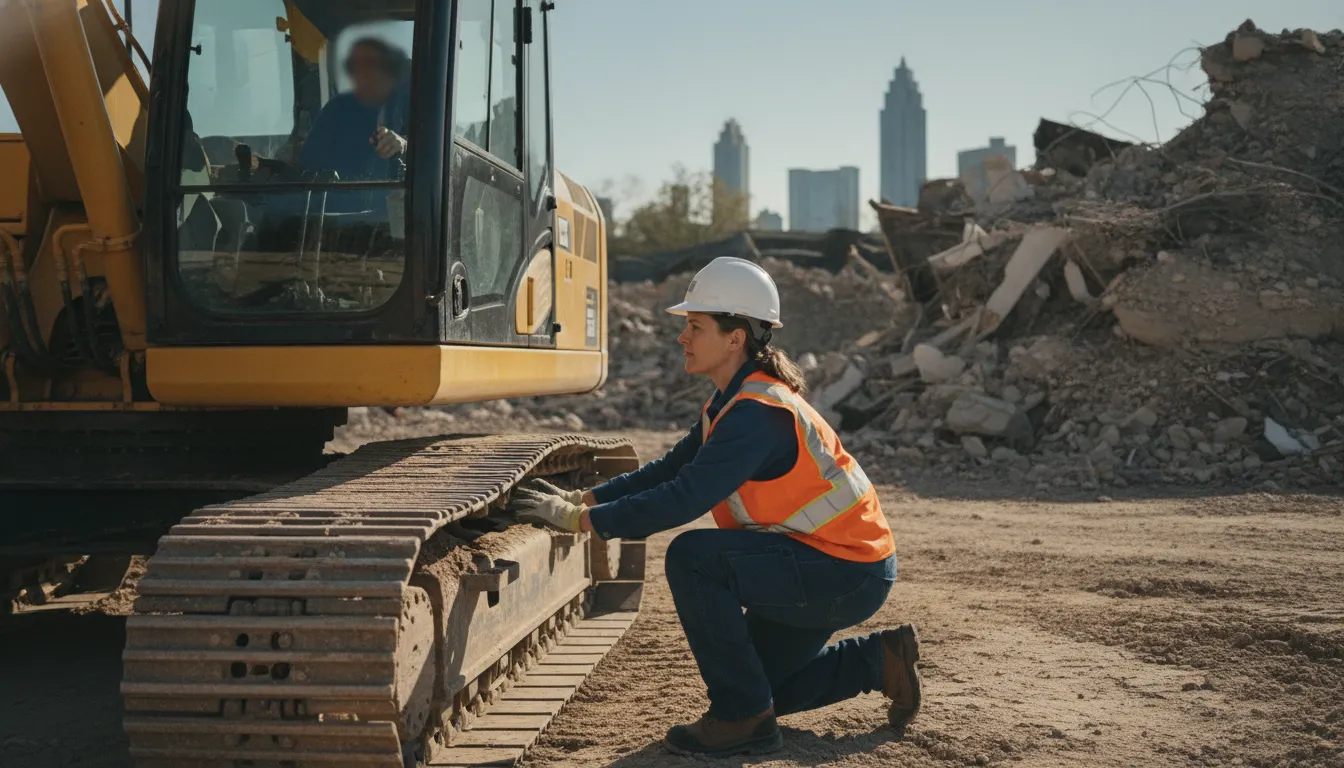
Before workers begin demolition, the structure needs a documented safety assessment, not just a quick visual walk-through. OSHA 1926.850 in Subpart T requires a competent person to conduct an engineering survey before employees are permitted to start demolition operations. The purpose is to understand how the building carries loads and where removal could trigger an unplanned collapse. See the OSHA Subpart T demolition requirements for the governing language.
This checkpoint is especially important when a project will use excavators, skid steers, breakers, or other heavy equipment inside or near the structure. A floor that appears sound may not be designed for the machine, its attachments, or the changing loads created as walls and materials are removed. The survey establishes the conditions that must be maintained as work progresses, and it connects the work plan to the building's actual condition.
- Review the available building information. Start with drawings, prior modifications, additions, known damage, and the planned sequence.
- Examine the framing, floors, and walls. Look for deterioration, cracking, fire or water damage, settlement, unsupported sections, and changes that could affect stability.
- Identify unplanned collapse risks. Document what could fall, shift, or lose support when a component is removed.
- Confirm equipment and floor capacity. Verify that the structure and access path can support the weight and operating forces of the selected equipment.
- Set monitoring and stop-work conditions. Reassess conditions whenever the work changes.
What Should Operators Check Before Heavy Machinery Moves?
Heavy machinery is safest when the operator, equipment, work surface, and exclusion zone are evaluated together. Pre-shift inspections, clear equipment limits, trained operators, and reliable communication reduce the chance of contact injuries, tip-overs, and uncontrolled movement before the first attachment engages. For related precision work, review these equipment safety and accuracy practices before coordinating demolition and core drilling.
Every person working near the equipment should know how to respond if conditions change. Operators and crew members must know the machine-specific emergency shutdown procedure, how to alert others, and where to move when the equipment stops. A shutdown is only the first step: the area should be secured, the cause identified, and work resumed only after the responsible supervisor confirms it is safe. All Pro Demolition states that its operators are licensed for the heavy machinery the company uses. Supporting the safe and effective execution expected by contractors, developers, and renovation teams. When selecting a contractor, these same controls are part of what to expect from a qualified commercial demolition contractor.
Mechanical vs Manual Demolition: Choosing the Safer Method
The safer method depends on the structure, the work area, and the sequence of removal. Heavy machinery clears large volumes quickly, but its weight and reach introduce forces that must be evaluated before equipment enters the building. Manual or selective demolition is slower, yet it provides tighter control around occupied areas, utilities, finishes, and structural elements that must remain. Neither method is automatically safer; the survey should establish what the structure can support and where a machine could trigger an unintended collapse.
| Criterion | Mechanical demolition | Manual or selective demolition |
|---|---|---|
| Speed | Faster for open areas and high-volume removal. | Slower, with materials removed in controlled stages. |
| Structural risk | Requires confirmed load capacity, clearance, stable surfaces, and lateral bracing where required. | Reduces equipment loading, but workers remain exposed to unstable materials. |
| When used | When the structure and access route safely accommodate the machine and its debris plan. | When preserving adjacent construction or working near sensitive utilities and finishes. |
| Best-fit projects | Large open commercial areas, slabs, and foundations. | Interior build-outs, partial removals, and tight spaces. |
Control the collapse path and the work zone
Mechanical work requires more than selecting the right excavator. A wall section more than one story high must not stand alone without lateral bracing unless it was designed and remains safe to stand without it. Exclusion zones should be sized for the machine, falling material, and possible movement of the remaining structure.
Manual demolition also needs a deliberate sequence, with debris directed into an approved removal route. Material cannot be dropped outside the exterior walls unless the area is effectively barricaded. Barricades, spotters, and clear communication are especially important where equipment and workers share the site. For plan guidance on defined removal areas, see our selective demolition guidance.
Site Prep That Protects Workers: Utilities, Debris, and Barricades
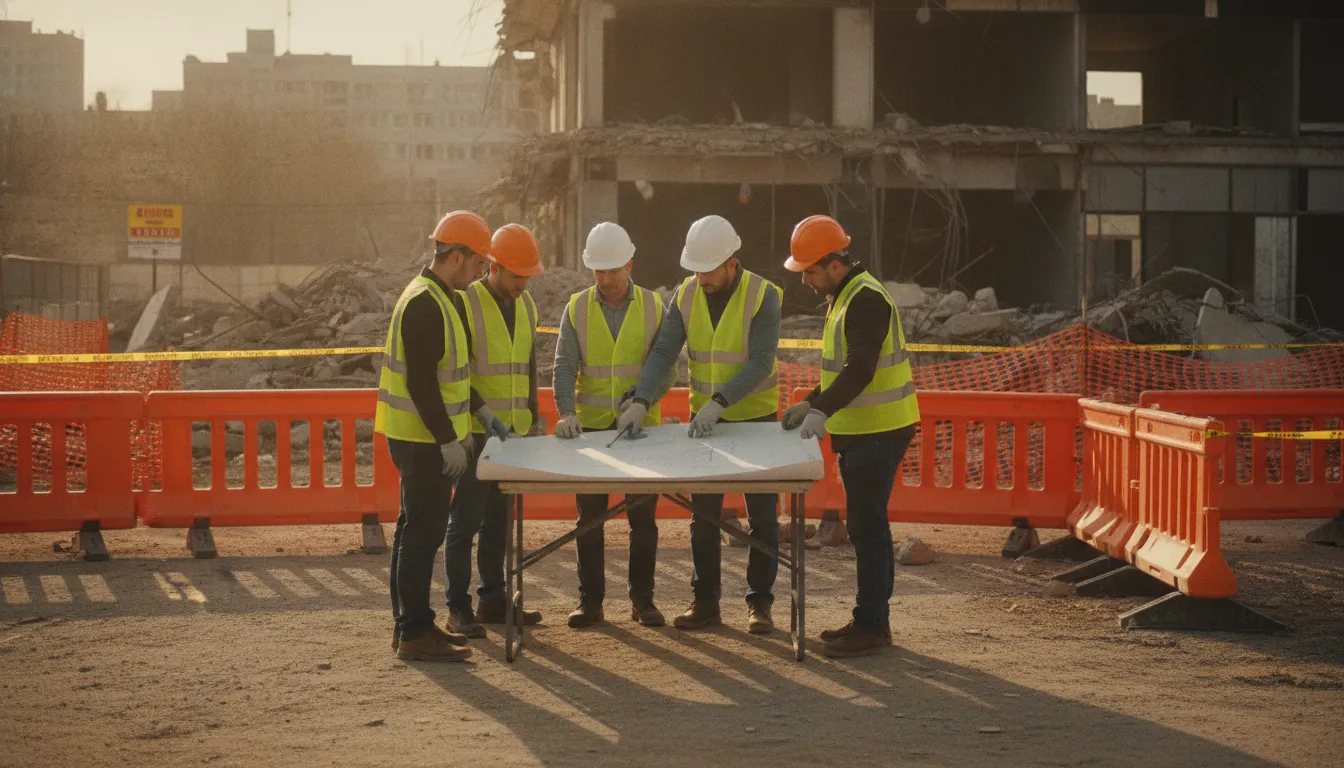
Site preparation turns the survey and the plan into a protected working environment. Utilities must be located, isolated, and verified before machinery touches the structure. Debris must be managed so it does not overload floors or fall onto workers. Barricades and clear access routes keep the public and the crew out of harm's way. These controls connect directly to the demolition sequence, so the project team should coordinate utility isolation and material removal together rather than treat them as separate checklists.
Dropping zones and removal routes should keep debris close to the point of removal and away from occupied areas. Effective site prep reduces dust, noise, and exposure to hazardous materials, supporting a safer job that is also easier to schedule and audit. For an overview of how contractors manage the waste side of these projects, review our demolition and debris removal guide and our dust and safety management guide. For commercial interiors that must keep working areas open, our interior demolition and strip-out guide shows how these controls are sequenced around occupants.
How Do Demolition Safety Standards Apply on Georgia Sites?
Federal OSHA rules establish the baseline, but a demolition plan in Georgia must also account for state environmental requirements and adopted fire-safety codes. These requirements affect sequencing, documentation, contractor qualifications, material handling, and site controls. Treating them as a late compliance check can create avoidable delays when hazardous materials or fire risks are discovered after work begins. For a wider view of the compliance picture, see our guide to commercial demolition regulations in Georgia.
Asbestos abatement and disposal are state-regulated
Georgia's Environmental Protection Division enforces rules governing asbestos abatement, licensing, and disposal. The EPD's Georgia asbestos rules should be reviewed before demolition planning is finalized, particularly when an inspection identifies asbestos-containing materials. An early hazardous-materials review is an important part of scope development. A contractor should not assume that interior removal or a small renovation is exempt from asbestos obligations. Findings should be coordinated with the project schedule so regulated abatement is completed before activities that could disturb the material.
Fire prevention must remain active throughout demolition
Georgia construction codes safeguard demolition through the Georgia Construction and Demolition Safeguarding Code, based on NFPA 241. The state's adopted 2024 International Fire Code includes Chapter 33, Fire Safety During Construction and Demolition. The project team should maintain clear emergency access, control ignition sources, coordinate hot work, manage combustible debris, and keep fire protection measures appropriate to the changing site conditions. Demolition can remove walls that once slowed fire spread, while temporary utilities and exposed building systems introduce new hazards. Before each phase, confirm that asbestos controls, fire safeguards, access routes, and disposal procedures still match the work in front of the crew.
Talk to All Pro Demolition about building a compliant demolition safety plan for your site.
Frequently Asked Questions
What are the primary OSHA demolition safety standards?
OSHA 1926 Subpart T covers core demolition controls, including preparatory operations, engineering surveys, material removal, access routes, wall and floor removal, and mechanical demolition. The team should translate these requirements into a site-specific plan before work begins, using OSHA Subpart T as the governing reference.
Why is an engineering survey required before demolition?
A competent person must survey the structure before employees begin demolition to identify the condition of the framing, floors, and walls and the potential for an unplanned collapse. Findings guide the sequence, equipment selection, exclusion zones, and any required bracing.
What precautions are necessary for heavy machinery?
Use trained operators, inspect the machine before operation, confirm its limits and operating modes, and keep workers outside the equipment's swing, travel, and falling-material zones. Establish clear communication with spotters where visibility is limited, and make sure everyone knows the emergency shutdown procedure.
How do demolition safety standards apply to Georgia job sites?
Georgia sites combine the federal OSHA baseline with state environmental rules for asbestos and disposal and adopted fire-safety codes such as NFPA 241 and the International Fire Code. A compliant plan sequences hazardous-material abatement, fire safeguards, and site controls into the demolition schedule.
What PPE is typically required during demolition?
Typical demolition PPE includes a hard hat, eye and face protection, hearing protection, high-visibility clothing, gloves, and steel-toe footwear. Respiratory protection may be needed where dust or asbestos exposure warrants it. PPE is a final layer of defense that works only alongside engineering controls, access control, and a written plan.
Contact All Pro Demolition to review the demolition safety standards that apply to your Georgia project and to plan a safer site.