
GPR Machine vs. Full Scanning Service: Georgia Guide
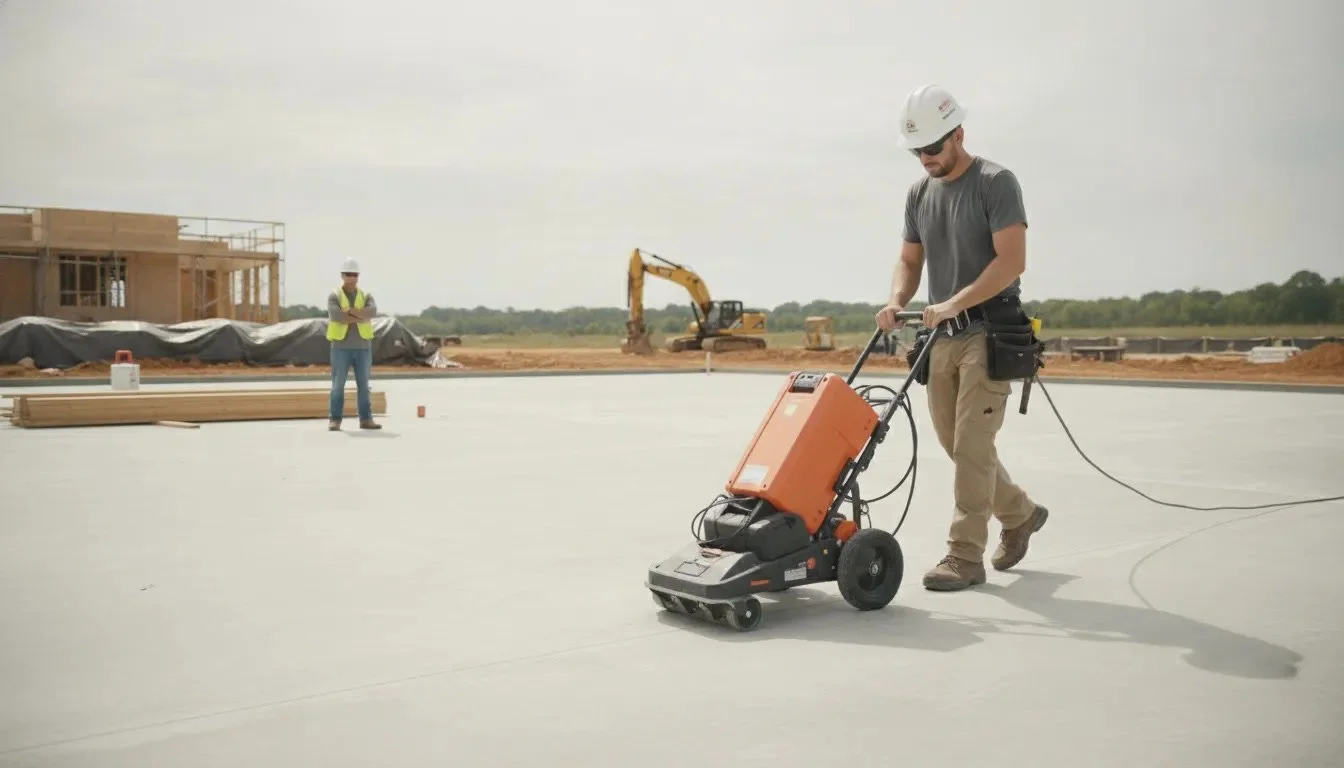
Before concrete is drilled, cut, or demolished, the useful question is not simply whether equipment is available. The project team needs to know what area will be examined, which site conditions may affect the readings. How findings will be marked or documented, and who will carry that information into the next trade handoff.
Discuss your Georgia project scope with All Pro Demolition
A gpr machine sends radio-wave pulses into the subsurface and records returning signals that can help characterize reflectors, including their depth and geometry. The equipment collects important field data, but a dependable construction decision also depends on the defined work area, site context, interpretation, and communication of the findings. The EPA describes GPR as a method for studying subsurface structure and features: learn more about how GPR works.
That distinction matters when a contractor is deciding whether equipment access alone is enough or whether the work calls for a coordinated scanning scope. Start with what the field system actually measures and how those measurements become useful project information.
What Does a GPR Machine Actually Do on a Jobsite?
A GPR machine sends radio-wave pulses into a surface or the ground to investigate what may be below it. As the energy travels through the material, the receiver records returning-signal amplitude and travel time. Those measurements can help characterize the depth, geometry, and relative strength of subsurface reflectors, such as changes in material or objects that may affect planned work. The U.S. Environmental Protection Agency describes the resulting survey as a cross-section that can depict subsurface electrical structure and features of interest.
That output is evidence, not an automatic work authorization. A scan does not turn an unreadable display into a simple yes-or-no answer for a proposed penetration. Someone must relate the collected data to the actual slab, wall, scan area, planned opening, and work sequence. The project team then decides how to mark, avoid, investigate, or coordinate around the findings.
For example, a contractor planning core drilling may need more than a machine passing over the general work area. The useful question is whether the scan addresses the specific penetration locations and produces information the drilling or demolition crew can use during the handoff. Access, surface conditions, scope, and interpretation all matter.
For a plain-language overview of the process, see what concrete scanning with GPR involves. The key distinction is simple: the machine collects signals, while a properly scoped scanning process turns those signals into project information.
GPR Machine vs. Full Scanning Service: What Changes?
Access to a GPR machine gives a project team a way to collect subsurface data. It does not, by itself, define the work area, establish the questions the scan must answer, or create a handoff that the drilling and demolition crews can use. The practical difference is between equipment access and a scoped service tied to the planned work.
Equipment access compared with a full scanning serviceProject needEquipment accessFull scanning serviceField setupIdentify accessible surfaces and prepare the area. Select a scan path that fits site conditions.The provider reviews the planned work area and organizes the field activity around the surfaces, penetrations, or demolition zones that matter.ScopeThe scan may remain a general data-collection exercise unless the team defines which slab, wall, utility conflict, or penetration requires review.The scope is connected to the actual decision, such as where intrusive work is planned and what subsurface features need to be investigated.InterpretationCollected signals still require someone to interpret the results in the context of the project. A GPR survey can produce a cross-section showing subsurface electrical structure or features of interest, according to the EPA overview of GPR.The service includes project-focused review of the collected information, with limitations and follow-up questions considered before the next trade begins.Markings and documentationThe project team must decide what to mark, record, and communicate, then preserve that information for the crew performing the work.Field markings or documentation can be planned as part of the handoff, based on the agreed scope and the work that follows.CoordinationScanning, drilling, cutting, and demolition may remain separate scheduling responsibilities.A coordinated provider can connect the scan with the next construction activity. All Pro Demolition combines demolition, core drilling, and GPR scanning in-house through its Georgia GPR scanning services.
For a project where the scan must support a defined penetration, cutting operation, or demolition sequence, consider whether your team can own each of those decisions and handoffs. If not, it may be more useful to hire a Georgia GPR scanning contractor with the project scope ready for review.
Which Site Conditions Affect a GPR Machine's Results?
A GPR machine responds to the electrical and magnetic properties of the materials it scans. The EPA identifies dielectric permittivity, electrical conductivity, and magnetic permeability as key factors in how electromagnetic energy travels through a site. Conductive or wet materials can change signal behavior, while differences between adjacent materials can create reflections. In practical terms, a concrete slab, a void, a utility, and surrounding fill may not produce the same response.
Material interfaces and surface conditions
When a pulse reaches an interface with sufficiently different electromagnetic properties, part of its energy can reflect back to the receiver. That contrast is useful, but the resulting image still requires interpretation in the context of the slab, soil, wall, or other assembly being examined. Surface conditions also matter. Congestion, rough or uneven concrete, coatings, debris, standing water, tight clearances, and limited access can restrict the scan path or leave parts of the planned area unexamined. Having room to place equipment does not, by itself, guarantee a complete result.
Pipe composition and site planning
Utilities can respond differently based on their composition. FHWA characterizes metal or steel as producing a strong GPR response, PVC as medium-strong, electrical lines as medium-low, and fiber optic lines as low. Those differences are one reason the utility material, expected alignment, accessible scan area, and planned penetration locations should be discussed before work begins. Review the Georgia utility-strike prevention guidance when coordinating pre-work checks.
This is general planning guidance, not a promise of a specific depth, detection rate, or accuracy. A responsible scope should identify the areas to scan, site limitations, known drawings or utility information. And how findings will be documented and handed to the drilling or demolition team.
When Does a Contractor Need a Full Scanning Service?
A contractor usually needs more than access to a gpr machine when the scan must support a defined work area, an intrusive-work decision, and a clear handoff to another crew. That is especially true when planned core drilling, saw cutting, demolition, or new penetrations could encounter utilities, reinforcement, or other subsurface features.
Start with a defined work area
A full service begins by clarifying what will be scanned and why: a slab zone, wall, proposed penetration pattern, or demolition boundary. GPR is a nondestructive evaluation technique that uses electromagnetic signals to identify subsurface anomalies. FHWA notes that civil-engineering applications include concrete condition assessment, reinforcement mapping, and utility detection. The scope should therefore match the actual drawings, marked work locations, access conditions, and planned sequence, rather than treating the equipment as the scope itself.
Turn field readings into usable marks and records
Field interpretation matters because the crew performing intrusive work needs information it can use at the work face. FHWA explains that GPR can provide real-time feedback while an operator locates and marks buried utilities and pipes. GPS-enabled systems can also facilitate maps for project planning and management. Depending on the project, the handoff may include field marks, a marked-up plan, scan limits, observations, and areas requiring coordination before work proceeds. These details help the contractor align the scan with the exact locations and sequence of drilling, cutting, or demolition.
The final step is coordination with the crew that will act on the information. Review the marked areas, clarify what was scanned, and preserve the documentation with the work package. For practical guidance on using scanning before concrete cutting, see GPR safety before concrete cutting. Contractors planning work across Georgia can also review Georgia GPR scanning services and request a project-specific scope for the site.
How Should GPR Scanning Fit Into Concrete Cutting or Demolition?
GPR scanning is most useful when it is treated as one step in a defined work plan, not as a stand-alone equipment decision. A practical sequence can help connect the scan to the drilling, cutting, or demolition that follows:
Define the intrusive work. Identify the planned cores, saw cuts, penetrations, removals, or other areas where the concrete will be disturbed. The work area and planned cut points determine what the scan needs to address.
Confirm surfaces and access. Note whether the team will scan a slab, wall, deck, or another concrete surface. Check access, surface condition, finishes, obstructions, and the areas that must remain available for the next trade.
Scan the relevant areas. The scan should cover the locations that relate to the planned work, with field collection sequenced around site access. EPA notes that common GPR configurations can collect data at or near walking speed, supporting detailed imaging of near-surface interfaces. See the EPA overview of GPR field data collection for context.
Document findings and limitations. Record relevant indications, marked areas, drawings or other project documentation, and conditions that may affect interpretation. A scan does not remove the need for the project team to understand its scope and limitations before authorizing intrusive work.
Coordinate the next operation. Share the documented findings with the drilling, cutting, or demolition team and confirm the work sequence before mobilization. For a broader handoff checklist, see this guide on how to coordinate scanning with concrete cutting. All Pro Demolition combines demolition, core drilling, and GPR scanning in-house, which may simplify scheduling and accountability on a Georgia project.
What Should a Georgia GPR Quote Include?
A useful quote gives the scanning team enough project context to define the work before mobilization. Include the Georgia project location, the building or site area, the surfaces involved, and the specific work zones to be scanned. Identify planned penetrations such as cores, saw cuts, anchors, or demolition boundaries, and note the approximate quantity and layout when available.
Also describe the questions the scan needs to support. For example, the team may need to investigate possible utilities, rebar, or other embedded features before drilling. Share drawings, marked-up plans, and known constraints, while identifying access conditions, active occupancy, equipment movement limits, and the requested timing. A clear schedule helps coordinate scanning with the concrete-cutting, drilling, MEP, or demolition sequence.
The handoff should define expected deliverables and assumptions. Ask what field markings, images, scan files, or written documentation will be provided, who will receive them, and when they are needed for the next decision. The quote should also identify limitations, exclusions, areas that cannot be accessed, and information the project team must confirm before work proceeds. Equipment access by itself is not the same as a fully scoped service. Project-specific scope and coordination needs determine the quote, and All Pro Demolition services are individually quoted rather than sold at standardized prices. For related planning considerations, review these concrete scanning cost factors without treating any published example as a project price.
Contact All Pro Demolition about your project scope
What Should a Georgia GPR Machine Checklist Cover?
Before deciding whether to use a GPR machine in-house or bring in a full-service scanning team, define the work that must follow the scan. Use a practical checklist to answer five questions:
Is the scope clear? Identify the slab, wall, penetration, utility corridor, or demolition area to be assessed. Mark the proposed core holes, saw cuts, or removals so the scanning work supports a specific field decision.
Are site conditions ready? Confirm access, surface visibility, obstructions, active work areas, and the locations of known utilities or embedded features. Equipment access by itself does not establish a complete survey scope.
Who will interpret and document the findings? Decide how scan areas, notable indications, marked locations, and limitations will be recorded and communicated to the crew. The handoff should be usable by the person performing the next intrusive task, not just by the person operating the equipment.
How will the work be sequenced? Coordinate scanning with drilling, cutting, utility work, and demolition. If conditions change or the planned work moves, confirm whether additional review is needed before proceeding.
Would one accountable team simplify the handoff? All Pro Demolition offers GPR scanning for subsurface utility detection and combines demolition, core drilling, and GPR scanning in-house. That integrated scope may reduce coordination between separate vendors, while the project team still defines the work and required documentation.
For a Georgia project that needs scanning, interpretation, and next-step coordination, review the Core Drilling and GPR Scanning services. Provide the planned work area, site conditions, and intrusive-work requirements for a project-specific discussion.
Frequently Asked Questions
What is a GPR machine used for?
A GPR machine sends radio-wave pulses into a material and records returning signals to help investigate subsurface features. On construction projects, it may support concrete condition assessment, reinforcement mapping, utility detection, and planning for penetrations or demolition. The equipment produces data, but the useful result depends on defining the work area. Interpreting the readings, and documenting the findings for the crew that will perform the next operation. The EPA explains how GPR data is collected and interpreted.
How much does a GPR machine cost?
Purchase, rental, and operating costs vary by equipment type, project requirements, training, and the support needed in the field. A machine price alone does not represent the cost of a complete scanning decision. For a contractor request, describe the surfaces, work zones, planned penetrations, schedule, access conditions. And desired handoff so the scope can be evaluated without relying on a generic figure.
How deep can GPR see?
There is no single depth that applies to every scan. Results depend on material properties, signal conditions, equipment configuration, and the feature being investigated. Electrical conductivity, dielectric properties, and material interfaces all affect how electromagnetic energy travels and reflects. Treat depth as a project-specific question to confirm during scoping, not as a guaranteed machine specification. EPA describes these factors in its GPR overview.
How much does a GPR survey cost?
A survey is normally quoted for the specific project rather than priced from a universal rate. The quote may need to account for the area to be scanned, surfaces and access, planned drilling or cutting, utility and rebar questions, timing, interpretation, markings, and documentation. Sharing those details early helps the scanning provider build a clear scope and coordinate the handoff to the concrete or demolition crew.
Get Started With a Project-Specific GPR Quote
Clear scope and site details help your team plan the right scanning, concrete, or demolition handoff for the work area. To discuss your project, planned penetrations, access conditions, and scheduling needs, contact All Pro Demolition through the project form. Share the Georgia location, surfaces involved, and the work you expect to perform so the request can be reviewed in the context of the job.
