
How to Hire GPR Scanning Contractor in Georgia
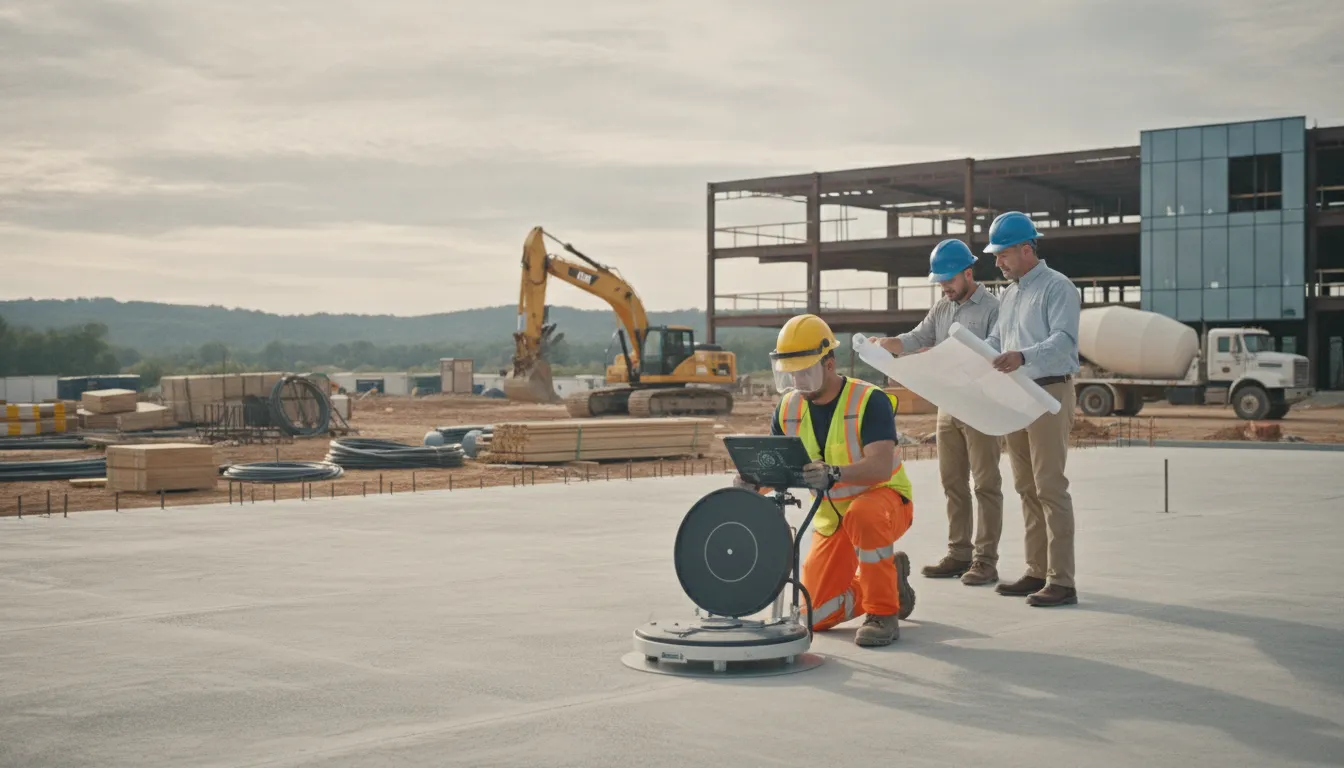
To hire GPR scanning contractor support in Georgia, compare more than the mobilization charge. Compare the proposed scan area, field markings, documentation, limitations, and handoff to the crew that will cut, drill, anchor, or demolish. A clear scope gives your superintendent, property team, or renovation manager useful information before intrusive work begins.
Request a project review to discuss your Georgia job and the scan information your team needs.
Ground penetrating radar, or GPR, is a nondestructive imaging method that uses radar pulses to help identify subsurface features. It can support decisions about concrete penetrations, selective demolition, and utility planning. It does not provide a universal guarantee that every hidden object will be detected.
The best provider makes the boundaries visible. That means identifying what will be scanned, what the team expects to deliver. Which conditions may limit interpretation, and how findings will reach the people performing the next phase of work.
How to Hire GPR Scanning Contractor Services for a Georgia Jobsite
When you hire GPR scanning contractor services, choose a provider that connects field scanning to the decision your project must make. Ask how the team will evaluate the requested surface, communicate suspected features, document inaccessible areas, and coordinate with concrete cutting, core drilling, or demolition.
Start with the decision, not a generic scan
Describe the planned work before requesting a quote. A proposed core, saw cut, anchor, wall chase, slab removal, or excavation may require a different scan boundary than a general condition survey. Share the approximate locations, dimensions, expected depth, and planned work date when those details are available.
Also identify the surface. Concrete slabs, elevated decks, walls, foundations, masonry, pavement, and soil can present different access and interpretation conditions. Coatings, finishes, standing water, stored materials, equipment, and reinforcement congestion may affect the field process. A responsible contractor should ask about these conditions instead of assuming every surface will produce the same result.
Look for clear limitations language
GPR findings depend on material, depth, moisture, reinforcement density, signal interference, access, and scan coverage. A quote or work plan should explain how the provider will record conditions that limit the scan. It should not imply that an inaccessible area was reviewed or that a marked feature is an absolute identification under every condition.
For background, the USGS describes GPR as a method for imaging shallow subsurface structures. That description supports the planning value of the technology, but the project team still needs field judgment, current drawings, utility information, and the approved work plan.
What Should You Include in a GPR Scan Scope?
A useful scan scope states the areas, surfaces, planned intrusive work, access conditions, requested deliverables, and known exclusions. Put those details in the request so each provider responds to the same project needs.
Define the areas and surfaces
Use a marked plan, room list, drawing, photograph, or site description to identify each area. Name the rooms, slab sections, walls, columns, footings, decks, pavement zones, or other surfaces that need review. If the work involves several buildings or levels, separate them clearly. Note which areas are occupied, restricted, covered, wet, damaged, or blocked by equipment.
Then describe the planned work. State whether the team expects core drilling, saw cutting, anchoring, wall chasing, selective demolition, utility installation, or another operation. Include proposed points and lines when known. The scan should inform a defined decision, not become a vague promise to inspect everything.
Ask these scope questions
- Which exact surfaces and boundaries are included?
- What planned cuts, cores, anchors, penetrations, or removals will the scan support?
- What drawings, photographs, utility records, or marked work points should be provided?
- Which depth, coverage pattern, or scan direction is appropriate for the stated decision?
- Which locations are excluded because of access, finishes, equipment, moisture, or site restrictions?
- How will the provider document conditions that limit collection or interpretation?
Coordinate access and timing
Include the preferred access window, security process, escort requirements, traffic controls, occupant restrictions, and site contact. Tell the provider whether equipment, vehicles, debris, temporary walls, raised flooring, or stored materials must be moved first. If scanning needs a shutdown, isolation, quiet period, or controlled work zone, identify who has authority to arrange it.
These details affect the quote and the usefulness of the field visit. They also prevent a crew from arriving with an accurate technical plan that cannot be performed because the surface is covered or the work area is active.
What Deliverables Should You Expect After GPR Scanning?
After the field visit, the deliverables should show what was scanned, what was observed, what was marked, and what remains uncertain. Agree on the format before work begins because a field-marking-only scope is different from a scan that includes drawings, photographs, or a written report.
Field markings and reference points
Many projects need markings that the next crew can understand at the work area. Ask how suspected conduits, pipes, reinforcement, voids, or other anomalies will be marked. Confirm the reference points, grid lines, measurements, color conventions, or notes that give the marks meaning. A mark without a clear reference system can create a new handoff problem.
Confirm whether the markings will remain visible through the planned work sequence. If other trades may disturb them, ask whether photographs or a marked-up plan will be provided. Clarify who will verify the current layout before the drill, saw, or demolition equipment starts.
Reports, photos, and drawings
Ask whether the scope includes field notes, photographs, annotated drawings, digital files, a written report, or an interpretation meeting. None of these formats should be assumed. The correct deliverable depends on the project decision and the information the crew needs.
A useful record distinguishes observed features from interpretation. It identifies the date and areas scanned, the surfaces reviewed, locations that could not be accessed, and conditions that affected the result. It should not imply that unscanned areas were cleared or that every subsurface condition can be identified.
Handoff and follow-up
Request a short handoff with the superintendent, engineer, project manager, or crew lead responsible for the next phase. The scanning team can explain the reference system and notable findings. Your team can compare the marks and notes with the active drawings and confirm that the planned work locations have not changed.
Ask how follow-up questions, changed layouts, disturbed markings, or added scan areas are handled. A changed scope may require new field work. Written exclusions and follow-up rules are more useful than informal assumptions made after the technician leaves.
How Does GPR Coordinate With Cutting, Drilling, and Demolition?
GPR works best as one step in a coordinated construction workflow. Scan the defined area before intrusive work, review the findings with the people performing that work, and document any change to the proposed layout. The scan informs decisions, but it does not replace engineering direction, utility-owner coordination, or jobsite safety procedures.
Sequence the work before mobilization
Start with the latest work drawings and proposed locations. The scanning team should know whether the next operation is a core, saw cut, anchor, penetration, wall removal, slab removal, or another activity. Allow time between the scan and the intrusive work so the project team can review findings and adjust the plan when conditions do not match expectations.
For a related explanation of the handoff, review how GPR scanning and concrete cutting can be coordinated. The useful question is not whether a scan occurred. It is whether the current scan information reached the current crew before work began.
Assign one point of accountability
Several specialty contractors can create gaps. Someone must relay the scan results, confirm the latest layout, and communicate any relocation or stop-work decision. An integrated provider that offers GPR scanning alongside core drilling and demolition can simplify scheduling and the service handoff. The general contractor still controls approvals, site safety, and the final work plan.
Document who marks the work area, who interprets the findings, who approves a change, and who briefs the field crew. Do not leave those decisions to an unrecorded verbal exchange. The project record should identify the scan limits and any conditions that require additional review.
Keep the scan in context
GPR may help identify metallic and some non-ferrous features in concrete. CDC and NIOSH describe situations where GPR can identify concrete ducts and non-ferrous pipes that electromagnetic locating alone may not detect. That capability can add useful information, but it is not a promise of guaranteed detection.
Use current drawings, utility information, surface markings, field judgment, required permits, and the approved safety plan with the scan findings. If the layout changes, pause and confirm whether the existing scan still applies to the new work area.
Which Site Access and Safety Questions Matter Before Mobilization?
Good mobilization planning gives the scanning crew access to the requested surfaces and gives the project team a controlled way to act on the findings. Confirm readiness, site contacts, hazards, shutdowns, PPE, and communication before the appointment.
Is the scan area ready?
Clear stored materials, equipment, vehicles, debris, and temporary barriers from the requested path when possible. Identify surfaces covered by fixed equipment, finishes, raised flooring, water, mud, or other obstructions. Tell the provider which areas cannot be exposed or entered. Those exclusions belong in the field record.
Provide current drawings, proposed core points, saw-cut lines, drilling depths, and prior utility information. Identify active work, occupied rooms, delivery paths, overhead hazards, fall risks, and other conditions that may change how the visit is performed.
Who controls the work zone?
- Define entrances, exits, boundaries, and nearby active work.
- Confirm the site contact, escort, access window, and emergency communication path.
- Identify required PPE and any fall, traffic, noise, dust, or electrical controls.
- Confirm whether systems or rooms require isolation or a shutdown authorized by the responsible party.
- Assign one person to review markings and communicate any change before intrusive work.
GPR should be one part of the control process. It does not replace lockout procedures, utility coordination, permits, excavation requirements, engineering review, or the site's own safety program. Keep the scan record, limitations, and approved next steps with the project documents.
For another utility-planning perspective, see GPR scanning guidance for reducing utility-strike risk in Georgia. The decision to proceed remains a project responsibility based on all available information.
How Should You Compare GPR Scanning Quotes in Georgia?
Compare quotes by scope and accountability, not by a single line-item amount. A proposal is easier to evaluate when it states the areas, surfaces, field process, deliverables, limitations, schedule assumptions, and follow-up terms.
Use the same comparison questions
- Does the proposal cover the same rooms, slabs, walls, levels, and work points?
- Does it explain access, surface, depth, coverage, and exclusion assumptions?
- Does it state whether field markings, photos, drawings, reports, or a handoff are included?
- Does it identify how changed layouts, added areas, or disturbed marks will be handled?
- Does it name the project contact and the person responsible for the field handoff?
- Does it clearly state what the scan cannot establish under the site's conditions?
Evaluate the service workflow
Ask how the provider communicates before arrival, during scanning, and after the field visit. Clear communication matters when a project has a short access window or when drilling and demolition follow soon after scanning. A provider that can coordinate GPR scanning with concrete cutting, core drilling, or demolition may reduce scheduling handoffs for a renovation or property team.
All Pro Demolition provides demolition, core drilling, and GPR scanning services for Georgia construction projects. Its project work is custom scoped, so a useful request should include the actual site conditions and planned work rather than rely on a generic allowance. You can also review the related Georgia guide to concrete core drilling when preparing questions for the next trade.
Choose clarity over unsupported certainty
A credible quote makes uncertainty manageable. It explains what the provider will review, how results will be communicated, and where additional investigation or project judgment may be needed. Be cautious of language that guarantees detection or treats a scan as a substitute for current drawings, utility coordination, or the approved work plan.
The right comparison ends with a written scope and a defined handoff. Those two items give your Georgia team a practical basis for scheduling the scan and deciding what happens before cutting, drilling, anchoring, or demolition.
Discuss your GPR scanning scope with All Pro Demolition before you compare proposals or schedule intrusive work.
Frequently Asked Questions
What does a GPR scanning contractor do?
A GPR scanning contractor uses ground penetrating radar to collect and interpret information about subsurface features in a defined area. The work can support planning for concrete cutting, core drilling, anchoring, demolition, or utility installation. The provider should explain scan limits and document areas that could not be reviewed.
Can GPR guarantee that every utility will be found?
No. Results depend on material, depth, moisture, reinforcement, interference, access, and coverage. GPR should be used with current drawings, utility information, field judgment, and the approved safety process rather than treated as a guarantee.
What should I send before requesting a scan quote?
Send the site address, work areas, surface types, proposed cuts or penetrations, approximate dimensions and depths, current drawings, access restrictions, preferred schedule, and requested deliverables. Also identify active work, shutdown needs, escorts, and any areas that cannot be exposed.
Should GPR happen before core drilling or concrete cutting?
In most planning workflows, scanning occurs before intrusive work so the team can review findings and adjust the layout if needed. The exact sequence depends on the project, surface, scope, and responsible technical direction. The scan results should reach the current crew before the work starts.
How do I compare GPR scanning quotes?
Compare the included areas, access assumptions, field markings, documentation, limitations, schedule, follow-up terms, and handoff process. A quote with a clear scope is more useful than a low-looking quote that leaves key deliverables or exclusions unstated.
Request a project review to discuss GPR scanning, concrete cutting, core drilling, or demolition coordination for your Georgia project.