
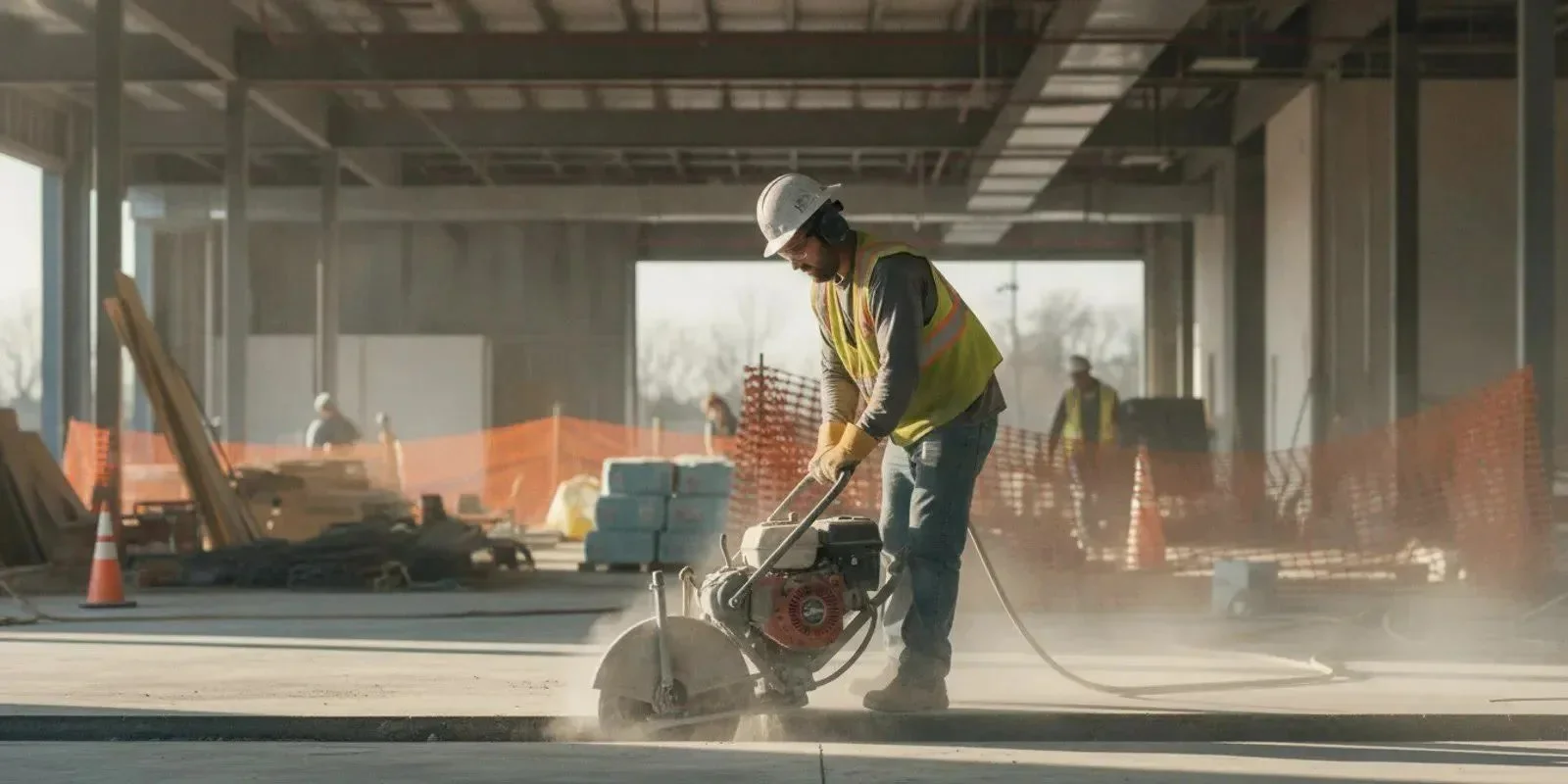
Concrete demolition services are not one kind of removal. A slab on grade, a reinforced wall, a footing, and an elevated deck each need a different plan for access, protection, sequence, and debris. A useful scope starts with what must come out and what must stay.
For Georgia construction and renovation teams, that distinction matters before a crew is scheduled. The right method can keep a clean edge, protect adjacent work, and give the next trade a workable handoff. The wrong scope can leave extra patching, a delayed load-out, or a concrete condition that was never priced.
Call (470) 345-2816 to discuss your concrete demolition scope or review interior demolition services for work inside a renovation.
What do concrete demolition services include?
Concrete demolition services remove or open concrete so the project can reach its next condition. Depending on the scope, that may mean breaking out a pad, cutting a controlled opening. Removing a wall, taking out a footing, or separating part of a slab from concrete that remains.
The service is more than the first break. The plan should account for the removal method, protection of nearby surfaces, material handling, load-out, haul-off, and the condition the crew leaves behind. If the concrete is part of a larger interior or exterior demolition, those boundaries belong in the same project scope.
Slab and pad removal. A crew may saw a boundary, break the concrete into pieces that can be handled, load it, and leave the base ready for the next phase.
Wall and masonry removal. Concrete or CMU walls need a clear keep line, a sequence that controls falling material, and a plan for finishes or structure on both sides.
Footing and grade-beam removal. Below-grade work adds questions about depth, surrounding soil, utilities, spoil, and the condition needed for new work.
Selective structural removal. A portion of an elevated slab, wall, or deck may need to come out while the rest remains stable and protected.
Support work beside demolition. Saw cutting, core drilling, or GPR scanning may support the plan, but each is a defined scope and should not be assumed to be included.
Which concrete demolition service fits the work?
Start with the result rather than the tool. The same breaker or saw can be a good fit on one site and a poor choice on another. Thickness, reinforcement, access, location, and the keep line determine what the crew needs to do.
Slab, sidewalk, or exterior pad
A slab on grade or exterior pad is usually planned around thickness, reinforcement, machine access, saw-cut limits, and haul-off. If the entire pad is coming out, the boundary may be simple. If a portion remains, the scope should show the keep line and the finished edge expected after removal.
Concrete or CMU wall
A wall removal needs more than a square-foot measurement. The quote should identify height and thickness, reinforcement, both-side conditions, nearby finishes, overhead work, and the direction in which material can be handled. A wall that separates occupied or finished areas needs protection and containment in the plan.
Footing, grade beam, or below-grade concrete
Below-grade concrete can affect excavation, soil, utilities, and the location of new foundations. Confirm the depth and the desired final condition before selecting a removal method. If the new work needs a clean trench or a specific elevation, say that in the request rather than leaving the end state open.
Elevated slab or structural section
Removal above grade adds edge protection, load limits, shoring or engineering coordination, and a controlled path for pieces leaving the floor. The structural plan and the demolition sequence need to agree before work starts. A site photo alone is not a substitute for the information the project team uses to confirm stability.
Saw cutting, core drilling, or scanning
Some projects need an opening, a cut line, or a scan before concrete is removed. Cutting can establish a clean boundary. Core drilling can create a round opening for a pipe, duct, or anchor. Ground penetrating radar (GPR) can help locate rebar, conduits, or voids before a cut or break. These services can support demolition, but they do not automatically include breaking, load-out, or disposal.
For a combined scan or concrete-opening scope, see core drilling and GPR scanning. The related concrete scanning guide explains what to compare in the field and the deliverable. Keep the scan, cut, break, and haul-off lines visible so the project team can compare the actual work.
What should be confirmed before concrete demolition begins?
A concrete demolition plan should answer six practical questions before the crew mobilizes. These details do not replace the project team's structural, utility, permit, or safety decisions. They make the demolition scope easier to review with the people responsible for those decisions.
What goes? Mark the removal boundary on drawings, photos, or both. Identify what must remain, including slabs, walls, finishes, utilities, and neighboring work.
What is the concrete? Record thickness, reinforcement, mesh, post-tensioning information, finish, and whether the section is structural or attached to another element.
How does the crew reach it? Describe truck and machine access, stairs, elevators, door widths, floor protection, and the route for pieces and tools.
What is below, behind, or inside it? Note utilities, embedded items, occupied rooms, adjacent tenants, and any scan or investigation already completed.
Where does the material go? State whether concrete is loaded out, recycled, disposed of, or handled by another party. Name any limits on trucks, bins, or site hours.
What is the handback? Define whether the project needs a rough break, a saw-cut edge, a cleaned surface, an excavation, or a condition ready for the next trade.
How do protection and site conditions change the work?
Concrete removal creates impact, dust, noise, vibration, and heavy debris. A plan for an open exterior pad is different from a plan inside a finished or occupied building. Protection should cover the surfaces and people that remain, not just the concrete being removed.
Dust control. Choose a method that fits the space, the adjacent work, and the project's requirements for water or vacuum controls.
Noise and vibration. Schedule impact work around occupied areas and identify sensitive finishes, equipment, or neighboring operations.
Containment and access. Define barriers, temporary protection, walk paths, access windows, and who keeps the work zone clear.
Material handling. Plan how broken concrete moves from the work area to the truck, bin, or staging location without damaging floors or finished surfaces.
Weather and ground conditions. Exterior work may depend on wet conditions, soft ground, drainage, or a machine path that changes after rain.
If a larger demolition includes regulated materials or a required notice, confirm the applicable project requirements before setting the concrete start date. The Georgia EPD asbestos notification requirements are the right starting point for the owner and project team to review the current notice path. The demolition crew can identify the concrete scope, but the owner and project team remain responsible for confirming the overall compliance path.
How do interior and exterior scopes differ?
Interior concrete demolition often prioritizes selective removal and protection. The crew may need smaller equipment, hand carry, floor protection, containment, after-hours coordination, or a staged handback. A concrete wall or slab inside a renovation should be scoped with the finishes and rooms that stay.
Exterior concrete demolition may allow larger equipment and a more direct haul route, but access, utilities, property lines, traffic, soil, and neighboring structures still matter. A pad that looks simple from the street can have limited machine access or an unloading route that changes the method.
When concrete removal is one part of an interior renovation, the interior demolition service is the relevant destination for the broader scope. For an exterior building or site removal, use the exterior demolition service and identify which concrete is included.
What should a concrete demolition quote name?
Two proposals can describe the same area but different work. Ask each provider to separate the lines below so the comparison is based on scope rather than a single total. This is not a rate card. Concrete demolition services are priced from the actual scope, site conditions, access, and material handling.
Quote line.What it should identify.Why it matters.Removal method.Breaking, saw cutting, coring, machine work, hand work, or a combination.The method affects edge quality, time, vibration, and what can remain nearby.Protection and controls.Floor protection, containment, dust, water, noise, and access controls.Unlisted protection can become a change after mobilization.Load-out.Staging, bins or trucks, stairs, elevators, machine paths, and loading hours.Concrete is heavy, and the path out can drive the crew hours.Haul-off.Who removes the debris, and whether disposal or recycling is included.A break without a destination is not a complete removal scope.Handback.A clean edge, rough break, cleaned surface, excavation, or another stated condition.The next trade needs a defined starting point.Assumptions and exclusions.Unknown reinforcement, post-tensioning, utilities, permits, engineering, and work by others.Clear assumptions show what could change the plan.
Removal method and boundaries
The quote should identify breaking, saw cutting, coring, machine work, hand work, or a combination. It should also show the keep line. The method affects edge quality, time, vibration, and what can remain nearby. A missing boundary is the fastest way for two bids to describe different jobs.
Protection and site controls
Ask for floor or surface protection, containment, dust, water, noise, and access controls. Unlisted protection can become a change after mobilization. Interior work and occupied buildings usually need this line written out, not left as a site-day decision.
Load-out and haul-off
Confirm staging, bins or trucks, stairs, elevators, machine paths, loading hours, and who removes the debris. Concrete is heavy, and the path out can drive the crew hours. A break without a destination is not a complete removal scope.
If the project expects concrete to be recycled rather than landfilled, name that expectation in the request. The EPA guidance on construction and demolition materials explains why source separation and recycling are planned before debris is mixed. The related concrete recycling guide covers what Georgia contractors should confirm about clean concrete and haul-off.
Handback and assumptions
Define the clean edge, rough break, cleaned surface, excavation, or other condition the next trade needs. List assumptions and exclusions for unknown reinforcement, post-tensioning, utilities, permits, engineering, and work by others. A quote that names its assumptions is easier to approve and easier to revise if the site differs from the drawings.
For the broader scope questions that surround concrete work, compare the demolition services scope guide and the structural demolition guide before finalizing the request. Use those pages for whole-project scope. Use this page for the concrete that is actually coming out.
What should you send when requesting a Georgia quote?
Send enough information for the first review to be useful. A short project pack can include the items below. If the project also includes a core, cut, or opening, add the count, dimensions, location, and what must remain around it.
Project city, site type, and target work window.
Photos of both sides of walls and the approach to slabs, pads, or footings.
Plans or marked-up photos showing what is removed and what remains.
Known thickness, reinforcement, post-tensioning, utilities, and prior scan results.
Access details, occupied areas, finished surfaces, machine restrictions, and staging location.
The desired handback, plus who handles loading, hauling, disposal, patching, or follow-on work.
If the concrete sits inside a larger demolition, name the interior, exterior, or structural scope. Do not send one request that only says "concrete removal." All Pro Demolition reviews that pack against the actual work before proposing a method.
Frequently asked questions about concrete demolition services
Are concrete demolition services the same as concrete cutting?
No. Concrete cutting creates a controlled cut or opening. Demolition removes material and usually includes breaking, handling, and a defined handback. A project may need both, but the quote should show each scope.
Does concrete demolition include GPR scanning?
Not automatically. GPR scanning can support planning by identifying likely reinforcement, conduits, or voids. But the scan and the demolition should be listed as separate lines unless the proposal clearly combines them.
Can a contractor remove a reinforced concrete wall?
Possibly, when the project team confirms the removal boundary, sequence, access, protection, and structural requirements. Reinforcement, nearby finishes, utilities, and what supports the wall all affect the plan.
Should haul-off be included in the concrete demolition scope?
It should be identified either as included work or as a named responsibility for another party. Concrete is heavy, so leaving haul-off undefined can change the schedule and the project budget.
What is the best way to request concrete demolition services?
Send marked-up photos or plans, concrete thickness and reinforcement information, access details, what stays, the desired handback, and the timing. Those details help the provider review the scope before a site visit or quote.
Plan a concrete demolition scope that the next trade can use
Concrete demolition services are easiest to compare when the project team defines the removal boundary, method, protection, access, debris path, and handback together. Start with what must stay, then ask the crew to explain how the proposed method reaches the required result.
Call (470) 345-2816 or send the scope through the contact form. Include the concrete location, thickness, access, what stays, and the desired handback so All Pro Demolition can review the right work.
