
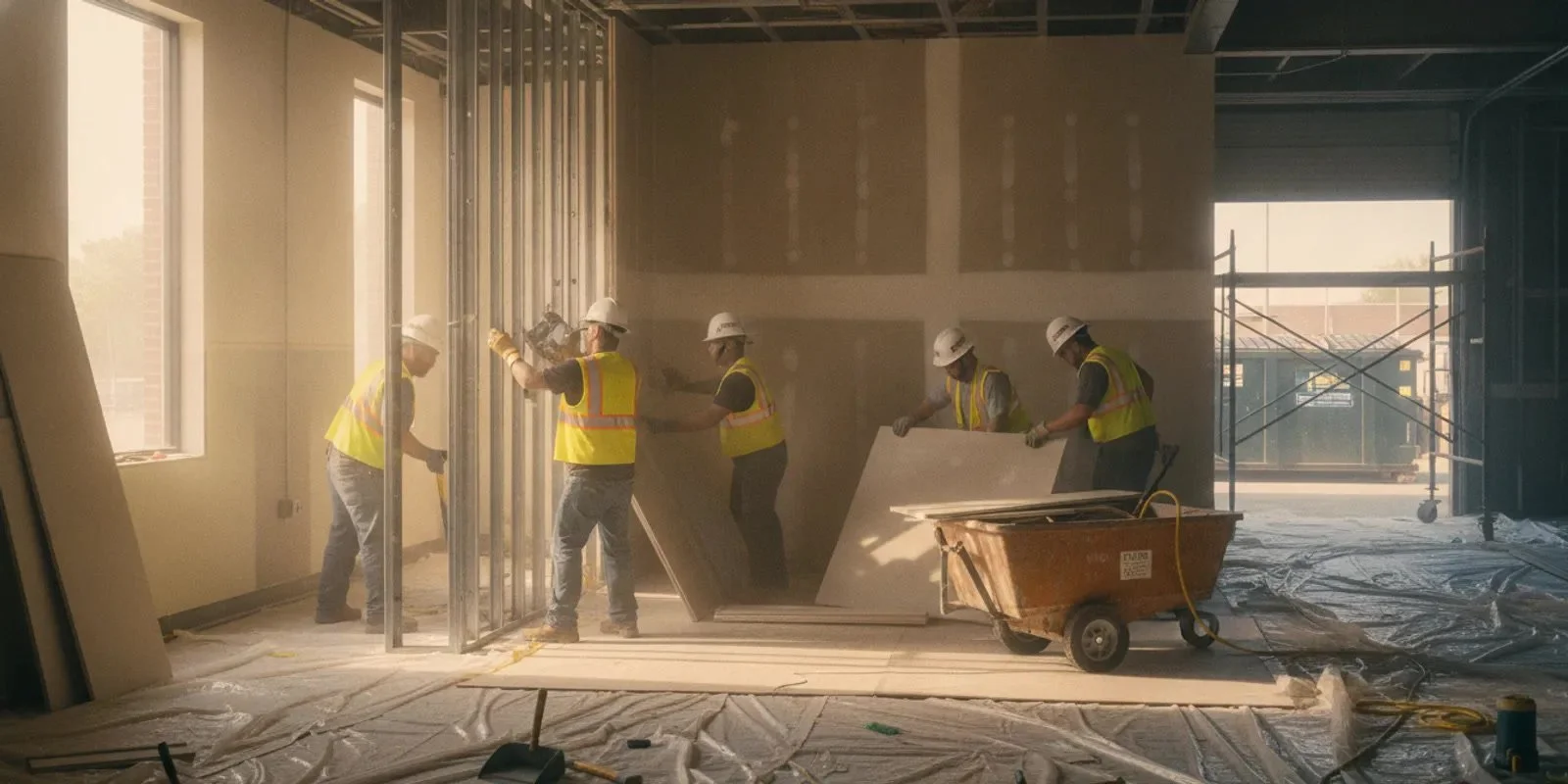
Selective demolition services remove chosen building components while preserving designated materials, structure, and spaces. For Georgia contractors planning a renovation, the hard part is often not naming what comes out; it is defining the boundary, protection, sequence, and handoff so every trade understands the same scope. A useful plan turns a broad request into observable work limits and decisions.
What question should the selective demolition scope answer?
The scope should answer a practical question: which components are removed, to what limits, and what condition must remain when the work is complete? The phrase “selective demolition” describes a controlled approach, not a complete work list. One project might remove a partition and its attached finishes; another might remove a section of ceiling, floor, or exterior assembly while retaining adjacent construction. Drawings, site conditions, and the renovation plan define the actual job.
Start by separating three categories: remove, protect, and resolve. “Remove” identifies included components. “Protect” identifies what stays and the measures needed to guard it. “Resolve” records items that cannot be confirmed until a site walk, opening, or decision by the project team. This avoids treating an assumption as an instruction.
All Pro Demolition provides interior and exterior demolition. For work inside an existing building, review the interior demolition service information; for defined exterior removals, see the exterior demolition service. The service category helps identify the right conversation, but the project documents still need to set boundaries and responsibilities.
How should you mark what comes out and what stays?
Use current drawings where available and supplement them with marked photographs from the actual site. Give each removal area a label or reference number. On the same plan, mark surfaces and systems to remain, transitions, access routes, and any uncertain conditions. If a plan conflicts with what is visible in the field, identify the discrepancy before pricing or scheduling rather than expecting the crew to infer the intended result.
Removal limits: Name the walls, ceiling zones, flooring, fixtures, attachments, and exterior elements included. Describe the start and stop points.
Retained work: Identify structural components, utilities, equipment, finishes, and neighboring areas that must remain in place.
Edges: Show where cuts or removals terminate at floors, walls, ceilings, openings, and adjacent finishes. State the desired endpoint rather than relying on “remove as needed.”
Protection: Specify what needs covering, separating, or otherwise protecting, and assign who installs, maintains, and removes that protection.
Unknowns: List concealed conditions, drawing conflicts, and other questions that must be referred to a named decision-maker.
Consider a partition between a room being renovated and a corridor that remains open. “Remove the partition” leaves several issues unresolved: does removal include framing, trim, wall covering, floor track, and ceiling connection? Does the ceiling grid continue across the former wall? Are both adjoining floor finishes retained? A marked elevation or photograph with a written component list gives the team a clearer basis for review.
For a partial ceiling removal, identify the exact grid or finish boundary and whether hangers, insulation, light fixtures, and other attachments are included. State whether materials immediately beyond the line must remain untouched. If the next trade will install a new assembly, define whether demolition stops at the existing substrate or includes additional removal to expose it. These distinctions affect labor, debris, and the condition available for follow-on work.
Which site conditions should be confirmed before mobilization?
Selective work commonly happens close to active systems, occupied areas, or completed finishes. Before scheduling, confirm who controls the work area, what access is permitted, which hours apply, how materials can enter and leave, and where debris may be staged. Note constraints such as narrow corridors, elevators, shared loading zones, limited storage, or other trades working nearby. The route matters: carrying debris through a finished, occupied space is not the same plan as moving it directly outdoors.
Utility isolation and any required hazardous-material assessment should be handled by the responsible qualified parties before demolition begins. Assign those tasks explicitly and confirm the necessary completion point. A demolition quote is not a substitute for separate determinations about building systems or hazardous materials. Local permit and building requirements depend on the project and jurisdiction; the owner and project team should confirm what applies with the authority having jurisdiction rather than assuming one Georgia-wide answer covers every scope.
Record visible pre-work conditions when appropriate. Dated photographs of retained finishes, nearby equipment, access points, and the marked boundary help the team compare the eventual handback with the starting condition. Photos do not replace contract documents, but they can make a disputed edge or unexpected condition easier to discuss.
Also confirm readiness, not just the calendar date. The area should be available, the scope current, assigned isolations complete, protection requirements understood, and the people authorized to answer field questions reachable. If one of those prerequisites is outstanding, record it as a hold point and agree who will confirm readiness.
How do you plan the sequence and schedule?
Break a larger selective demolition package into locations or components that can be completed and reviewed independently. A sequence might move from one room to another, or from overhead removals to wall and floor work where the design and site conditions call for that order. The plan should reflect the actual assembly and project documents; a generic order cannot replace a site-specific method.
Confirm the work area: Check current drawings, marked limits, access, operating restrictions, and retained items.
Complete prerequisites: Verify required utility isolation, assessments, permits or approvals assigned to the project team, and agreed protection.
Remove by defined phase: Work within the marked boundary, keeping retained work protected and reporting conflicts before expanding the scope.
Handle debris as planned: Separate materials if specified, use the agreed route, and coordinate loading or container access.
Inspect and hand off: Compare the exposed area with the scope, document exceptions, and release it to the next trade only when agreed conditions are met.
Schedule duration depends on more than the area being removed. Material types, attachment details, access, working hours, protection, debris movement, and coordination constraints all influence the work plan. Build time around handoffs: an exposed condition may need review by the general contractor, designer, engineer, or another assigned party before the crew proceeds. That review is a real sequence dependency, not unproductive time to omit from the schedule.
The European Demolition Association describes selective demolition as coordinated operations carried out gradually to promote reuse of materials. That general definition supports planning work in deliberate phases, but it does not determine a particular project's means, sequence, or contract scope. See the EDA overview of selective demolition for context.
What should a practical scope say about protection and debris?
Protection and debris handling are easiest to coordinate when they are described as work items rather than assumed to be included in a short phrase. Identify the retained surfaces and equipment, the protection needed, and which party supplies and maintains it. Specify whether protection is required only during removal or must remain until a later milestone. If the work area borders an operating space, spell out any separation, access, or timing requirements that the project team has established.
For debris, state what is removed from the site, how it moves through the building, where it can be staged, and whether any sorting or separate handling is required. Identify who coordinates container placement and access if those are part of the broader project. Do not assume that a request for removal automatically includes every hauling, disposal, sorting, cleaning, or restoration task; the written scope should distinguish included work from work assigned elsewhere.
A useful comparison is the difference between two conditions. In a vacant room with a direct exterior exit, crews may have a straightforward material route. In a tenant area with shared corridors and restricted hours, the same quantity of material may require more coordination, protection, and planned movement. The scope should capture the actual constraint, not merely the room dimensions.
How should you coordinate the work with other trades?
Before mobilization, name the person who controls the area and the person authorized to approve a scope change. Define the handoff between demolition and the next trade: where the crew stops, what condition it should leave, who inspects, and how exceptions are reported. A simple marked plan can prevent one trade from treating a temporary opening as permission to remove adjacent construction.
Where the renovation also includes concrete openings, cutting, or drilling, show those activities as distinct locations and coordinate their order with demolition and retained elements. All Pro Demolition also provides core drilling and GPR scanning information for projects where those services are relevant. The project team should still specify opening locations, responsibilities, and required approvals. Scanning can inform investigation of subsurface conditions, but results do not replace engineering decisions or utility coordination.
For related planning context, see the guides to concrete cutting methods and planning, concrete scanning and GPR, and concrete core drilling. These are separate work packages; use them to clarify questions, then align the chosen services and sequence in the project documents.
What does a clear handback look like?
Agree on the handback standard before work starts. It might require listed materials to be removed, debris cleared from the defined zone, retained surfaces left in the documented condition, and exceptions reported. It should also say whether the area is merely exposed or must be ready for a specific follow-on task. Patching, reconstruction, surface finishing, and final cleaning should not be presumed included unless the scope says so.
Are all listed components removed, and are designated items still in place?
Do edges and openings stop at the agreed limits?
Was debris handled along the agreed path and sorted as instructed?
Are unexpected conditions, damage, or conflicts recorded and reported?
Is the area ready for the next trade, or does another assigned task remain?
Use a short inspection note and photographs where they add clarity. If actual conditions differ from the plan, pause the affected work and refer the question to the named decision-maker. A crew should not silently extend a boundary because a concealed condition makes the original scope inconvenient. Record the direction and any resulting scope or sequence change so the next update is based on a shared understanding.
What information helps prepare a useful quote?
Send the project location, target schedule, drawings or marked photographs, a list of removals, items to remain, access restrictions, work hours, debris expectations, and known coordination dependencies. Mention whether the package is interior, exterior, or includes concrete cutting or drilling. If some details are uncertain, label them as unknown instead of presenting them as settled facts. This helps distinguish the defined work from questions that need a site review or clarification.
For example, a useful request might identify a partition by drawing reference, note that adjacent corridor finishes remain, attach photographs of both sides, describe the permitted debris route, and state that utility isolation is assigned to another party. It should also say whether the contractor is being asked to price protection, loading, or any other specific task. The example is not a universal checklist for every project; it illustrates how concrete details reduce ambiguity.
All Pro Demolition serves projects within a 150-mile radius centered on Atlanta and provides demolition, concrete cutting, and core drilling. You can review the company’s background and service information and its general guide to selective demolition. For broader Georgia planning considerations, see the building demolition planning guide.
Frequently asked questions
Is selective demolition the same as a full interior strip-out?
No. Selective demolition removes defined components while retaining identified elements. A strip-out may include a wider set of interior materials. The written scope, rather than the label alone, establishes what is included.
Who handles utility disconnection?
Assign that responsibility explicitly in the project documents. Identify the qualified party responsible for isolating or disconnecting each service and the point at which the area is confirmed ready for demolition.
Can selective demolition take place in an occupied building?
It can be planned for an occupied setting, but access, separation, hours, dust and debris controls, and coordination need project-specific review. The owner and project team should define restrictions and responsibilities before scheduling.
Does selective demolition include repairs to retained areas?
Not automatically. State whether edge repair, patching, surface finishing, or reconstruction is included or assigned to another trade. Define the desired condition at the edge so the handoff is clear.
What if the crew finds something different from the drawings?
Pause the affected work, document the condition, and refer it to the designated decision-maker. Continue only after the project team confirms whether the scope or sequence should change.
Share your project details with our team
A clearly marked boundary, protection plan, and agreed handback give every trade a more dependable starting point for selective demolition.
