
When to Hire Demolition Services for a Georgia Renovation
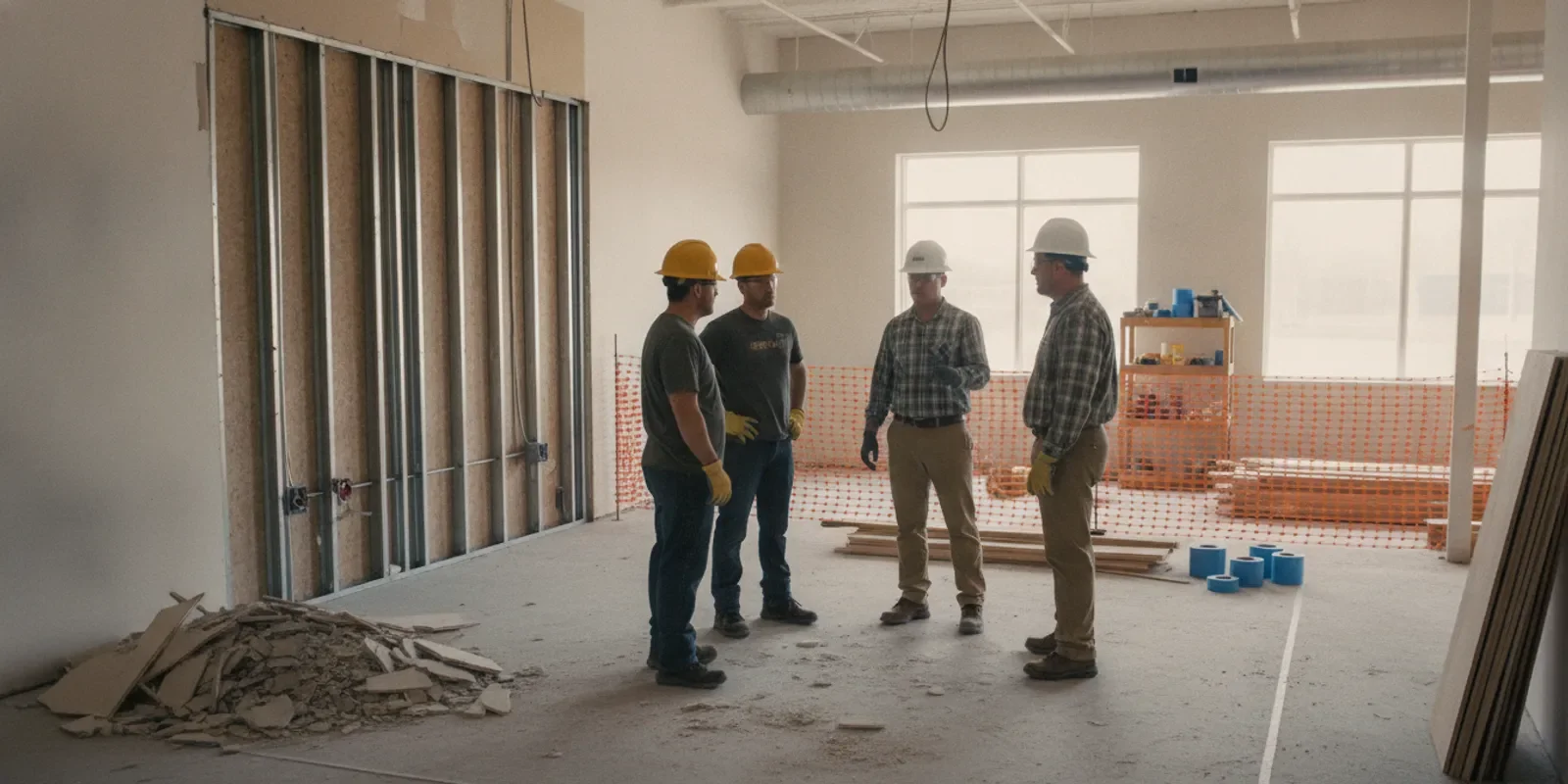
Knowing when to hire demolition services can help a Georgia renovation avoid rushed scope changes, blocked access, and avoidable handoff delays. The right time is usually before the construction schedule is locked, once the work area and intended changes are clear enough to discuss. If you are planning a project, review the broader demolition planning steps as you define the work.
When is it time to bring demolition into the renovation plan?
Bring a demolition contractor into the conversation when the project has moved beyond a general idea and the team can identify what must come out, what must remain, and what work follows. You do not need every drawing finalized to start a useful discussion. You do need enough information to describe the area, the planned removal, and the schedule constraints.
Demolition often sits at the start of a chain of work. It may need to happen before framing, mechanical, electrical, plumbing, concrete work, or finishes can proceed. If demolition is considered only after those trades are scheduled, the project team may have to revise access, sequence, protection, or dates. An early scope conversation gives the team more time to identify those dependencies.
For many renovations, the practical point to call is when one or more of these things is true:
The project plans now show removal of walls, finishes, built-ins, slab sections, or exterior elements.
A general contractor is setting a start date or preparing a trade sequence.
Existing conditions differ from what the team expected, and the affected area needs a defined removal plan.
Concrete openings, penetrations, or cuts must be completed before another trade can install its work.
The work area has access, operating-hours, occupant, or adjacent-space constraints that could affect the sequence.
These are prompts to start planning, not a claim that every project needs the same service or lead time. Project size, access, scope, and the number of trades involved all affect the schedule. A contractor can only assess a specific request using the available project details.
When to hire demolition services: what signs suggest the work should be scoped before the schedule is set?
A few early signals make it especially useful to define demolition scope before the schedule becomes difficult to change.
The removal boundary is not obvious
If the plans or field markings do not make clear what is removed and what stays, pause to clarify the boundary. A short written scope, marked drawing, or site walk can help distinguish the work area from adjacent finishes and features. This is particularly important in a renovation, where existing walls, floors, utilities, or occupied spaces may remain in place beside the work.
Describe the limits in terms the project team can verify: room or floor, wall or slab location, dimensions where known, and the material or assembly involved. Identify anything that must be protected or left undisturbed. Do not assume that a broad phrase such as “clear the area” communicates the same limits to every trade.
Follow-on trades depend on a clean handoff
Ask what must be true before the next trade begins. The answer may include access to an area, removal of a specified element, a completed opening, or a clear handoff of work limits. If that answer affects another contractor's mobilization, include demolition in the sequencing conversation early.
For a larger building project, compare the demolition work sequence with the wider planning issues in this Georgia project planning guide. For work focused on interior removal, see the overview of interior demolition services. These links provide context; the exact scope still depends on the project.
Concrete work is part of the renovation, not an afterthought
Concrete cutting and core drilling are distinct tasks from broad removal. If the plans call for a controlled opening, a trench, a slab section, or a round penetration, identify that need when the team discusses sequencing. The shape, dimensions, concrete element, access, and intended use of the opening may change which work method fits.
Review how concrete drilling services are matched to a structure if you are deciding whether a circular opening or another drilling task is involved. If the project requires holes for a planned route through concrete, core drilling and GPR scanning services are another relevant part of the conversation. Share the opening's purpose and dimensions rather than asking for a method based on a vague description.
Site access or work hours could constrain the sequence
Tell the contractor about entrances, loading areas, elevator or corridor restrictions, occupied rooms, work-hour limits, and other trades using the same space. These details can affect when the work can happen and how the crew reaches the area. They may also change what the project team needs to coordinate before the work date.
Do not wait until mobilization to raise a known access constraint. A site discussion or a few current photos may help explain the conditions, but photos do not replace a project-specific review when the scope or access is uncertain.
How should the team choose the right point in the project timeline?
Think of the decision as a sequence of checkpoints rather than a single calendar date. Each checkpoint answers a different question: Is there enough information to define the work? Can the team fit it into the schedule? Are the conditions ready for the planned work?
During early planning: Identify which items are expected to be removed and which trades need the area afterward. Raise demolition when the team begins outlining the renovation sequence.
When the scope is taking shape: Confirm the affected locations, boundaries, known materials, dimensions, and any items to protect. Resolve gaps that could change what is being removed.
Before dates are committed: Discuss access, work hours, site occupancy, other trades, and the desired handoff. Avoid treating an assumed duration as a confirmed schedule.
Before work begins: Reconfirm that the work area, access, scope, and relevant project conditions match what was discussed. Tell the contractor about changes since the initial conversation.
This sequence does not set a universal number of days or weeks. The project team should confirm timing directly with the contractor after discussing the actual work and conditions. A small, clearly defined interior scope may have different planning needs from a multi-area renovation or a project with complicated access.
Demolition is also not a substitute for project approvals or required notices. For facility demolition in Georgia, the University System of Georgia's Due Diligence Guidelines: Demolition of Facilities says Georgia EPD must be notified 10 working days before demolition, regardless of whether asbestos is present. Confirm which requirements apply to your project with the responsible project team and the relevant agency; do not infer compliance from a contractor quote or an assumed schedule.
Use schedule gates instead of guessing at lead time
A useful schedule check is to name the decision that must be made at each meeting. At the first planning review, determine whether demolition is in the project scope at all. At the scope review, settle the removal limits and identify the information still missing. Before the schedule is issued, confirm that the proposed work window leaves room for access coordination and the next trade's start. This makes the discussion concrete without inventing a standard lead time that may not fit the project.
For example, a renovation team may be waiting on final room dimensions but already know that a partition and a section of floor finish must be removed. It can raise the work early, label dimensions as pending, and ask what additional information will be needed to firm up a proposal. By contrast, if the demolition boundary itself is still under design, the immediate next step is to settle that boundary, not to treat a tentative date as confirmed.
What project details help define demolition scope?
A useful first conversation makes the proposed work concrete. You can start with incomplete documents, but be clear about what is known and what remains uncertain. Include information that helps the contractor understand the space, the work limits, and the handoff that the rest of the project needs.
Project location and type: Give the Georgia project location and describe whether the work is part of an interior renovation, exterior change, or another defined project.
Work area: Identify the building, floor, room, or exterior area. State whether the site is occupied or shared with other work.
Removal scope: List the elements to remove and the elements to remain. Provide marked plans, dimensions, or photos if available.
Concrete requirements: Describe any slab cuts, wall cuts, or penetrations separately. Include known dimensions and the intended follow-on use.
Access and sequence: Note site entry, material movement constraints, work-hour limits, dates under consideration, and trade handoffs.
Unknowns: Flag anything that has not been confirmed in the field or could change the work area. Do not present assumptions as verified conditions.
A quote request should invite questions where the scope is unclear. For broader context on a removal project and what may follow it, see this guide to demolition and debris removal. Use the details relevant to your job rather than assuming that every project includes the same tasks.
Prepare a concise scope package
Before sending a request, gather the current version of the documents that explain the work. A short package might include a marked plan, a written list of what comes out and what remains, a few site photos, and a note about schedule constraints. Label each file with the area it shows and the date it was prepared. If a drawing is preliminary, say so. That simple distinction helps prevent an early concept from being mistaken for an approved field condition.
It can also help to write the intended end condition in plain language. For instance: “Remove the identified finish in this room while leaving the adjoining wall in place,” or “Create the shown opening for the next trade, with dimensions to be confirmed.” These descriptions do not replace drawings or a site review. They give everyone a clear starting point and reveal where the request still needs clarification.
When should concrete cutting or core drilling be discussed separately?
Discuss concrete cutting or core drilling when the renovation requires a precise cut or penetration in an existing concrete element. These needs can be easy to miss if the request is described only as “demolition.” They are worth calling out because the project may need a specific opening, location, dimension, or sequence that differs from general removal.
For example, a team might need a defined slab section removed, a wall opening created, or a circular penetration for a planned route. The right question is not simply whether concrete is present. Ask what opening is needed, where it belongs, what dimensions are known, what must remain around it, and which trade will use it next.
Concrete cutting may be part of a broader demolition plan, but it should be described as its own work requirement. The Georgia concrete cutting planning guide can help a project team organize method, site-condition, and handoff questions. For a more specific explanation of core drilling, read what concrete core drilling involves. These resources are planning references, not a substitute for reviewing the actual structure and scope.
If you are unsure whether the project calls for removal, cutting, or drilling, describe the desired end condition. A contractor can then discuss the relevant service and any information still needed to assess the request.
Separate the work descriptions, then coordinate the sequence
When one renovation includes broad removal and a precise concrete opening, list each requirement separately in the scope notes. Include the location and known size of the opening, the concrete element involved, what must remain around it, and the trade that needs the result. Then show how the two tasks relate on the schedule. The point is not to decide a technical method before the project is reviewed. It is to make sure the particular cut or hole is not hidden inside a general demolition description.
This separation also helps when the plan changes. If the room layout stays the same but the opening moves, the project team can identify which part of the request needs a new review. If the removal boundary changes instead, it can update that scope without assuming that every related task has changed too. Clear descriptions make revisions easier to communicate across the team.
What can delay a demolition decision?
Several recurring planning gaps can make a late request harder to coordinate. The point is not to predict a delay in every case. It is to identify questions the project team can address before the work date is fixed.
Unclear limits: The plans do not show what is to be removed or where removal stops.
Unconfirmed conditions: The team has not checked whether field conditions match the assumptions used to plan the work.
Competing access needs: Demolition, deliveries, occupants, and follow-on trades need the same route or work area.
Late changes: The renovation design or intended opening changes after the demolition scope was discussed.
Handoff not defined: The next trade's needs are not clear, so the team cannot agree on what completion should look like.
Requirements not checked: The project team assumes approvals or notices are unnecessary without confirming the applicable rules.
When a change occurs, share it promptly with the contractor and the other affected trades. A small drawing revision or a different opening location can alter the scope. Keeping the current information in one place helps the team discuss the same version of the work.
Distinguish an information gap from a scope change
Not every open question means the project is ready to proceed, and not every new detail means the entire request must be rebuilt. Keep a short list of unresolved items, assign someone on the project team to confirm each one, and note whether it affects the work boundary, access, sequence, or expected handoff. A missing dimension might be an information gap; moving a wall or changing the area to be removed is a scope change. Making that distinction helps the team decide whether to provide a clarification or circulate a revised request.
Use one current plan or written scope as the shared reference. If old and new versions are both circulating, identify which one is current and summarize what changed. This is especially useful when several trades depend on the same area. It reduces the chance that a contractor plans from a superseded boundary or that the next trade expects a different condition than the demolition scope describes.
How can a Georgia project team make the next step clear?
Before requesting a quote, write a short project brief. State what must be removed, where it is, what must remain, when the area may be available, and what other work depends on the handoff. Attach marked drawings or photos if they clarify the request. Label uncertain information instead of filling in gaps with guesses.
Then ask for a project-specific discussion of scope and timing. A quote request is a starting point for understanding the work, not a guarantee of a schedule or a substitute for coordinating with the general contractor, owner, designers, and follow-on trades. If concrete cutting or core drilling is needed, identify it explicitly so the team can discuss it alongside demolition rather than discovering it as an unplanned task.
All Pro Demolition provides demolition, concrete cutting, and core drilling services in Georgia. If you have a renovation scope to discuss, review exterior demolition services when the work involves exterior elements, or use the contact page to describe the project and request a quote.
Contact our team about your project
Frequently asked questions about when to hire demolition services
Should I contact a demolition contractor before plans are final?
You can start a scope conversation before every plan is complete, especially if demolition affects trade sequencing or the renovation schedule. Explain what is known, identify open questions, and update the contractor if the scope changes. Do not treat an early discussion as confirmation of final scope or dates.
How early should demolition be scheduled?
There is no single lead time that applies to every renovation. Discuss timing before the project team commits to dates, then confirm it with the contractor using the actual scope, access, work area, and site conditions. Also have the responsible team check any required approvals or notices.
Do all renovation projects need demolition services?
No. The need depends on the planned work. A project may involve removal, a defined concrete cut or penetration, or no demolition work at all. Describe the intended result and ask which service, if any, fits the scope.
Can demolition and concrete cutting be part of one renovation plan?
Yes, a project may need both, but they should be identified as separate work requirements in the scope discussion. Specify what must be removed and what openings or cuts are needed, then coordinate how each task affects the next trade.
What if the work area or scope changes after I request a quote?
Tell the contractor and project team as soon as the change is known. Share an updated drawing, dimensions, or description and confirm whether the change affects scope, access, sequence, or timing before relying on the earlier plan.
Request a quote for your Georgia renovation
Early scope and schedule conversations help a project team decide whether demolition belongs in the plan and what information is still needed before work begins.
