
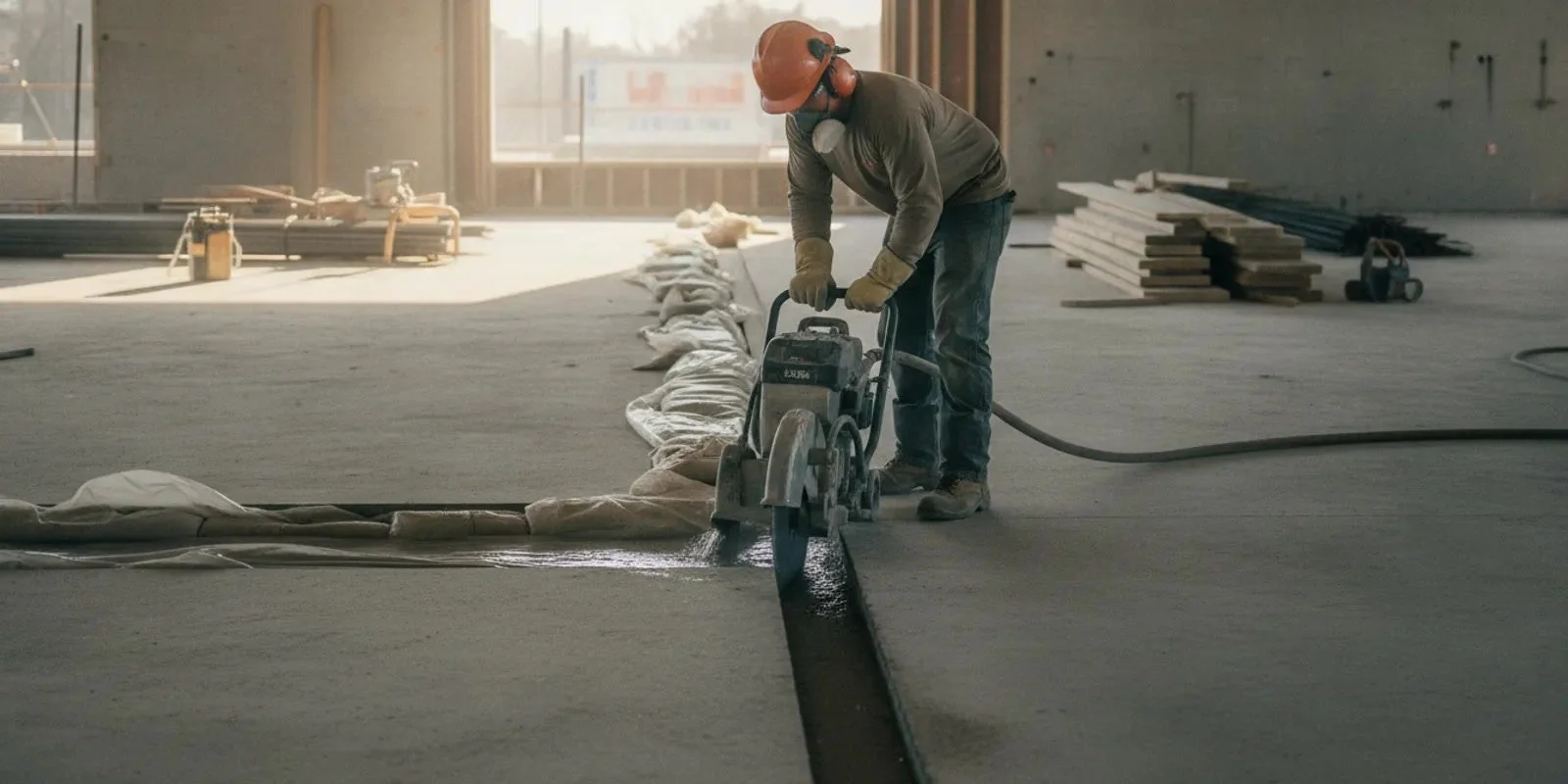
Concrete cutting contractor cost is shaped by the work a crew must perform, the conditions at the site, and what the quote includesânot just the length of a cut. For a Georgia project, a useful estimate starts with a clear scope: what needs to be cut, where, how deep, when the work can happen, and what must be protected or removed afterward.
That distinction matters when a contractor is comparing proposals. Two totals can look far apart even when both are based on reasonable assumptions, because one may include setup, water management, cleanup, or additional mobilization while another prices only the cutting operation. The goal is not to chase a generic price per foot. It is to make the work comparable before choosing a provider.
Why does concrete cutting contractor cost vary?
There is no single rate that applies to every slab, wall, or opening. A short cut in an open, accessible area can require a different setup from a deep cut in a busy building where access is restricted and finished surfaces need protection. Contractors need enough project detail to estimate the method, time, equipment, crew, and site controls involved.
When you ask for an estimate, think of cost as the result of several connected decisions:
Cutting method: The job may call for a floor saw, wall saw, hand-held saw, or another approach. The right choice depends on the surface, cut geometry, access, and required finish.
Dimensions and depth: Total length matters, but depth and thickness affect the work too. A quote should clarify which dimensions the contractor assumed.
Number and shape of cuts: A straight, continuous cut is not the same scope as multiple openings, corners, short segments, or cuts that need precise endpoints.
Access and setup: Distance from equipment access, stairs, elevators, occupied areas, limited working space, and site restrictions can change the time and setup needed.
Water, dust, and debris controls: The work plan may need to address water use or collection, protection of adjacent areas, and who handles resulting slurry and debris.
Schedule and site coordination: Work windows, phasing, other trades, building access, and required shutdowns can affect how efficiently the job can proceed.
Scope beyond the cut: Cutting, breaking out the section, lifting pieces, hauling material, and disposal are separate activities unless the proposal says otherwise.
These are not automatic add-ons in every case. They are questions that help define what a contractor is being asked to price. A careful estimate identifies the assumptions rather than hiding them inside a single unexplained number.
What work are you actually asking the contractor to do?
Start by describing the result you need, not just the tool you think should be used. For example, a plumbing or electrical opening through a slab may need a core drilled at a specified diameter and location. A trench through a floor may call for a series of straight cuts before the concrete is removed. A boundary cut around an area may be part of a larger selective demolition scope.
Concrete cutting and core drilling are related but not interchangeable. A saw creates a linear cut; core drilling creates a round opening. If a project needs both, list each opening and cut separately. All Pro's overview of Georgia concrete cutting can help teams think through method and planning questions. For a core opening, review the companyâs core drilling and GPR scanning service information and describe the required diameter and location in the request.
Define what happens to the concrete after it is cut. Does the general contractor have a separate crew to break out and remove the section? Should the cutting contractor also remove pieces, load them, or arrange disposal? If the answer is not written down, bidders may include different scopes and their totals will not be directly comparable. For broader removal work, see the guide to concrete demolition services.
Which job details have the biggest effect on an estimate?
Dimensions, thickness, and cut layout
Provide a sketch or marked-up plan when possible. Show each cut or opening, approximate length and width, known slab or wall thickness, and the side from which the work can be accessed. Mark corners, intersections, and any segments that stop at a boundary. If thickness is unknown, say so rather than guessing; the contractor can then state what needs to be confirmed before the estimate is final.
For floor work, distinguish the length of the saw line from the size of the concrete area that will be removed. A rectangular opening, for example, has several cut lines, while its area is a different measurement. Showing both prevents a misunderstanding about how much cutting is included. For a project centered on a slab, the article on scanning a concrete slab before work is a useful companion to the scope conversation.
Access, occupancy, and working hours
Tell the contractor how equipment and crew will reach the work area. Note door widths, ramps, floor levels, loading access, distance from parking or staging, and any areas that must remain open. Mention whether the building is occupied, whether work must happen after hours, and whether there are specific check-in or escort procedures.
Access details matter even when the cut itself looks simple. A crew may need to move equipment through a finished corridor, protect surfaces, or work in a limited window. Share those facts early so the proposal reflects the real conditions and the project manager can coordinate the schedule.
Utilities, embedded items, and adjacent finishes
Identify known utilities, conduits, reinforcement, post-tension systems, or other embedded items, and provide available drawings or prior survey information. Do not assume a visible line on a plan confirms every condition in the field. Ask how the project team will address uncertainty before a cut is made, and who is responsible for providing or reviewing any required scanning or locating information.
Where scanning is part of the plan, state its location and purpose as a separate scope item. The companyâs guide to concrete scanning in Atlanta and its explanation of ground penetrating radar concrete scanning offer background on how scanning fits into project planning. Do not treat an estimate for cutting as proof that every subsurface condition has already been checked.
Also point out finished flooring, walls, equipment, or other surfaces near the cut that must remain. Include any known restrictions on water, noise, vibration, dust, or access. The project team and contractor can then discuss suitable controls and responsibilities instead of discovering a constraint after mobilization.
What should a concrete cutting quote include?
A useful proposal should let you understand the work, the assumptions, and the boundary between included and excluded tasks. It does not need to predict every unforeseen condition, but it should make the planned scope clear enough to compare with another proposal.
Location and scope: Identify the project area, number and type of cuts or openings, and the dimensions or quantities used for pricing.
Method or equipment assumptions: State the proposed cutting approach when known, along with any site condition that could require a change.
Depth and access assumptions: Note the assumed material thickness, working face, access, setup area, and work hours.
Included controls: Explain what surface protection, water handling, dust management, or cleanup is included, as applicable to the proposal.
Removal boundary: Say whether the price covers cutting only, breakout, handling pieces, loading, hauling, and disposal. Avoid relying on a verbal assumption.
Schedule and mobilization: Record the planned work window, phasing, number of mobilizations if known, and coordination needs.
Exclusions and change conditions: Identify unknowns, access restrictions, concealed conditions, or additional work that could change the scope or price.
Estimate basis: Clarify whether the amount is a fixed proposal, an allowance, or based on measured quantities subject to confirmation.
Ask the contractor to separate optional tasks where practical. For instance, if you may need a crew to remove the cut section, request a clear description of that work rather than assuming it is included. This makes it easier to compare a cutting-only proposal with one that includes demolition and debris handling.
How can you compare bids fairly?
Put each proposal beside the same written scope and compare more than the bottom line. If one bidder assumes a shallow cut and another assumes a deeper section, the totals do not answer the same question. The same is true when one includes after-hours work, cleanup, or removal and another does not.
Normalize the quantities. Check that each bidder is pricing the same locations, cut lengths, dimensions, thickness assumptions, and number of openings.
Separate the tasks. Compare saw cutting, core drilling, scanning, breakout, material handling, hauling, and disposal as distinct items when they apply.
Review access and schedule. Confirm every bidder knows the work hours, occupied conditions, access route, staging limits, and phasing requirements.
Read exclusions closely. Look for items such as water collection, surface protection, cleanup, utility locating, or restoration that may sit outside the quoted scope.
Ask about assumptions. Request clarification in writing when a dimension, site condition, or responsibility is unclear. Do not fill gaps by assuming the most favorable interpretation.
Compare the plan, not only the price. Consider whether the proposed method and sequence fit the site constraints and whether the quote gives the project team enough detail to coordinate.
A lower total may still be the right choice if the scope is equivalent and the contractor's plan meets the project needs. A higher total may include work or controls that another bidder omitted. The comparison becomes meaningful only after you identify those differences. For more questions to use when evaluating providers, see how to choose a concrete sawing contractor in Georgia and the related guide to Georgia concrete cutting.
How should you plan water, slurry, and cleanup?
Cutting methods and site conditions influence the water and residue generated by the work. Before approving a proposal, ask what the contractor expects to use, how the work area will be protected, and how collected water or slurry will be managed. Confirm who is responsible for cleanup and what the site requires for handling and disposal. The proposal should reflect the actual jobsite rules rather than leaving those responsibilities open.
Include floor drains, nearby equipment, finished spaces, pedestrian routes, and access to a suitable work area in the discussion. If the owner or general contractor has site-specific controls, share them with each bidder. Do not assume that âcleanup includedâ means the same thing to every contractor; ask what area and material that phrase covers. Clear boundaries help avoid arguments over residue or restoration after the cut is complete.
What information should you send to request an estimate?
A complete first request helps a contractor identify the scope and ask focused follow-up questions. Gather the details below before contacting providers:
Project address and the requested work dates or schedule window.
A short description of the project purpose and the result needed.
Marked drawings, photos, or a sketch showing each cut and opening.
Approximate lengths, widths, diameters, and material thickness where known.
Available information about reinforcement, utilities, embedded systems, or prior scanning.
Access route, staging area, work hours, occupancy, and any building rules.
Details about water use, dust or noise limits, surface protection, and cleanup expectations.
A clear statement about whether cut sections should be broken out, removed, hauled, or left in place.
The project contact who can answer technical or scheduling questions.
If a drawing is not ready, send photos and a written description, then note which dimensions are approximate. A contractor may need to confirm details before providing a final scope. When speaking with a provider, also ask what should be checked before work begins and which items remain the responsibility of the general contractor or owner.
For safety and site planning, consult the applicable requirements and guidance for the specific work. The Occupational Safety and Health Administration is a government resource for workplace safety information; project teams should confirm which rules apply to their job and coordinate responsibilities with their contractors.
What should your first conversation accomplish?
The first conversation should establish whether the contractor understands the requested result and what information is still missing. Walk through the marked plan or photos. Confirm the cut locations, dimensions, access, schedule, surrounding finishes, and the intended handling of the concrete after cutting. Then ask the contractor to identify assumptions and exclusions in the written proposal.
All Pro Demolition provides demolition, concrete cutting, and core drilling services. The project team can use a concrete cutting cost planning guide for Atlanta for additional quote factors, or review slab sawing in Georgia when planning a linear floor cut. To discuss a specific scope, send the project details and request a quote.
Learn more and discuss your project
Frequently asked questions about concrete cutting contractor cost
Can I estimate concrete cutting cost from cut length alone?
Cut length is useful, but it is not enough to compare every job. Depth, material thickness, cut layout, access, work hours, controls, and what happens to the cut section can also shape the scope. Give contractors the same dimensions and jobsite details so their proposals are based on comparable assumptions.
Should concrete removal be included in a cutting estimate?
Only if the proposal says it is included. Cutting may be followed by breaking out the section, lifting or handling pieces, hauling, and disposal. Those tasks should be identified separately or clearly described in the scope so the project team knows who is responsible.
Does scanning always appear in a concrete cutting quote?
No. Scanning is a separate planning task and should be identified in the proposal when it is part of the requested work. Share known information about embedded items and ask how the project will handle unresolved subsurface conditions before cutting begins.
What if the slab thickness is unknown?
State that it is unknown and provide any drawings, photos, or available project records. Ask the contractor how the estimate accounts for that uncertainty and whether a site review or confirmation is needed before the scope and price can be finalized.
Why do two contractors give different totals for the same project?
They may be using different assumptions about dimensions, depth, method, access, schedule, water handling, cleanup, removal, or exclusions. Compare the written scope line by line and ask each contractor to clarify differences before deciding which proposal best fits the project.
What should you do next?
Prepare a marked plan or clear photos, list the dimensions and site constraints you know, and spell out whether the cut sections need to be removed. Then compare proposals against the same scope and ask each contractor to explain any assumptions that could affect the work. That gives your Georgia project team a stronger basis for evaluating the price and planning the job.
