
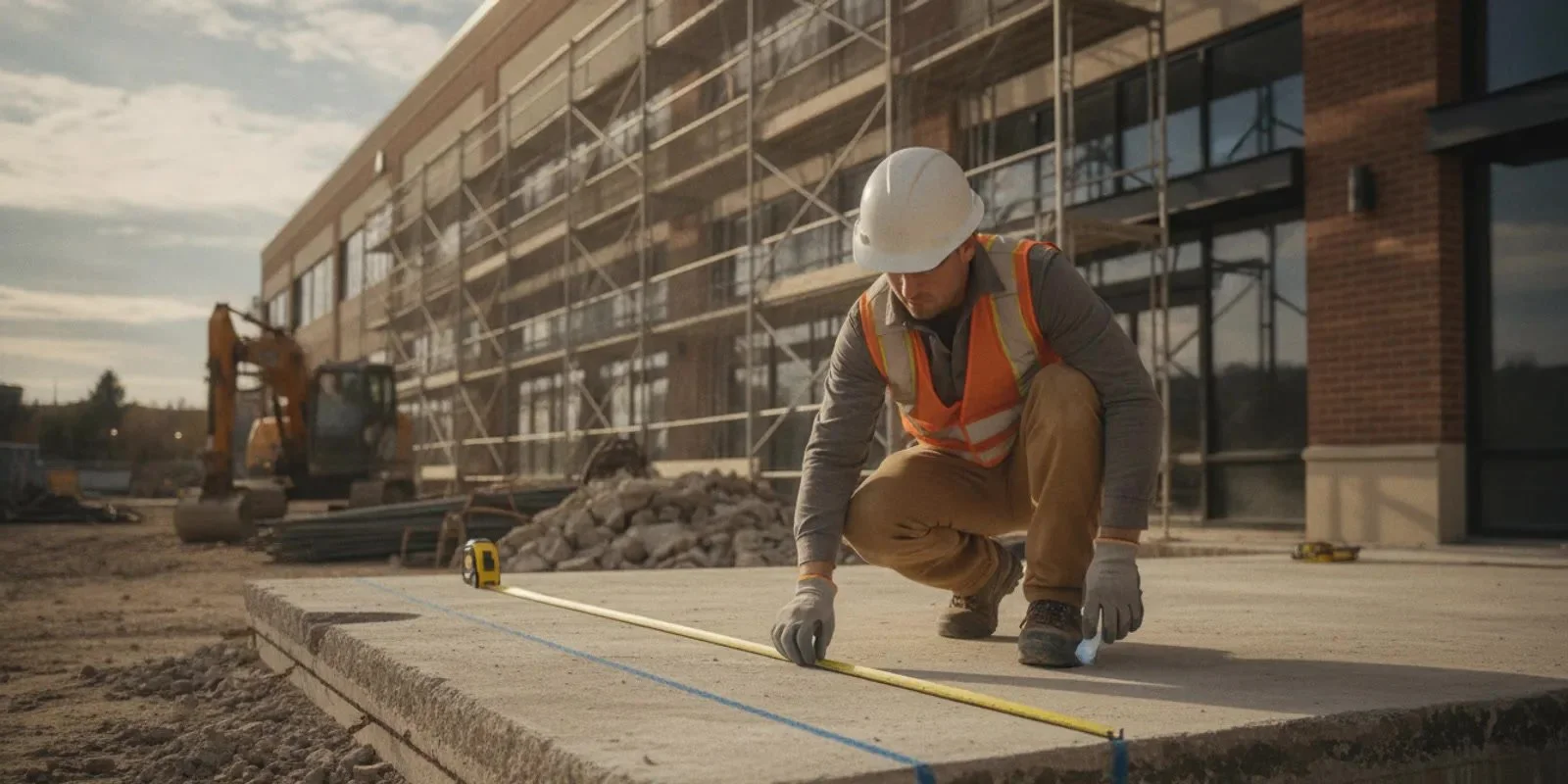
Planning an exterior project often starts with one question: what affects concrete removal price per square foot? A unit rate can help you compare early options, but it cannot describe every job by itself. Slab thickness, reinforcement, cutting, equipment access, debris handling, and the exact limits of removal all shape the work. The most useful comparison starts with a defined scope, not a number without context.
Why does concrete removal price per square foot vary?
Square footage measures the surface area of a slab. It does not tell you how much material is below that surface, how it is connected to other concrete, or how crews can reach it. Two areas with the same dimensions can require different work if one is a thin, open patio and the other is a thick reinforced pad beside a building.
A quoted unit rate may include breaking, saw cutting, loading, hauling, disposal, and cleanup—or it may cover only part of that list. The project total may also include mobilization, site protection, or work that is difficult to express as a simple per-square-foot amount. Before comparing rates, find out what each proposal includes and excludes.
For a broader explanation of how demolition estimates are framed, see this Georgia demolition cost planning guide. Concrete removal is a specific scope, so use general cost guidance as background rather than a substitute for details about your slab.
Which details have the greatest effect on the estimate?
Area, thickness, and volume
Measure the length and width of each section, then record the known or estimated thickness. For a rectangle, multiply length by width to calculate surface area. If the shape is irregular, divide it into rectangles or other simple shapes, calculate each area, and add them together. Keep separate areas separate when their thicknesses or conditions differ.
Thickness matters because the same surface area can represent substantially different amounts of concrete. If you do not know it, say so rather than guessing. Construction drawings, prior project records, exposed edges, or a site review may help clarify it. Note whether a measurement is confirmed or only an assumption.
Area is still useful for a first comparison. For example, if a clearly defined 400-square-foot area has a written project total of $4,800, dividing the total by the area gives an effective rate of $12 per square foot. That arithmetic does not establish a market price or prove that another quote is comparable. It only describes the relationship between that particular total and area. The assumed scope and included work still need to match.
Reinforcement and concealed items
Rebar or wire mesh can affect the way concrete is separated and handled. Conduits, pipes, embedded anchors, or previous repairs may also matter. Share available drawings and scan information, and identify uncertainties directly. A surface photo does not establish what is inside a slab.
Where a planned cut or removal boundary is close to an embedded service or an element that must remain, resolve the uncertainty before work begins. The right next step depends on the project and site. For work involving penetrations or precise cuts, ask whether a separate scanning or cutting scope should be coordinated; do not assume either task is included in a slab-removal estimate. All Pro Demolition also describes core drilling and GPR scanning as service areas.
Access, staging, and protection
Describe how equipment and debris can move in and out. Record gate widths, stairs, overhead clearance, travel distance to the work area, loading access, and where trucks may stage. Mention occupied spaces, operating hours, neighbors, landscaping, walls, foundations, and finished surfaces that need to remain undisturbed.
Restricted access can affect the sequence and handling plan. A slab that is easy to reach from an open paved area is not the same as one behind a narrow doorway or within a space where other work continues. Share the constraints early so that proposals address the actual site rather than an assumed clear path.
Removal boundaries and cutting
Mark exactly what is to be removed and what must stay. A whole slab removal has different boundaries from a rectangular opening cut into an existing floor or a strip removed along a building. State whether edges need to be straight and whether adjacent concrete must remain intact. Identify depth where relevant and describe the expected condition at the boundary.
Ask whether saw cutting is included and which edges it covers. A price for breaking out a marked area may not include precision cuts that separate it from neighboring concrete. The concrete removal services page describes the relevant exterior demolition service; use a project discussion to confirm the method and limits for your site.
Loading, hauling, and disposal
Concrete becomes heavy debris, and its handling is part of the scope. Confirm who will load it, move it through the site, haul it away, and arrange disposal. Ask whether disposal is included in the total, whether material may be left in a designated area, and whether separation from other debris is expected.
These details can explain why two project totals differ even when their measured areas are similar. A proposal that leaves broken concrete on site does not cover the same deliverable as one that includes loading and removal. For a separate look at the debris stage, review this demolition and debris removal guide.
What is included in the quoted total beyond the slab area?
Ask whether the estimate is a single project total, a unit rate, or a combination. A unit rate may be applied to a measured area, while a lump sum may cover a specific set of tasks and conditions. Neither format is complete unless the scope states what work the contractor is taking on. Ask whether any minimum mobilization, setup, protection, or cleanup work is listed separately or included in the total. Do not presume a charge is present or absent; request the written breakdown that applies to your job.
Look for a clear boundary between removal and the next construction phase. A concrete removal scope may end after the slab and debris are removed, while grading, base repair, compaction, replacement concrete, or finish restoration may be separate work. If those tasks matter to your schedule, identify them as requested outcomes and ask who is responsible. This avoids comparing a removal-only estimate with a broader proposal that includes follow-on work—or assuming an area is ready for the next trade when that has not been specified.
Also ask how an unexpected condition will be handled. For example, an exposed edge may reveal that the slab extends farther than the marked plan, or a section may be thicker than the available records suggest. The estimate should make clear what information is needed before work, which assumptions define the price, and how a change will be reviewed and approved. The purpose is not to predict every hidden condition; it is to agree on a communication path before one affects the work.
If the project has more than one removal zone, ask whether each area is priced and described separately. A line-item scope can make it easier to pause or sequence one zone without confusing it with another. It also helps identify whether protection, haul routes, and debris handling apply to all zones or only a particular area. Keep the marked plan and written estimate together so that the boundaries being discussed match the boundaries being priced.
How do you compare per-square-foot quotes fairly?
Start by asking each contractor to price the same area and list the same requested deliverables. Then ask how the contractor arrived at any unit rate. Some scopes may be estimated as a defined task or combined project rather than a flat area rate. That is not automatically a problem; the important point is to know what the total covers.
Use a comparison sheet with one row per scope item. Record the answer, not just a check mark, so that assumptions and exceptions remain visible:
Removal area, thickness, and whether measurements are confirmed.
Reinforcement and concealed services known, suspected, or unverified.
Breaking method, saw-cut boundaries, and any required openings.
Protection for adjacent concrete, structures, finishes, and active areas.
Access limits, equipment route, staging location, and working hours.
Loading, hauling, disposal, cleanup, and material that may remain.
Preparation expected from the owner or general contractor.
Exclusions, assumptions, and conditions that could change the scope.
Imagine two written estimates for the same measured area. One includes cutting the perimeter, loading, and hauling; the other includes breaking and loading but leaves haul-off unclear. Comparing only their totals may make the second appear less expensive, but the deliverables are not yet equivalent. Ask for the missing information, then compare the revised scopes. If the rates are still different, ask which site condition or work item explains the difference.
You can also normalize a proposal for your own comparison without mistaking the calculation for a new quote. Divide the written project total by the measured area, but keep any separate costs and exclusions visible. If a contractor provides a lump sum plus optional haul-off, calculate the base rate and the rate with haul-off separately. That shows how the option affects the comparison. Do not add an unconfirmed disposal allowance or assume that a separate line item is unnecessary; ask the contractor what the option covers and whether it applies to all debris.
Check that the area used in each calculation is measured the same way. One estimate may include a narrow strip or an irregular corner that another excludes. If the requested work has separate zones, list each zone and its dimensions on the plan. This makes it easier to notice whether a bid has omitted a section or priced an additional boundary. For a simple rectangle, length multiplied by width is enough; for an L-shaped area, split it into two rectangles and make sure their shared area is not counted twice. Accurate area does not answer every pricing question, but it prevents an avoidable mismatch before comparing scope.
For additional context about concrete-specific demolition work, consult the concrete demolition project guide and the cost to remove a concrete slab guide. They can help you frame questions, but your own measurements, access conditions, and removal limits remain central to a project quote.
What information should you send before requesting an estimate?
A concise project packet helps a contractor understand what you are asking to remove. Include the site address, project contact, approximate dimensions, known thickness, and photos from several angles. Add a marked plan or a clear sketch showing what stays and what goes. Label uncertain measurements as estimates.
Useful photos show the full slab, its edges, nearby structures, access routes, and the area where debris could be staged. If you can safely photograph an exposed edge that shows thickness, include it. Do not enter a restricted or unsafe area to get a picture. Include notes about stairs, narrow gates, overhead limits, truck access, working hours, and ongoing site operations.
Attach relevant drawings, prior scanning results, and information about reinforcement or earlier repairs. Identify the concrete element as accurately as you can: exterior pavement, a pad, steps, a curb, or another feature. If you are not sure what it is, say that it is unknown. A clear uncertainty is more useful than a confident but unsupported assumption.
State the intended result, not only the demolition method. Explain whether you want the entire area removed, an opening formed, or a section taken out while adjacent concrete stays. Note who is responsible for follow-on work such as subbase preparation or replacement concrete, if known. Do not assume restoration or replacement is part of a removal quote unless it is stated.
For projects that also involve cutting, it may help to read the Georgia concrete cutting quote guide. For a wider project sequence, the demolition scope guide explains how removal can fit into a larger demolition plan.
What should you confirm about safety and site coordination?
Before work is scheduled, agree on site access, work boundaries, coordination with other trades, and the person who can answer questions if conditions differ from the plan. Identify any areas that must remain open or protected. Confirm how the work zone will be separated from people who are not part of the removal operation. The project team should determine which safety requirements and site procedures apply to its specific work.
OSHA provides construction safety information and requirements through its official construction safety resources. Consult the applicable guidance for the project rather than treating a general pricing discussion as a safety plan. If the site is occupied or access is constrained, raise those conditions when defining the work sequence.
Make responsibility clear for locating site services, sharing drawings, securing access, and notifying affected occupants or trades. The right allocation depends on the contract and project. Put key assumptions in the written scope so all parties have the same understanding before work starts.
Which questions should you ask the contractor?
Use the estimate discussion to clarify the work, not just to request a single unit rate. These questions help expose differences that are easy to miss:
What exact area, thickness, and removal depth does the estimate assume?
Which measurements or site conditions have been verified, and which remain assumptions?
Are reinforcement, embedded items, and nearby services addressed in the plan?
Is saw cutting included, and how are the limits and edges defined?
Are loading, hauling, disposal, and cleanup included in the quoted total?
What access, staging, protection, or preparation must our team provide?
What conditions could change the scope or require a revised estimate?
What additional information or site review is needed to firm up the quote?
Ask for exclusions and change conditions in writing. This is particularly helpful when the slab thickness is unknown, drawings are incomplete, access has not been confirmed, or hidden features may affect the work. A written scope gives you a better basis for discussing a changed condition than a unit rate alone.
Frequently asked questions about concrete removal pricing
Can I use a price per square foot to create an early budget?
You can use a rate as a preliminary planning tool if you understand what work and site conditions it represents. It is not a project-specific quote. Confirm whether it includes cutting, loading, haul-off, disposal, protection, and cleanup before applying it to your own area.
Does thicker concrete always have a higher removal price?
Thickness affects the amount of material and the work plan, but it is only one factor. Reinforcement, boundaries, access, equipment needs, debris handling, and disposal also matter. Provide the known thickness and ask how the estimate treats any uncertainty.
Should I ask for one rate for the entire area?
Ask for a clear total and the assumptions behind it. A single unit rate can be convenient when areas and deliverables are consistent. If one section is thicker, harder to reach, or requires precise cutting, separate line items or scope notes may make the proposal easier to understand.
What if I do not know the slab thickness or reinforcement?
Mark both details as unknown and send any plans, records, photos, or prior scan information you have. Ask what inspection or additional information is needed to confirm the scope. Do not present an unverified guess as a measured fact.
Request a quote for your concrete removal project
What should your first conversation accomplish?
Your first conversation should establish what will be removed, how the site can be accessed, and what the estimate includes. Bring dimensions, photos, marked boundaries, debris expectations, and a list of unresolved questions. A well-defined scope makes the per-square-foot figure easier to interpret and gives the contractor a clearer basis for preparing a project-specific quote.
