
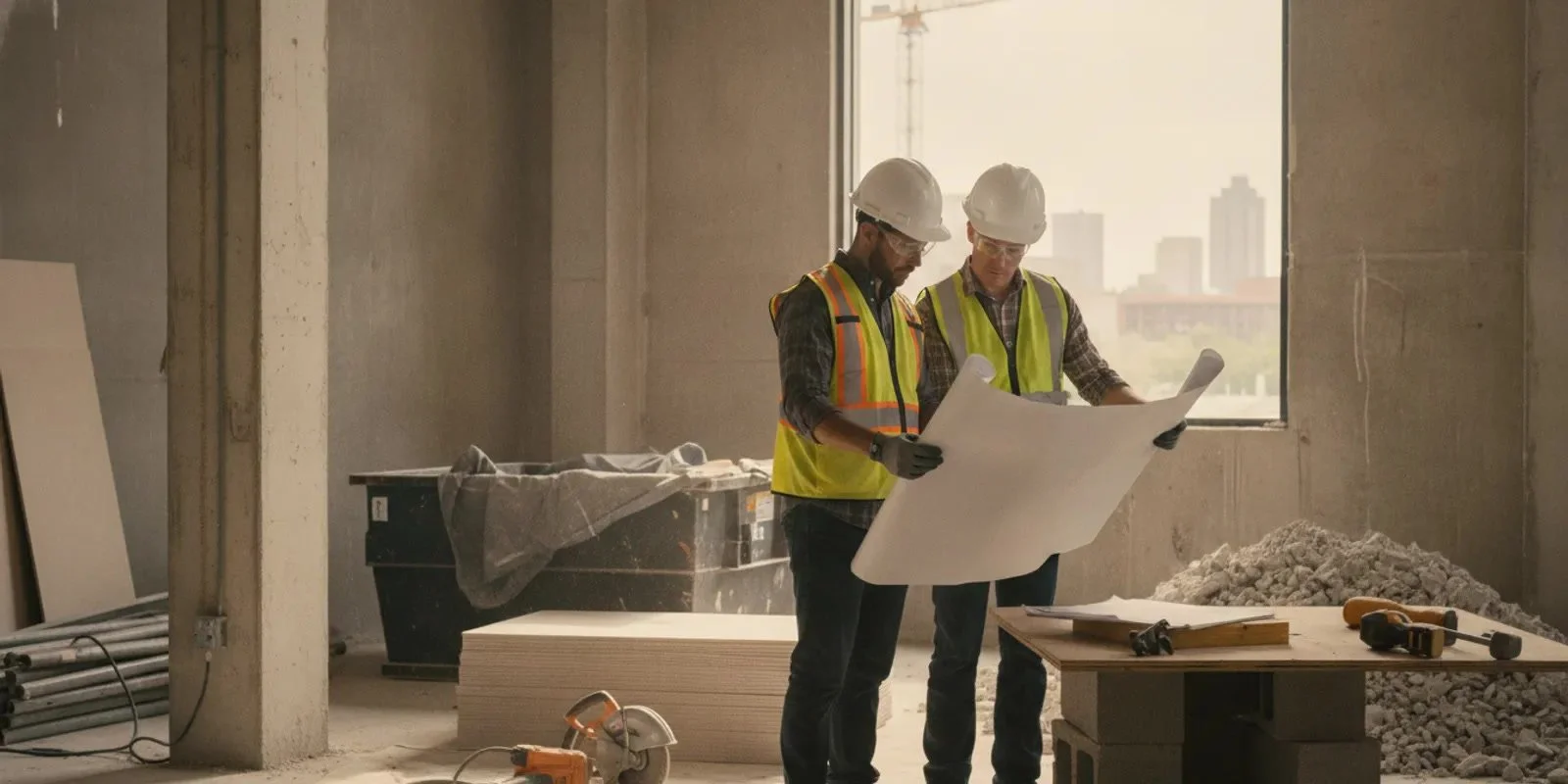
Demolition monitoring plans help a project team define what conditions to observe, when to record them, and who should respond if demolition work may affect nearby areas or building elements that will remain. A useful plan links the work sequence to specific concerns and decisions; it is not simply a list of instruments. For Georgia owners, contractors, and facility teams, the first step is to clarify what information is needed and who has authority to interpret it.
What should demolition monitoring plans establish?
The phrase can describe a documented process for observing site or building conditions while demolition is underway. The right process depends on the structure, adjacent properties, work method, occupancy, and project requirements. One job may need a consistent photographic record of a retained wall; another may have written engineering criteria for measurements at a particular location. The plan should explain the reason for each observation rather than assume every project needs the same equipment or frequency.
Start by stating the concern in plain terms. Is the team watching a retained building element, a neighboring structure, an occupied space, a sensitive operation, or a condition identified in project documents? Then connect that concern with a location, a method of observation, and a responsible person. A demolition contractor can describe planned work and access conditions. Any engineering criteria, numerical limits, or technical interpretation should come from the qualified professional assigned to that role.
Define the concern: Identify the element, area, operation, or condition that needs attention, and say why it matters to the work.
Mark the observation area: Describe where observations will be made and what is outside the plan's scope.
Name each role: Identify who records observations, reviews them, shares updates, and can make or authorize a work decision.
Connect information to action: State how an unusual condition is reported and who decides what happens next.
These details distinguish routine job documentation from a formal monitoring program based on project-specific criteria. Do not assume an estimate for demolition automatically includes instrumentation, engineering analysis, or continuous observation. Ask which tasks are included, who supplies any specialists, and what decisions remain with the owner or design team. Put those boundaries in writing before crews mobilize.
When might monitoring be considered for demolition?
A project team may consider monitoring when work is close to occupied areas, sensitive equipment, neighboring structures, or components that need to remain in place. It can also be considered when the owner, designer, engineer, or contract documents identify a condition to observe during a particular phase. The presence of nearby property alone does not determine a monitoring method; the project team needs to understand the actual concern and the consequences of an observed change.
For example, selective removal beside a retained wall raises different planning questions from removing an unoccupied detached structure. Work in an active commercial building may require coordination around operating hours and access. A floor opening near equipment may call for a distinct sequence and review. These are prompts for project discussion, not a claim that a monitoring program is always required. For a broader look at the scope differences, see how selective demolition is planned and the commercial demolition planning guide.
Also separate monitoring from other project controls. A condition log does not replace utility coordination, permits, safe work planning, hazardous-material review, or engineering design. The team should identify which documents govern each of those subjects. For general workplace safety information and applicable federal requirements, consult the Occupational Safety and Health Administration and the project’s safety professional; the project team should confirm which rules apply to its work and location.
What should be documented before work starts?
Baseline documentation creates a point of comparison for later observations. It should be collected before the relevant demolition activity begins and should match the concern being evaluated. Depending on the assignment, it might include dated photographs, written condition notes, location references, readings from specified instruments, or several forms of documentation. A record is much more useful when the project agrees in advance how it will be made and stored.
Record the date, time, location, observer, and work phase for each entry.
Use repeatable viewpoints for photographs and identify what each image shows.
Describe visible conditions objectively; do not turn an observation into a diagnosis.
Use the same units, reference points, and recording format when measurements are required.
Store records in a controlled, shared location and define who can access or distribute them.
Note work methods, sequence changes, weather or site events when relevant to interpreting an observation.
Consider a simple example: a team plans to remove interior finishes next to a wall that will remain. A useful baseline might identify the exact wall and adjoining area, show the condition from repeatable viewpoints, and record who prepared the file and when. If a project engineer has specified a measurement method, the team should document that method and its reference points instead of substituting a casual visual note. Keep the scope clear about what was and was not inspected; a record should not imply that concealed conditions were assessed if they were not.
For an existing building, the owner may also request a pre-work condition survey of adjacent or retained areas. The party assigned to perform that survey should follow the contract and technical requirements. Clarify access, notification, photo permissions, file ownership, and how the observations will be shared. If the property cannot be accessed, record the limitation and ask the project decision-maker how to address it rather than treating the unobserved area as documented.
How should monitoring align with demolition methods?
The work method affects when an observation is useful. Interior removal, structural demolition, concrete sawing, and core drilling have different sequences and site interactions. A plan tied only to start and finish dates can miss the phase that matters. Instead, connect each observation to an activity, location, or transition, such as removal of a connection, a planned opening, or work near a retained element.
Suppose the scope includes removing a partition and then making a concrete penetration. The team should define which activity occurs first, what must be verified before the next step, and who confirms the work area is ready. If a retained element is affected by the removal sequence, state when it will be observed and who receives the information. For concrete openings, review concrete core drilling and project planning. For saw-cutting work, the Georgia concrete cutting planning guide provides more context on methods and coordination.
A change in method can make the original observation schedule less useful. If access changes, the work area expands, or the sequence shifts, the team should decide whether the locations, timing, or reporting chain need revision. A field change should not quietly override project-specific criteria. Identify who reviews a proposed change and how the updated plan is distributed so that the crew, owner, and technical reviewer are working from the same version.
How should observation timing be planned?
Set observation timing around the concern and the demolition sequence, not just a generic daily checklist. A project may specify a baseline before work, observations during selected activities, and a follow-up record after a phase is complete. Other work may require readings at defined intervals or when a particular operation starts. The responsible technical professional should determine the schedule when measurements or technical criteria apply; there is no single interval that is right for every building or method.
Write down the trigger for each observation. It might be a scheduled check, the start of work near a retained area, completion of a removal phase, or a change that the project team has agreed to report. Name who confirms that the trigger occurred and who receives the resulting record. If the schedule depends on a crew’s progress, make sure the field lead can communicate phase changes in time for the assigned observer to be present.
Also plan for gaps: what happens if a reading cannot be taken, a location is inaccessible, or the designated observer is unavailable? Identify a backup or escalation contact and a process for documenting the missed observation. Do not fill a gap by estimating or copying a prior result. The project decision-maker should determine whether work can proceed and what additional documentation is needed.
Who should collect and interpret observations?
Collection and interpretation are different responsibilities. A person may be assigned to take photographs or readings without being authorized to decide what those results mean for the structure or the project. The plan should name a collector, a technical reviewer when required, and the decision-maker who can direct a response. It should also name a backup contact for time-sensitive work.
Before work begins, confirm how information travels. Does the collector notify the superintendent, owner representative, engineer, or another named contact? Is the notice by phone, email, or a project system? Who confirms receipt? What happens outside normal working hours? These questions are practical, not administrative filler: an observation cannot inform a timely decision if the responsible person does not receive it.
Where engineering judgment is required, keep that judgment with the assigned qualified professional. A contractor should not be expected to invent thresholds or make a structural diagnosis from a field note. The plan can state that a reading or visible change triggers notification and review without claiming a universal tolerance. If a numerical threshold is specified, identify its source, who approved it, what instrument or method applies, and what procedure follows when it is reached.
How should the team respond to a notable change?
A useful plan gives field staff a clear process rather than asking them to improvise. It should state who is contacted, what information to provide, and which person decides whether work continues, pauses, or changes. The project’s technical lead should establish any numerical limits and the meaning of results. Avoid writing a one-size-fits-all response that conflicts with project documents or leaves staff uncertain about decision authority.
Capture the observation: Record what was seen or measured, where and when it occurred, who observed it, and the work activity underway.
Notify named contacts: Share the information through the agreed channel and confirm that the responsible reviewer received it.
Follow the stated procedure: Apply the project’s pre-established review, escalation, or work-pause steps. Do not substitute an informal verbal guess for the documented process.
Record the disposition: Note who reviewed the information, the decision made, any follow-up observation, and whether the work sequence changed.
Close the loop: Tell affected crew members and project contacts what they need to know before the relevant work resumes or proceeds.
For example, if an observation differs from the baseline, the collector can report the location, time, photo or reading, and activity in progress. The named reviewer then evaluates it under the project criteria. The written record should preserve that sequence: initial information, receipt, review, decision, and follow-up. This is more dependable than relying on a single summary after the work is complete.
What details belong in a demolition monitoring plan?
A concise plan can still be specific enough to guide action. It can identify project limits, the concern, relevant demolition phases, observation points, methods, timing, record format, and reporting chain. It should point to the documents that set technical criteria, not invent values where none have been approved.
Project name, location, work limits, and adjacent or retained areas of concern.
Demolition activities and sequence that relate to the monitoring question.
Observation method, location, frequency, and any event that triggers an observation.
Baseline records, their preparer, and who reviews or accepts them.
Roles for observation, technical review, communication, and work decisions.
Escalation contacts, backup contacts, response process, and record retention.
Owner, design, engineering, permit, contract, and safety documents that apply.
Assumptions, exclusions, access limits, and the process for approving changes.
For work that combines removal and concrete operations, separate the requested tasks clearly. All Pro Demolition offers interior demolition, exterior demolition, and core drilling and GPR scanning. Discuss the specific scope and confirm what a quote includes. Do not assume monitoring, engineering, or every related service is included unless it is stated in the project agreement.
What should you send when requesting an estimate?
Useful information helps a contractor understand the demolition or concrete work being considered and identify questions that remain for the owner’s technical team. It does not need to be a finished monitoring specification. If the criteria are still in development, say so and identify who is preparing them.
Project location, building type, and a brief description of the work area.
What will be removed, cut, or drilled, including the planned sequence if known.
Plans, sketches, or photographs showing the work limits and nearby retained features.
Access limits, occupied areas, work-hour restrictions, and relevant milestones.
Written monitoring requirements or concerns already raised by the owner, engineer, or general contractor.
The role of the person who can clarify technical requirements and approve project decisions.
When comparing scope, ask whether the estimate covers labor and equipment for the specified demolition task, how access or sequence assumptions affect the work, and what is excluded. Ask separately whether documentation or monitoring is included and who performs it. If a project requires an engineer or specialist, identify whether the owner or contractor is engaging that professional. These questions help prevent a scope gap from appearing after mobilization.
Share only the facility information needed for the discussion and use an appropriate channel for sensitive plans. If project documents specify a monitoring process, provide the relevant requirements and identify the approving contact. A quote can define the priced work and flag open questions; it should not be treated as approval of an engineering program. To understand demolition scope options, see the overview of interior and exterior demolition services or the Georgia commercial demolition rules and regulations guide.
Frequently asked questions about demolition monitoring plans
Does every demolition project need monitoring?
No single process fits every job. The owner and project professionals should determine whether monitoring is needed based on site conditions, work methods, project documents, and nearby concerns. Ask for the decision and its basis to be documented.
Does a monitoring plan always require instruments?
No. Depending on the question, the agreed process may use photographs, written observations, instruments, or a combination. The assigned technical professional should define methods and criteria when technical measurements are required.
Who sets acceptable limits?
The responsible engineer or other qualified professional should set or approve project-specific criteria under the applicable project requirements. A demolition contractor should not be assumed to create engineering thresholds unless that responsibility is explicitly assigned and appropriately qualified.
Can monitoring guarantee that damage will not occur?
No. Monitoring can provide information to support decisions, but it does not guarantee prevention of damage or replace appropriate design, work controls, and communication. The plan should explain how information will prompt review and action.
Should the plan change if the demolition sequence changes?
It may need to. The project team should review whether revised methods, access, or work limits affect observation locations, timing, or responsibilities. Follow the project’s approval process and share the current version with everyone who relies on it.
What should your first conversation accomplish?
Your first discussion should clarify the demolition or concrete scope, the site conditions that matter, and whether written monitoring requirements already exist. Identify who will answer technical questions, review observations, and make project decisions. Bring plans or photos, describe access and schedule constraints, and ask which tasks are included in the estimate. A clear conversation gives the contractor useful context while leaving engineering decisions with the professionals assigned to make them.
Contact our team about your project
Share the work area, expected sequence, and any criteria already provided so the scope can be discussed with the right context.
