
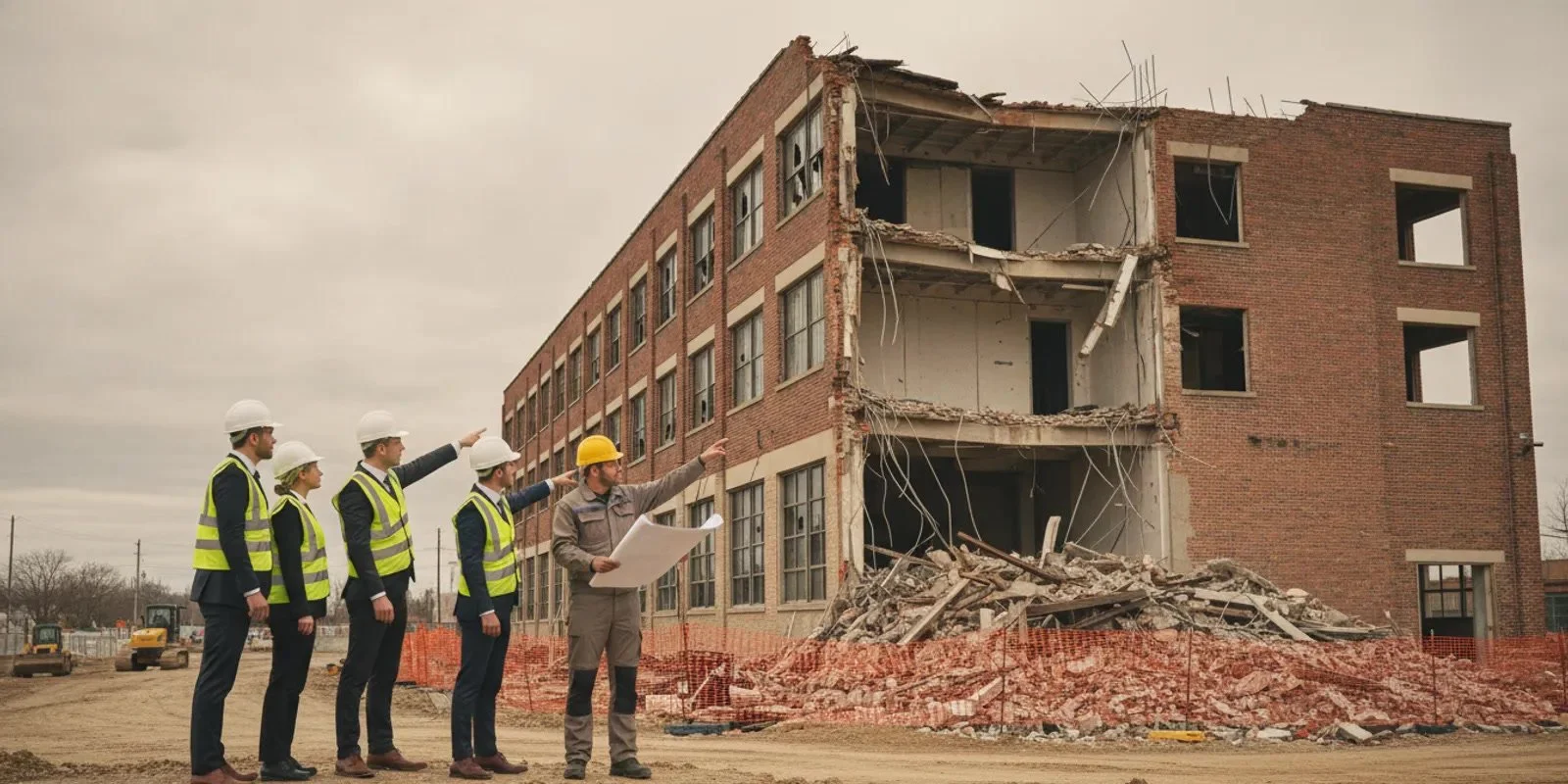
Emergency demolition can become a consideration after a fire, vehicle impact, severe weather, structural damage, or another event leaves part of a building unsafe. For a Georgia property owner or project team, the first question is not how quickly to remove materials. It is how to protect people, understand the immediate risk, and coordinate the right decisions before demolition begins. This guide explains the practical steps to take and what to confirm when contacting a demolition specialist.
What does emergency demolition mean for a project team?
Emergency demolition describes demolition considered in response to an urgent condition, rather than work scheduled as part of an ordinary renovation. The phrase does not by itself determine who has authority to approve the work, what areas need to be removed, or whether a demolition contractor can safely begin. Those decisions depend on the condition of the site, the danger to people, the instructions of relevant authorities, and the project scope.
Sometimes the immediate need is to keep people away from a damaged area while a qualified person assesses it. Sometimes a property team needs to plan removal of a compromised section, clear access for other work, or arrange a larger demolition scope. These situations are different. Do not assume that a damaged wall, roof, slab, or building must be demolished in full, or that the visible damage shows the limits of the problem.
All Pro Demolition provides interior and exterior demolition, concrete cutting, and core drilling. Whether a specific urgent project is within our scope or can be scheduled depends on its conditions and requirements. An estimate conversation helps establish what work is being considered; it is not a substitute for emergency response, structural evaluation, or direction from the authority responsible for the site.
What should you do first if the site may be unsafe?
Keep occupants, employees, tenants, visitors, and other crews away from a potentially dangerous area. Use the property's established emergency procedures and contact emergency services when there is an immediate threat to life or safety. Do not enter a damaged structure to retrieve belongings, inspect hidden damage, or take photographs if doing so could put someone at risk.
If a fire, collapse, unstable structure, exposed electrical equipment, gas odor, or other active hazard is present, leave the response to the appropriate emergency personnel and utility providers. A demolition contractor should not be treated as a replacement for emergency services or a qualified structural professional. Where an authority or building representative is controlling access, follow their instructions.
Do not try to make the area safe by moving debris, propping up a damaged element, or restarting a utility unless that work is directed by the people responsible and is within your role. A change that seems small can affect access or conditions elsewhere. Keep a clear boundary between observation and intervention: report what you can see from a safe location, then let the appropriate responder or qualified professional decide what further assessment is needed.
If the event affects an active business, coordinate who will notify occupants, employees, tenants, or other contractors that access has changed. Provide a simple update with the affected area, current restrictions, the person responsible for questions, and where people should go instead. Avoid sharing unverified conclusions about structural stability or the cause of damage. This reduces conflicting instructions while the property team determines what comes next.
Once the immediate danger is addressed, designate one person to coordinate communication for the owner or project team. That person can keep a record of who has been contacted, what areas are restricted, what instructions were given, and which questions remain open. Clear communication helps avoid sending workers into an area based on an assumption or an outdated site update.
Who should be involved before work is authorized?
The right contacts depend on the event and the property. A property owner or authorized representative should coordinate the project, but may need input from several parties before deciding what work to request. These can include emergency responders, the local authority responsible for building or site oversight, the property insurer, the property manager, the general contractor, utility providers, and a qualified structural or environmental professional.
Not every party makes the same decision. One person may control access, another may assess a structural condition, and another may explain insurance documentation or utility isolation. Ask who has authority to approve work and who must be notified before removal begins. If you are a tenant or subcontractor rather than the property owner, confirm that you are authorized to request demolition and identify the person who can approve scope and cost.
For work that involves concrete, it is also useful to distinguish demolition from a specific opening or cut. A project may call for removal of a larger area, a targeted concrete cut, or a drilled penetration. Review the separate interior demolition service information if the affected work is inside a building, or the Georgia concrete cutting planning guide if the request involves a defined cut rather than general removal.
What site information should you document?
When it is safe and permitted to do so, record the conditions without entering a restricted or unstable area. Photos or video from a safe location can help explain the visible damage, access, and nearby features. Keep the date and time, note who observed the condition, and save relevant communications. Do not alter or remove evidence if an authority, insurer, or property owner has asked that the scene remain undisturbed.
Make a short list of known facts and separate them from unanswered questions. For example, record whether the damage is limited to a specific room or exterior section, whether any utilities have been shut off or isolated, and whether access restrictions are in place. If you do not know whether a line is active, say that it is unconfirmed. Guessing that a utility is disconnected can create risk and confusion.
Useful records may include available building plans, prior renovation information, site access instructions, and any written notices or assessments already received. Share only documents that you are authorized to provide. If hazardous materials are known or suspected, flag that clearly rather than assuming demolition work will identify or handle them as part of ordinary removal.
For a project involving a concrete opening or penetration, relevant drawings and layout details can help define the request. The Georgia core drilling field guide explains the kinds of project details that matter when planning that distinct scope. For larger building work, the commercial demolition planning guide offers a broader project context.
How should utilities and hazardous materials be handled?
Before demolition, the project team needs to establish what utilities may serve the affected area and who is responsible for confirming their status. Depending on the property and conditions, this could involve electrical, gas, water, communications, or other services. Do not rely only on a switch, a visible meter, or an assumption based on an earlier project. Confirm the right contact and the steps required for the specific site.
Damage can also expose materials that the project team has not identified. Older buildings or past renovations may have materials requiring assessment or special handling. If asbestos, lead-containing materials, or another regulated or potentially hazardous material is suspected, pause the affected demolition planning until the responsible professionals or authorities clarify what assessment and controls are needed. Do not disturb a suspect material to find out what it is.
Worker protection is an important part of planning any construction or demolition activity. OSHA provides federal workplace safety information and resources at osha.gov. Project teams should use applicable professional guidance and site-specific requirements rather than treating a general article as a safety plan or legal determination.
How do you define the emergency demolition scope?
Describe the work area as precisely as you can. State the building or structure, floor or level, room or exterior side, and the portion believed to be affected. If the boundary is uncertain, say so. A clear statement such as "remove the visibly damaged exterior section after access and scope are confirmed" is more useful than "demolish everything," especially when the project may involve both removal and preservation.
Then identify the intended outcome. Is the immediate request to remove a particular damaged element, clear an area for later repair, carry out interior demolition, or discuss a larger building demolition? Which materials are expected to remain? Does the site need access for another trade? Are there adjacent spaces or occupied areas that require coordination? These answers help distinguish a defined task from an initial assessment or a wider renovation plan.
Demolition methods and sequence depend on the actual structure and site conditions. Avoid instructing a crew to remove material based only on a distant photograph or a rough quantity. A specialist may need to review access, surrounding construction, work limits, debris handling expectations, and other conditions before giving a reliable scope. Where conditions change after work is discussed, stop and communicate the change before proceeding. Set a simple decision process before removal starts: identify the person who can approve a scope change, the person who should be notified, and how the affected work will be held while the issue is reviewed. This avoids relying on an informal direction from someone who may not have authority to change the project.
It can also help to separate the initial response from follow-on repairs. Emergency demolition may address a particular removal need, while rebuilding, finish work, or other trades may require a separate scope and schedule. Ask what the proposed work does and does not cover, how the boundary will be recorded, and whether another contractor must inspect or accept the area afterward. If the scope depends on a condition that cannot be verified until work is underway, ask how that uncertainty will be handled and who needs to agree before extra work is added.
These questions are not a reason to delay an immediate safety response directed by the responsible authorities. They are a way to make sure that, once the situation allows a defined contractor scope, the project team shares the same understanding of the task and its limits.
If the request concerns a specific part of a building rather than a whole structure, see our information on selective demolition scope and scheduling. For a broader explanation of how interior and exterior work differ, review demolition service scopes. These resources can help you describe the work, but the site and the authorized project team determine what is appropriate.
What should you ask about access, debris, and coordination?
Urgent conditions can make normal project coordination harder, so confirm practical arrangements early. Explain how a crew can reach the site, where vehicles or equipment may be allowed, and who will provide access. Identify restricted areas, operating hours or other property rules, nearby occupants, and any work that must continue elsewhere. Do not promise access until the responsible property contact has confirmed it.
Discuss what is included in the requested work and what remains for the owner or another contractor to arrange. Ask how debris handling is addressed in the proposed scope, what site conditions could change the work, and how a change or newly discovered issue will be communicated. If another trade needs to follow, establish who coordinates that handoff and what condition the area must be in first.
When work involves concrete, make the distinction between cutting, core drilling, and demolition clear. A small, planned opening is not automatically the same scope as removing a damaged slab or wall section. Read about concrete drilling methods or concrete demolition work if either may be part of the project, then describe the actual desired result when you request a quote.
What should you confirm about permits and approvals?
Do not assume that an urgent situation automatically removes ordinary approval, notification, or documentation requirements. Requirements can depend on the location, the nature of the work, the property, and the direction of the relevant authority. Ask the owner or authorized representative who is checking these obligations and whether any written instruction, permit, inspection, or other approval is needed before demolition begins.
If an emergency responder or local authority has already issued instructions, record them and share them with the project contacts. If the project team is unsure who has jurisdiction or what process applies, seek clarification from the appropriate local authority or qualified professional. A demolition contractor can discuss the work it is being asked to perform, but should not be assumed to decide every legal or property approval question on the owner's behalf.
Keep copies of approvals, scope changes, site restrictions, and project communications together. This is particularly useful when several organizations are responding to the same event. For more general planning context, the Georgia commercial demolition rules guide discusses why project teams should check requirements for the specific site rather than rely on a one-size-fits-all assumption.
How should you request an estimate?
When immediate safety concerns and site access are being handled by the appropriate people, contact a demolition specialist with a concise project brief. Include the property location, your role and authority, the event or condition that prompted the request, and the part of the structure under consideration. State whether the work is interior demolition, exterior demolition, concrete cutting, core drilling, or an uncertain combination.
Also share any safe-to-provide photos, plans, known restrictions, utility status, suspected material concerns, prior assessments, and instructions already received from the owner or authorities. Say plainly what has not yet been confirmed. Include the best contact person for site access and decision-making, and explain any timing concern without presenting an unapproved deadline as settled.
Ask what the next step is: a discussion of the request, a site review, clarification of scope, or a written estimate based on the information available. Confirm which items are included, which assumptions the estimate relies on, and what would require a revised scope. If timing is urgent, ask whether the contractor can review the project and discuss availability; do not assume that a website request guarantees immediate dispatch or a particular response time.
To prepare for a useful conversation, you can also review how to evaluate demolition contractors in Georgia and our Georgia demolition cost planning guide. The goal is to describe the actual conditions and ask for a scope that fits, not to force a complex urgent project into a generic price or service category.
Contact our team to discuss your project
Frequently asked questions about emergency demolition
Does emergency demolition always mean demolishing the whole building?
No. The term describes an urgent context, not a predetermined amount of removal. The appropriate scope depends on the condition, the desired outcome, site-specific review, and instructions from the people responsible for the property and its safety.
Can I enter the building to take photos for an estimate?
Do not enter an area that is restricted or may be unsafe just to collect information. Use existing photos or take new ones only from a location where you are permitted and can remain safe. Let the project contact know what information is unavailable.
Can a demolition contractor confirm whether a structure is safe?
Do not treat a demolition estimate as a structural safety assessment. If the stability of a building or element is in question, follow emergency instructions and consult the qualified professional or authority responsible for evaluating that condition.
What if I need concrete cutting or core drilling rather than building removal?
Describe the opening, cut, or penetration you need and where it is located. Those scopes differ from broader demolition, and the specialist may need drawings, layout information, access details, or other site-specific context to discuss the request.
What should your first conversation accomplish?
Your first conversation should establish the project location, who can authorize the work, what is known about immediate hazards and access, and what outcome you need from demolition or concrete work. Share confirmed information, identify uncertainties, and follow the directions of emergency responders and the people responsible for site safety. With those basics in view, a demolition specialist can discuss whether the requested scope fits and what information is needed for an estimate.
